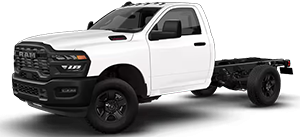
Nobody comes in and says their shocks are worn out. They come in and say the truck feels floaty on the highway, or that it will not settle after the approach to their yard, or that the back end skips sideways on washboard where it used to just rumble. Ride control wears out so gradually that you adapt to it without noticing, which is why it is one of the most commonly ignored items on a prairie truck. If yours has started doing any of that, book a service appointment and we will put it on the hoist and look, because this is one of the few complaints you genuinely cannot diagnose from the driver's seat alone.
Out here the wear is not theoretical. Gravel roads and spring frost heave put more cycles through a shock in one season than smooth highway kilometres do in three, and the truck that spends its life between Portage and a field approach is doing something fundamentally harder than the odometer suggests.
Key Takeaways
- There is no honest fixed replacement interval, and we are not going to invent one. Shocks and struts wear by cycles and conditions, not by a number on a chart. A gravel road truck and a highway commuter with identical odometers can be in completely different shape.
- The symptoms are specific and they are checkable. Excessive bouncing after a bump, the nose diving under braking, cupped or scalloped tire wear, clunking noises, body roll in corners, and visible fluid leaking down the shock body are the recognised signs of wear.
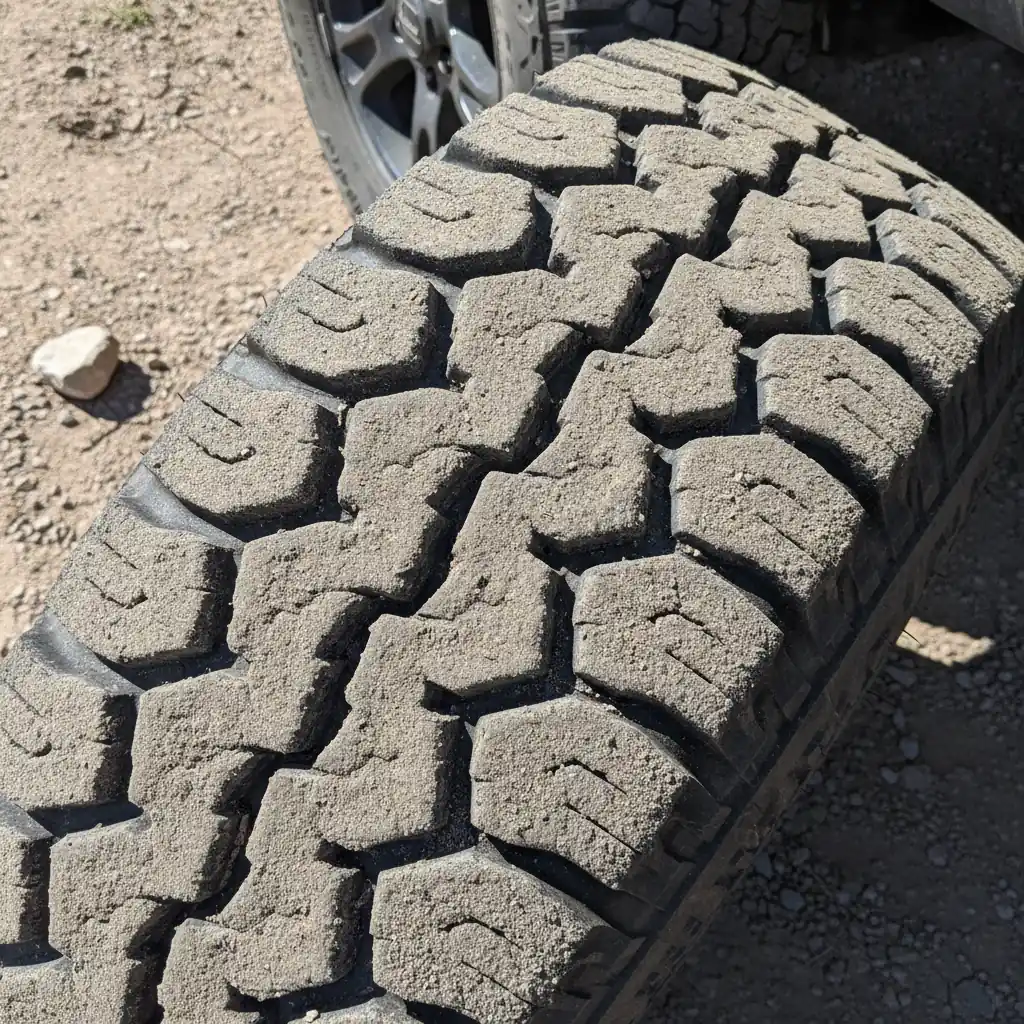
- Cupped tire wear is the one people miss. When a shock stops keeping the tire on the road, the tire wears in scalloped patches. Replacing just the tire fixes the symptom and leaves the cause.
- Worn shocks lengthen your stopping distance. Nose dive under braking is not just an unpleasant feeling. It shifts weight forward and away from the rear tires at exactly the moment you need all four working.
- Washboard gravel and frost heave are the two things that wear ride control fastest around here, and both of them are unavoidable if you live outside city limits.
What a Shock Actually Does
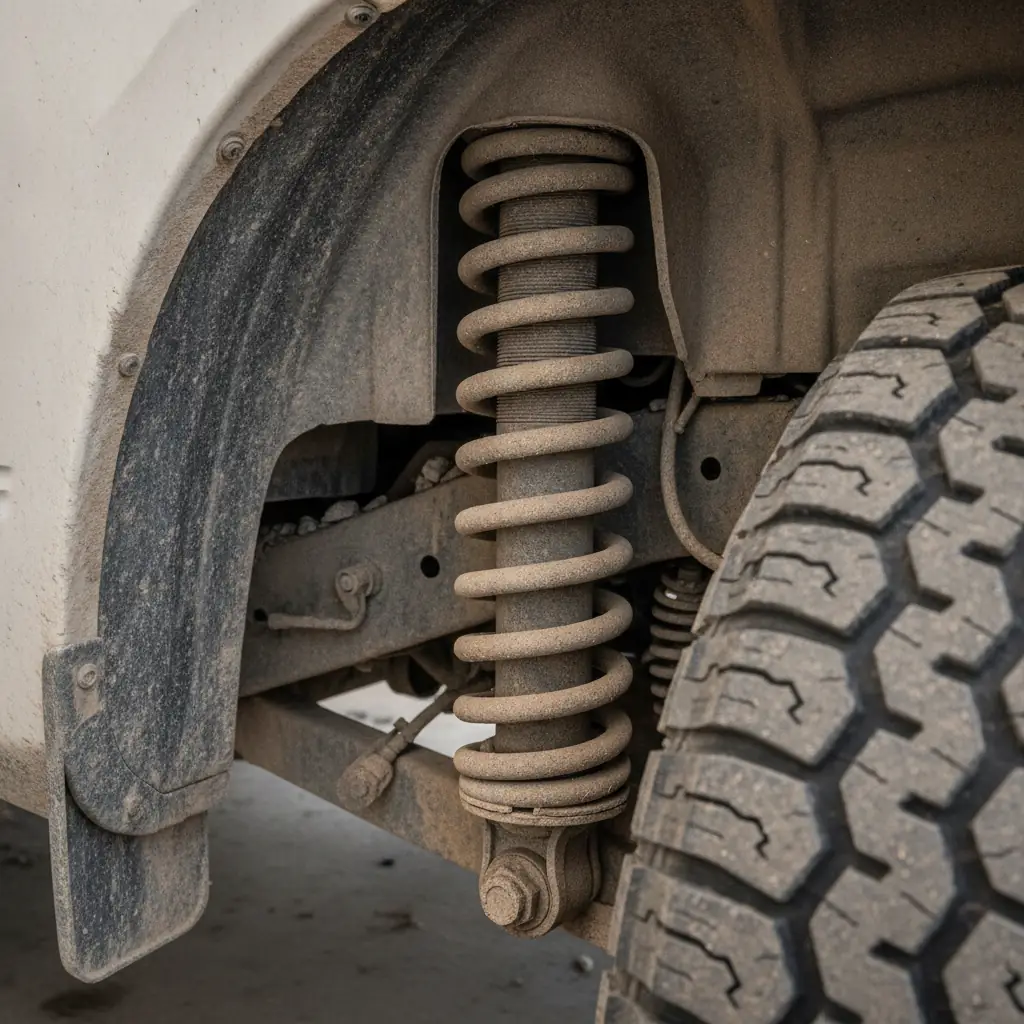
Most people think a shock absorber softens the ride. That is a side effect. The actual job is keeping the tire pressed against the road.

Springs carry the weight of the truck. When a wheel hits a bump the spring compresses and then wants to rebound, and without something to control it, it will keep oscillating. The shock is the part that damps that oscillation so the tire comes back down and stays down. When the shock is worn, the tire spends measurably more time light or airborne after every bump, and a tire that is not touching the road is not steering, braking, or driving.
That is why worn shocks show up as safety symptoms rather than just comfort symptoms. On a washboard gravel road the effect compounds, because the bumps arrive faster than a tired shock can control them and the rear end starts to walk sideways instead of tracking straight. Anybody who has felt a truck get loose on gravel at highway speed knows the feeling. It is not always the road.
The Warning Signs Worth Acting On
These are the recognised symptoms of worn shocks and struts, and they are the ones a shop will look for.

Excessive bouncing after a bump. A vehicle should settle after hitting a bump rather than continuing to bounce. If yours keeps moving after the bump is behind you, that is the clearest single sign.
Nose dive under braking. If the front end dips sharply toward the ground when you brake, that points at worn front damping. It is dangerous specifically because it can increase stopping distance.
Cupped or scalloped tire wear. When the tire is not held firmly on the road it bounces, and bouncing gouges rubber out of the tread in patches. If you find cupping, replacing the tire alone treats the symptom and leaves the cause in place. Have the steering and suspension looked at, including the shocks. This is also why a tire rotation is a good moment to catch it, and our post on how often to rotate tires in Manitoba covers that schedule.
Sway or roll through corners. More body lean than the truck used to have, especially on a highway ramp or a curve at speed, is worth a look.
Clunking or knocking. Noises from a corner of the vehicle over bumps can come from worn shocks or struts, or from the mounting hardware around them.
Visible fluid on the shock body. A shock that is leaking hydraulic fluid down its own body has failed. This one you can often see yourself with a flashlight and a few minutes.
If a couple of those describe your truck, a quick inspection settles it. Our service centre can check ride control at the same visit as anything else you have booked, and it is a much shorter job than most people expect.
Why Manitoba Is Harder on Ride Control
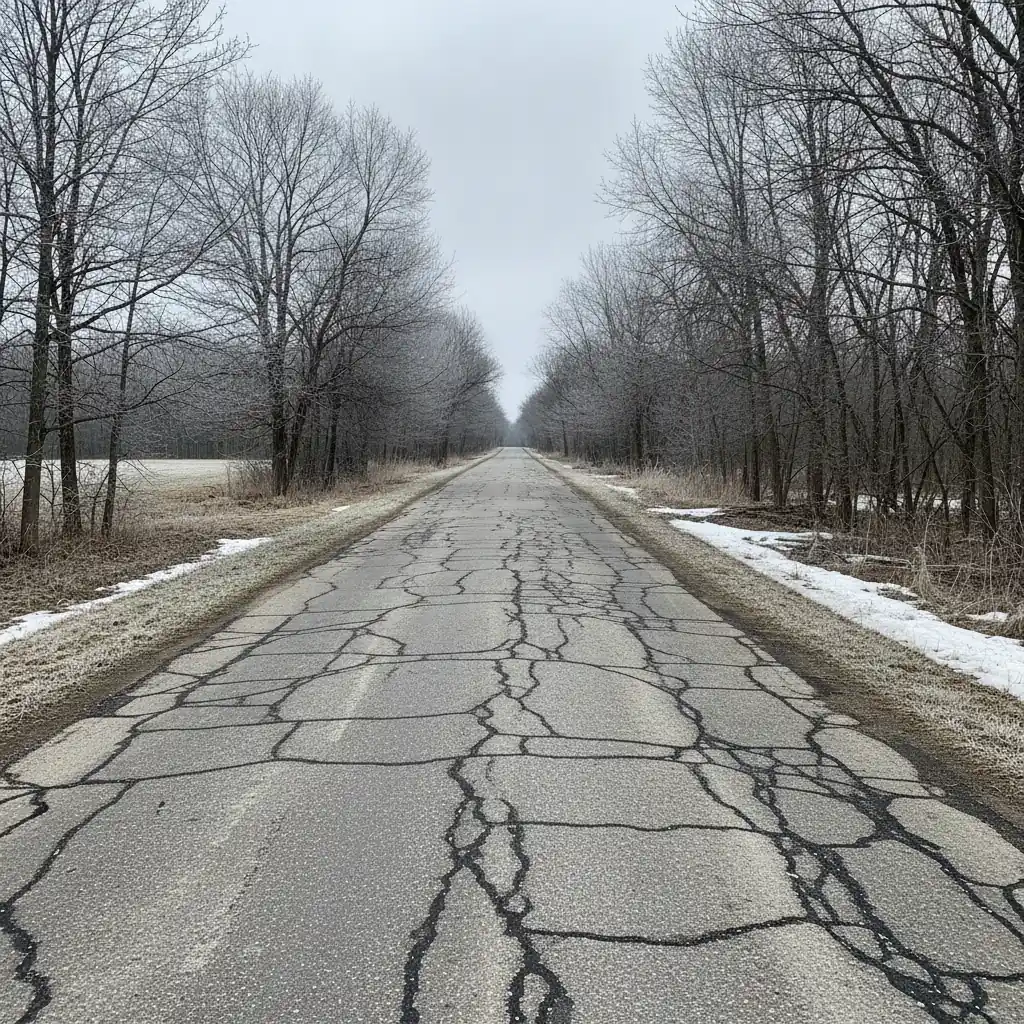
Two conditions do most of the damage out here, and neither of them shows up in a manufacturer's test cycle.
Washboard gravel. The ripple pattern on a gravel road is essentially a rapid, repeating input at exactly the frequency shocks work hardest to control. A truck that runs twenty kilometres of washboard to town and back a few times a week is putting an enormous number of cycles through its dampers, and heat is the by product. Shocks work by converting motion into heat and shedding it. Sustained washboard gives them no chance to cool.
Spring frost heave. When the frost comes out of the ground the road surface buckles, and for several weeks every spring the paved routes around here develop rolling humps and sharp edges that a smooth road never has. Those big amplitude inputs are hard on everything in the suspension, not just shocks, which is why spring is when we see the most ride complaints and the most alignment work.
A third factor people forget: load. A truck that regularly carries weight in the box or pulls a trailer is asking more of its rear damping than an empty one. If your truck works, its shocks are working too.
The practical result is that a truck living on gravel around Portage la Prairie will need ride control attention sooner than the same truck living on Winnipeg pavement, and the odometer will not tell you that. The road it drove on will. If you have also been fighting the steering wheel a little, our post on wheel alignment in Manitoba covers the other half of the story, because worn ride control and a knocked out alignment often show up together after a bad spring.
What We Actually Do About It
The inspection is straightforward and it is not a mystery process.
We look for fluid on the shock bodies, check the mounting hardware and bushings, look at your tires for cupping and uneven wear, and check for play in the surrounding suspension components so we are not blaming a shock for a worn bushing. Then we tell you what we found. If they are fine, they are fine and we will say so.
On replacement, two honest points. Shocks are replaced in pairs across an axle, because a fresh one on one side and a tired one on the other gives you a truck that is unbalanced in a new way. And if the truck is at the age and use where the fronts are done, the rears are usually not far behind, so it is worth pricing both at the same time even if you only do one axle now. Our parts department can quote the real number before you commit to anything.
What we will not do is sell you shocks on a hunch. If the complaint turns out to be tire pressure, a bad tire, an alignment issue, or a worn bushing, we will fix that instead. A shop that finds worn shocks on every truck it inspects is not inspecting.
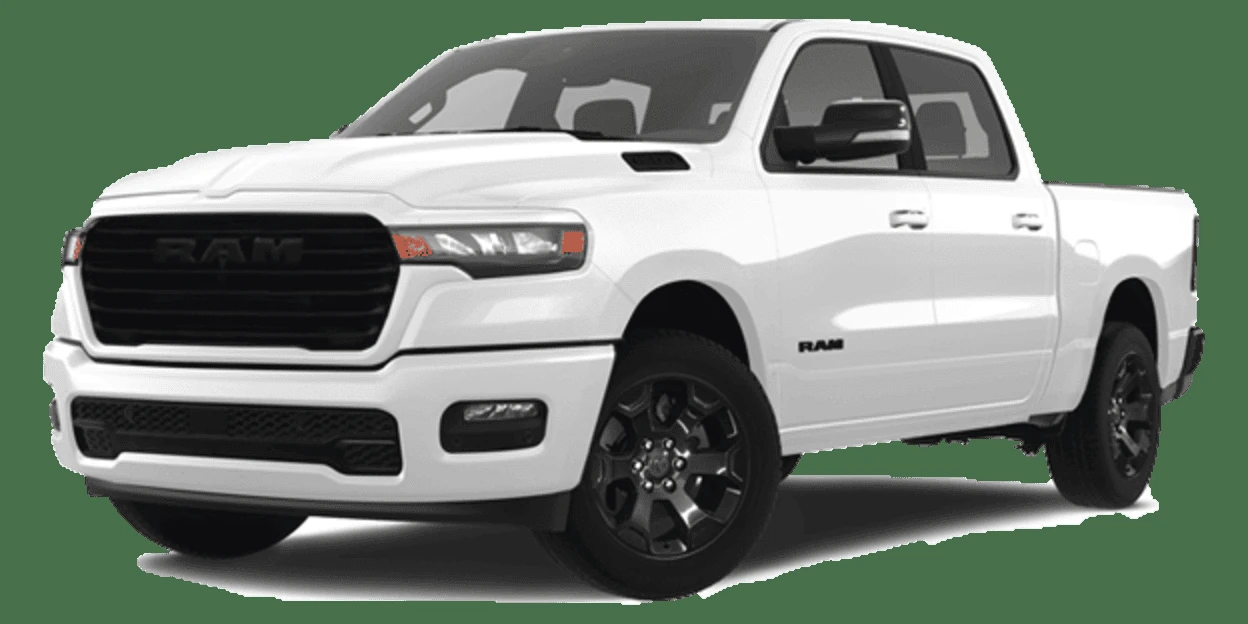
If the truck is far enough along that ride control is one item on a longer list, that is worth knowing too. Sometimes the honest math points at a newer truck rather than another round of repairs, and the new Ram 1500 lineup is on the lot if you want to compare the two paths side by side without any pressure.
FAQs
When should I replace the shocks on my truck?
There is no single mileage figure worth trusting, because shock wear depends on cycles and road conditions rather than distance. Replace them when the symptoms show up: continued bouncing after bumps, nose dive under braking, cupped tire wear, clunking, excessive body roll, or visible fluid leaking down the shock body. On gravel roads that point arrives sooner than the odometer suggests.
How do I test my shocks myself?
The classic check is the bounce test. Push down hard on one corner of the vehicle and release. It should settle rather than continue bouncing. Also look under the truck with a flashlight for fluid running down the shock bodies, and check your tires for scalloped, patchy wear. None of this replaces a proper inspection, but it tells you whether to book one.
Do worn shocks affect braking?
Yes. Nose dive under braking shifts weight forward and unloads the rear tires, and worn damping lets the tires lose contact with the road surface more often. Both increase stopping distance. It is the main reason worn ride control is a safety item and not just a comfort item.
Do shocks have to be replaced in pairs?
Across an axle, yes. A new shock on one side and a worn one on the other leaves the vehicle behaving differently left to right, which is its own handling problem. Front and rear axles can be done separately if only one end is worn.
Does gravel really wear shocks faster than highway driving?
Yes, and it is not close. Washboard gravel puts a rapid, repeating input through the dampers and generates heat faster than they can shed it. A truck that runs gravel daily is doing far more damping work than an identical truck on smooth pavement with the same kilometres on it.
The Bottom Line
Shocks do not fail on a schedule, they fail on a road. Around here that road is washboard gravel in the summer and frost heaved pavement in the spring, and both of them age ride control faster than the odometer admits. Learn the symptoms, do the bounce test, look for cupping on your tires, and get it inspected rather than guessed at. It is a short job, it is cheaper than a set of tires you did not need to buy twice, and it puts your truck back on the road properly.