Coolant is the fluid nobody thinks about until the temperature gauge does something it has never done before. Oil gets changed on a schedule everybody knows. Coolant sits in the engine for years, quietly doing the two jobs that keep a truck alive up here: moving heat away from the engine in July, and refusing to freeze solid in January. Get it wrong and the repair is not a fluid change, it is a cooling system, and sometimes an engine. If your Ram is due for a look, you can book service with us and we will pull the freeze point while the truck is on the hoist.
This is the honest read on coolant for a Ram or a Jeep in Manitoba: what the factory actually calls for, what the published interval really says, why mixing the wrong type is the expensive mistake, and why the number that matters at 30 below is not the colour in the bottle.
Key Takeaways
- Your Ram or Jeep calls for OAT coolant meeting the manufacturer material standard MS.90032, and the factory fluid is Mopar Antifreeze/Coolant 10 Year/150,000 Mile (240,000 km) Formula OAT. That is the specification, not a suggestion.
- The published service life is up to ten years or 150,000 miles (240,000 km), whichever comes first. That is a genuinely long interval, and it is why so many owners never think about coolant at all. It is also why the trucks that do have problems usually got the wrong fluid put in somewhere along the way.
- Mixing coolant types is not recommended and can damage the cooling system. The owner's manual is direct about this. If the wrong type went in, the fix is a drain, a flush, and a refill with the correct OAT coolant, not a top up and a hope.
- Freeze point, not colour, is the number that matters here. The manual calls for a minimum fifty percent OAT coolant mixed with distilled water, and allows higher concentrations up to seventy percent where temperatures below minus 37 Celsius are expected. That last clause was written for places like this one.
- A freeze point test takes minutes and costs almost nothing. Getting it done in September is one of the cheapest pieces of insurance you can buy on the prairie.
What Your Truck Actually Calls For
There is one specification and it is worth knowing by name, because it is the thing you check when somebody else is putting fluid in your truck.

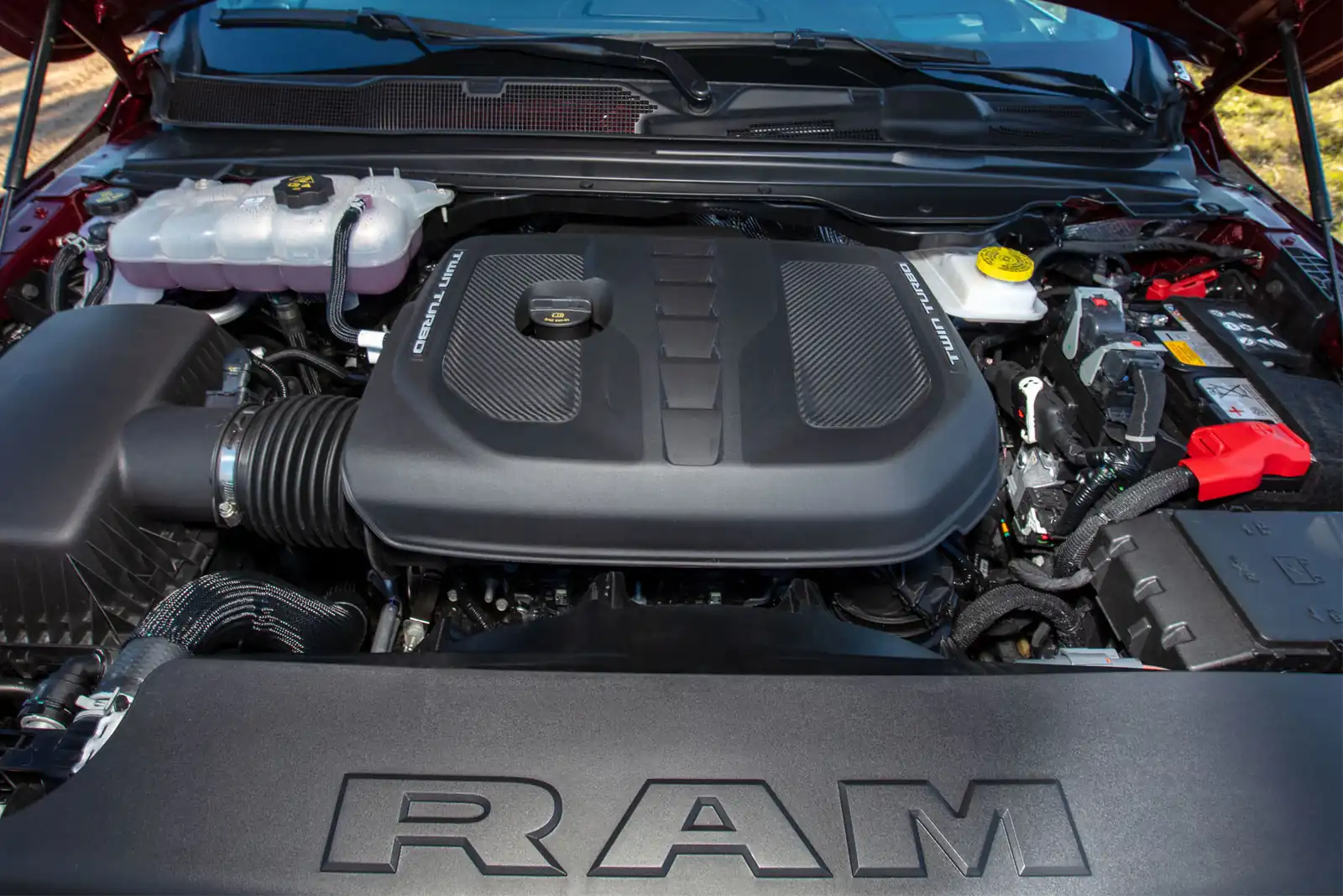
The spec is MS.90032. The owner's manual calls for an OAT coolant conforming to manufacturer material standard MS.90032, and names Mopar Antifreeze/Coolant 10 Year/150,000 Mile (240,000 km) Formula OAT as the fluid that meets it. OAT stands for organic acid technology, and the factory fill is purple. That colour is a useful hint, but it is only a hint, because aftermarket bottles are dyed whatever the maker wants. The specification on the label is what counts, not the shade in the jug.
The mix ratio matters. The manual calls for a minimum of fifty percent OAT coolant meeting MS.90032 mixed with distilled water. Note the word distilled. Tap water carries minerals that deposit inside a cooling system over years, and well water out here can carry a lot of them.
There is a cold weather clause and it applies to us. The manual permits higher concentrations, not exceeding seventy percent, where temperatures below minus 37 Celsius are anticipated. Portage la Prairie gets there. Not every winter, and not for long, but a cold snap that puts a still morning down past minus 35 is not unusual, and a system mixed weak enough to slush at minus 30 does not care that it only happens a few days a year.

Do not mix types. The manual states plainly that mixing engine coolant types is not recommended and can result in cooling system damage. If a different coolant went in during an emergency top up, the manual's own instruction is to have a dealer drain, flush, and refill with OAT coolant conforming to MS.90032 as soon as possible. That is not upselling, that is the book.
The Interval, Honestly
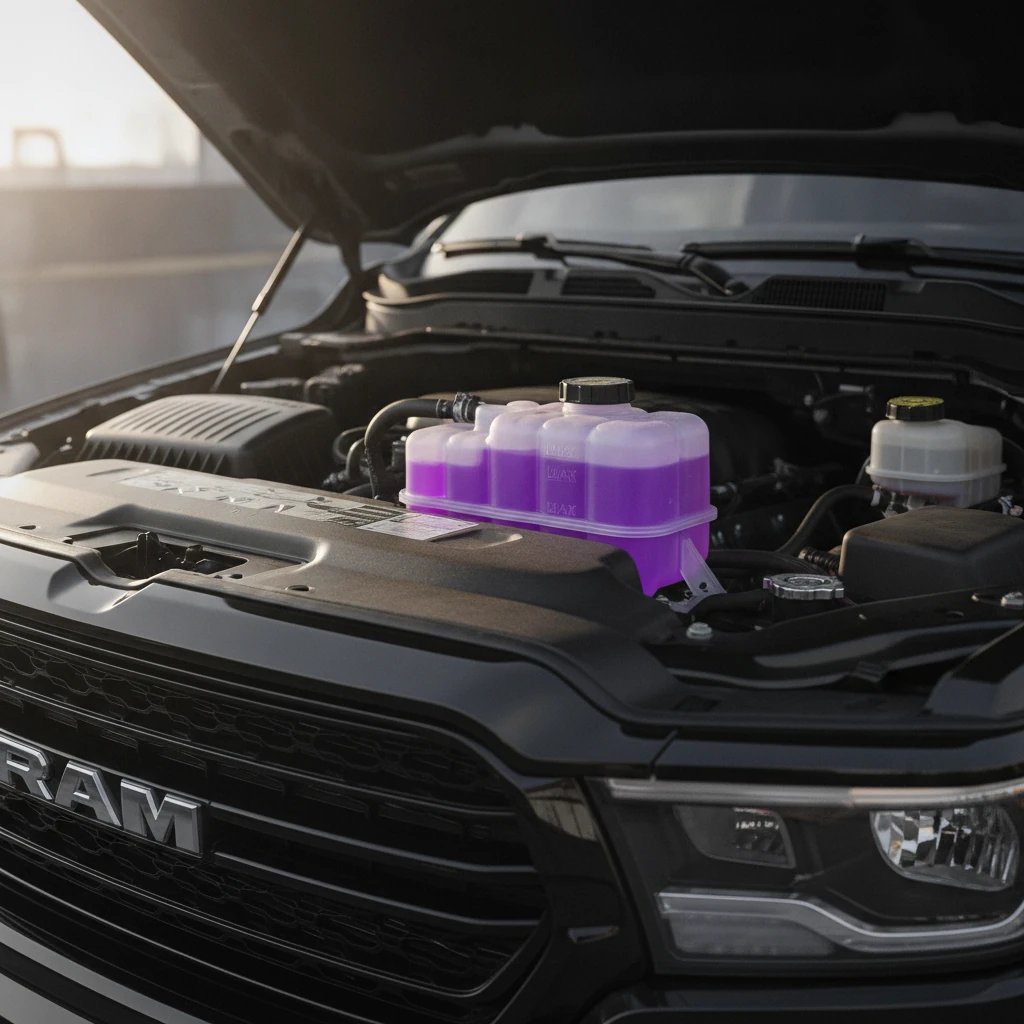
Here is where we are going to be more careful than most articles you will find on this subject.
The published number is up to ten years or 150,000 miles, which is 240,000 kilometres, whichever comes first. That is what the factory documentation says about the service life of the OAT fill. We are not going to invent a shorter "real world" interval and present it as fact, because we cannot source one, and a service department inventing intervals is exactly how customers stop trusting service departments.
What we will tell you honestly is what changes that math. Two things shorten the useful life of coolant in practice. The first is contamination, which almost always means the wrong fluid went in at some point, or a repair introduced something the system did not want. The second is a system that has been opened, drained, or partially refilled without being properly flushed, because now you no longer know what is actually in there or at what concentration.
Time counts even when kilometres do not. A truck that only sees 12,000 kilometres a year will hit the ten year mark long before the distance mark. Farm trucks and second vehicles fall into this category constantly. The clock is part of the interval for a reason.
The practical advice is short. Follow the published interval, do not let anyone put a non OAT coolant in the system, and have the freeze point checked before winter every year regardless of where you are in the interval. That third item is free at most service visits and it is the one that actually catches problems early.
Why Freeze Point Beats Colour Every Time

A jug of coolant is a promise about a temperature. That is genuinely all it is. And the only way to know whether the promise still holds is to measure it.
Concentration drifts. Somebody tops up with water at the side of the road. A small leak gets chased with whatever was in the shop. A partial drain during an unrelated repair gets refilled with premix when the system was already at fifty percent. None of these are dramatic events, and any of them can move your freeze point by several degrees.
The failure is not gradual. An engine with weak coolant does not run a little worse for a while. It runs perfectly right up until the morning the block is frozen, and then you have a cracked something and a truck that is not going anywhere. On the prairie the difference between fine and catastrophic is a handful of degrees on one still night in January.
Testing takes minutes. A refractometer or a tester reads the freeze point of the fluid directly. Any shop can do it, we do it as part of a seasonal check, and it tells you the one thing the colour of the fluid cannot. If you are getting the truck ready for winter anyway, our post on getting ready for winter driving covers the rest of the list, and our service department guide explains what actually happens when your truck is in our bay.
The Warning Signs Worth Acting On
Cooling systems usually give you notice. These are the ones worth a phone call rather than a wait and see.
The temperature gauge moves somewhere it has not been before. Not a specific number, just different from its own normal. You know your truck's normal better than any chart does.
The coolant level drops and you cannot find why. A sealed system should not consume coolant. If the reservoir keeps falling, it is going somewhere, and small external leaks are cheap to fix while internal ones are not.
Sweet smell or coloured residue. Coolant has a distinct sweet smell. If you smell it after a drive, or find crusty coloured residue around a hose connection, radiator seam, or water pump area, that is a leak announcing itself.
Heat that comes and goes. Cabin heat that works sometimes and not others often points at circulation or level, and in a Manitoba winter that symptom is also a safety issue on its own.
Anything after somebody else worked on it. If a shop opened the cooling system and you are not certain what went back in, get the freeze point read and confirm the fluid. Our parts department stocks the correct Mopar OAT fluid, and our service centre can flush and refill it properly if the wrong thing went in. The related maintenance items live in the same neighbourhood, so if you are due for more than coolant, our Ram 1500 maintenance schedule post lays the whole calendar out.
FAQs
What is the coolant change interval on a Ram 1500?
The factory documentation gives the OAT coolant a service life of up to ten years or 150,000 miles (240,000 km), whichever comes first. Time matters as much as distance, so a low kilometre truck reaches the interval on the calendar rather than the odometer.
What kind of coolant does a Ram or Jeep take?
An OAT coolant conforming to manufacturer material standard MS.90032. The factory fluid is Mopar Antifreeze/Coolant 10 Year/150,000 Mile (240,000 km) Formula OAT, and it is purple. Check the specification on the label rather than trusting colour, because aftermarket dyes vary.
Can I mix coolant types or top up with a universal antifreeze?
The owner's manual says mixing engine coolant types is not recommended and can result in cooling system damage. If something else went in during an emergency, the manual's own guidance is to have a dealer drain, flush, and refill with the correct OAT coolant as soon as possible.
What concentration do I need for a Manitoba winter?
The manual calls for a minimum fifty percent OAT coolant mixed with distilled water, and permits higher concentrations up to seventy percent where temperatures below minus 37 Celsius are anticipated. Rather than guessing, have the freeze point measured. It is a quick test and it is the only way to know what your system will actually take.
How do I know if my coolant is still good?
Have the freeze point tested. Colour tells you almost nothing once a system has been topped up or partially serviced, and there is no reliable way to judge concentration by eye. A freeze point reading gives you a real temperature and takes only a few minutes.
The Bottom Line
Coolant is a ten year fluid in a truck that lives in a place where ten years contains a lot of cold mornings. Use the correct OAT coolant meeting MS.90032, never mix it with something else, and get the freeze point measured before the first hard cold rather than after. If you want a second set of eyes on your cooling system, bring the truck in. And if you are shopping rather than servicing, the new Ram 1500 lineup is on the lot and every one of them leaves here with the right fluid in it.