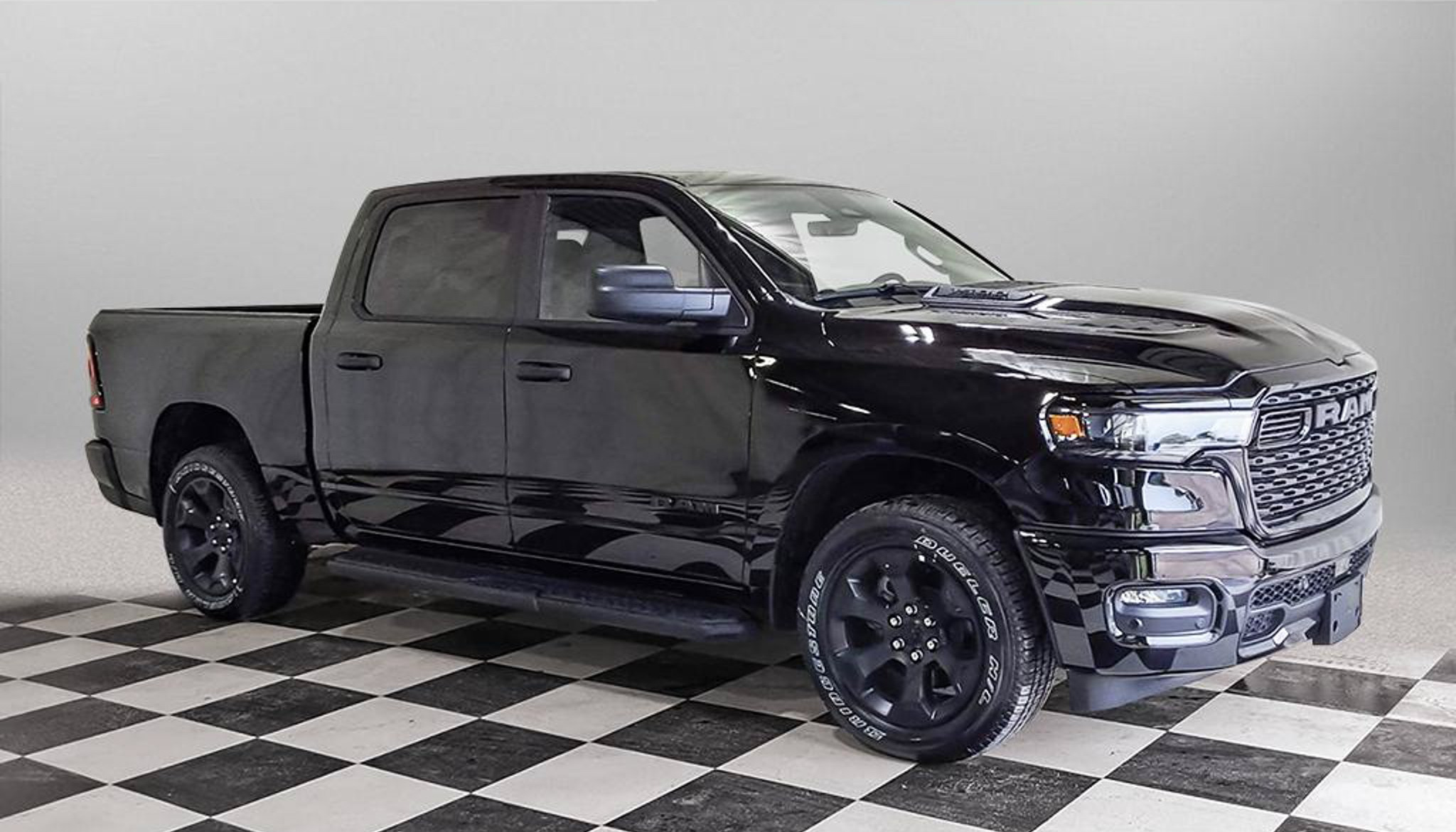
It usually starts small. The truck shivers at the light on Saskatchewan Avenue, just once, then settles. A week later it hesitates as you pull a loaded trailer up the ramp onto Highway 1, a quick stutter under your right foot that was not there in the summer. Nothing on the dash yet. You tell yourself it is the cold, or the fuel, or nothing.
That stutter has a name, and on a HEMI V8 it is worth taking seriously early. A misfire is a cylinder that did not burn its fuel properly on one or more power strokes, and the engine is very good at telling you about it long before it quits. If yours has started, the cheapest version of this repair is the one you book into our service department while it is still a stumble instead of a tow. Here is how to read what the truck is telling you.
Key Takeaways
- A misfire feels different at idle than under load. A shake at a stoplight and a hesitation while towing can be the same problem showing up in two places, or two different problems. Where and when it happens is useful information for the tech.
- The usual causes come in a known order. An ignition coil and the spark plugs are the most common. A fuel injector comes next. A mechanical concern inside the engine is less common and is a different, longer conversation.
- A flashing check engine light means pull over. A steady light says get it looked at soon. A flashing one says the misfire is severe enough to damage the catalytic converter, and that is a much bigger bill than a coil.
- A code names a cylinder, not a part. The scan tool can tell us which cylinder is misfiring. Finding out why is the diagnosis, and swapping parts until it stops is the expensive way to do it.
- Never guess at a recall from a forum. Whether your truck has an open recall or service action is a VIN lookup, not a rumour.
What a Misfire Actually Feels Like

Owners describe misfires in a lot of different ways, and all of them are right. These are the versions we hear most at the service desk.

A shake at idle. The truck sits at a light and you feel a rhythmic shudder through the seat and the steering wheel. Sometimes the exhaust note goes uneven, a little lumpy instead of a steady burble.
A stumble under load. Empty around town it feels fine. Hook up a trailer, or climb a grade with a full box, and the engine hesitates or bucks as you press the pedal. Load raises the pressure inside each cylinder, which makes a weak spark or a lazy injector show up much sooner.
A hesitation when you accelerate. Pulling out to pass on a two lane highway, the power comes on with a stutter instead of a smooth pull.

A slower cold start. On a minus 25 morning the engine catches, stumbles for a few seconds, then smooths out. Cold makes every weak part of the ignition system work harder.
Fuel economy drifting. Easy to miss, because a headwind or a box full of tools does the same thing. But a cylinder that is not burning its fuel is still being fed.
None of these on their own proves a misfire. Several of them together, especially with a check engine light, usually do.
The Honest Order of Causes
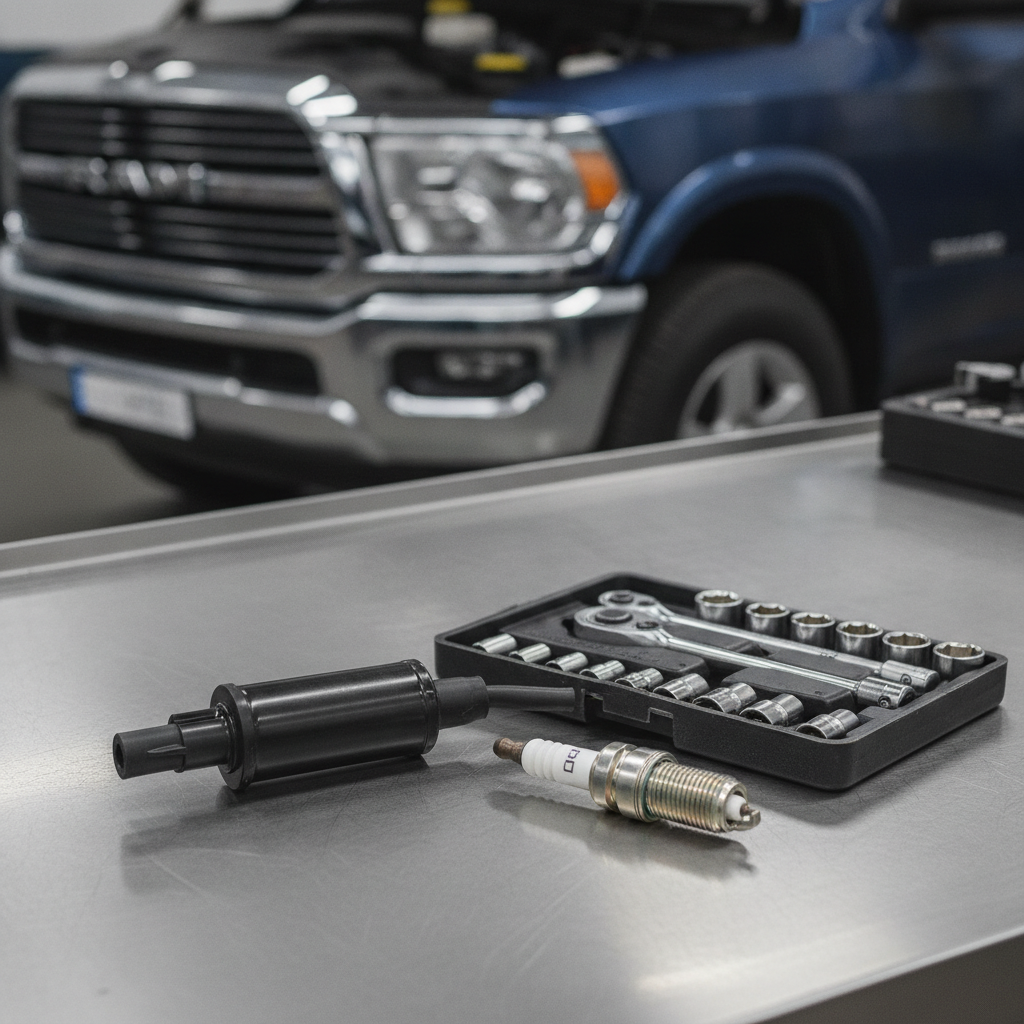
A misfire has a short list of usual suspects, and a good diagnosis works through them in a sensible order rather than starting with the most expensive part.
1. Ignition coils. A coil turns battery voltage into the high voltage that jumps a spark plug gap. Coils live on top of a hot engine through years of heat cycles, and on a prairie truck through a lot of very cold starts too. A coil that is breaking down often misfires under load first, which is why the trailer is where many owners first feel it.
2. Spark plugs. A HEMI V8 runs two plugs per cylinder, and worn plugs make the coil work harder to fire them. A tired set is a very common root cause, and it often takes a coil down with it. Our post on HEMI spark plug replacement explains why there are sixteen of them and when the published schedule says they come due.
3. Fuel injectors. An injector that is clogged, leaking or electrically failing starves or floods one cylinder. It can look very much like an ignition misfire on a code reader, which is exactly why a code alone is not a diagnosis.
4. Vacuum leaks and sensors. A cracked intake hose or a leaking gasket can lean out a cylinder or a whole bank. These tend to show up more at idle than under load.
5. A mechanical concern inside the engine. Low compression in a cylinder, or a valvetrain problem, can also cause a misfire. When a misfire comes with a new ticking or tapping noise, or will not move no matter which coil sits on that cylinder, the diagnosis shifts to the inside of the engine. That is a different, longer conversation, and not one anybody should have with you from a blog post or a forum thread. It needs the truck on a hoist and proper testing.
Steady Light or Flashing Light: Why It Matters
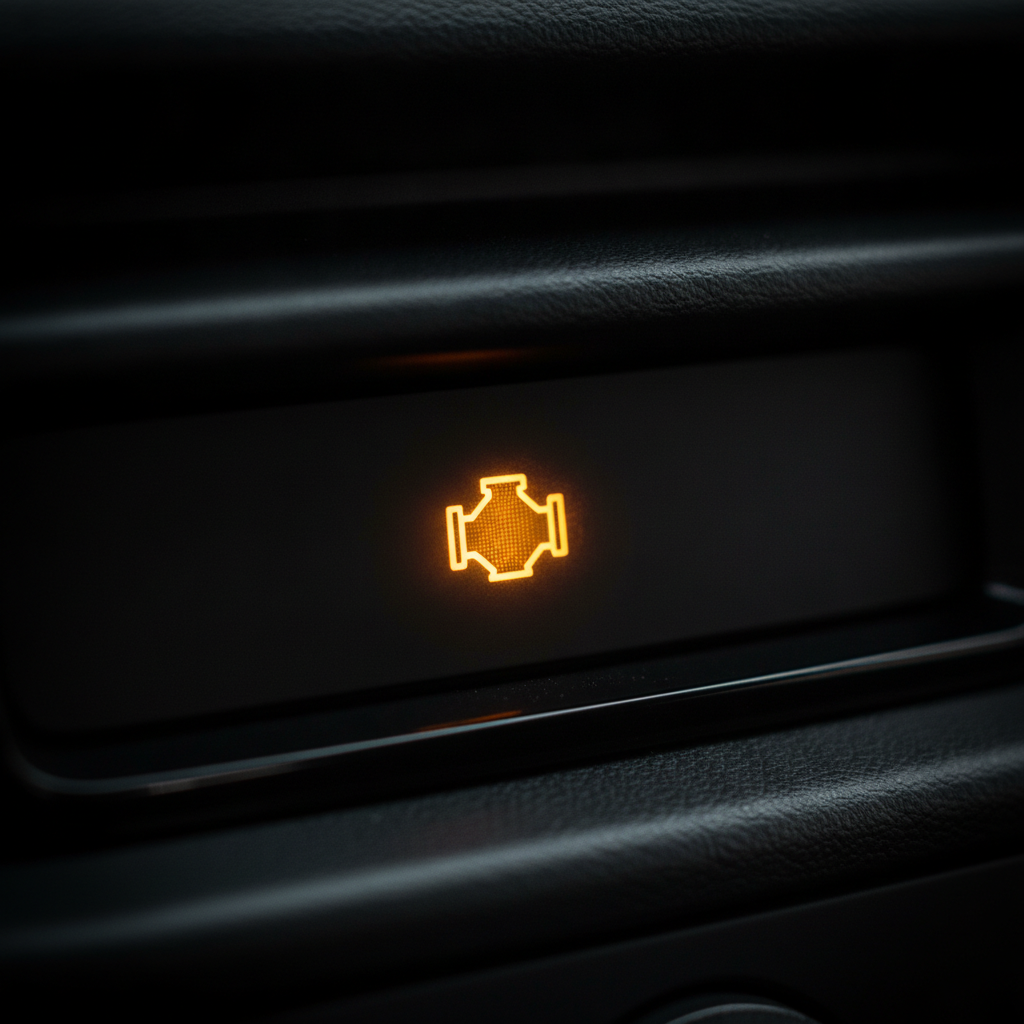
This is the single most important thing in this post.
A steady check engine light means the engine computer has stored a fault. With a misfire, it means the misfires have been counted and logged. Drive gently, avoid heavy towing, and get it booked soon.
A flashing check engine light means the misfire is active and severe enough to damage the catalytic converter. Unburned fuel is being pushed into a converter that runs extremely hot, and it can overheat and fail. A converter costs far more than a coil or a set of plugs. Get off the highway when it is safe, keep the load off the engine, and call us. If it is flashing, do not tow home with it.
Our explainer on what a check engine light actually means covers the other things that light can be telling you.
What Our Scan Tool Tells Us, and What It Does Not
A basic code reader will usually show a general misfire code, or a code that names a specific cylinder. That is genuinely useful. It turns a whole engine into one cylinder.
What it does not tell you is why. A cylinder four misfire could be the coil, either plug, the injector, a wiring connector, or something mechanical. Our techs use the dealer scan tool to look at live misfire counts cylinder by cylinder, watch when the misfires happen (cold, hot, idle, under load), and check fuel trim data. Then they test the suspect parts. A common and cheap check is moving a coil to another cylinder and seeing whether the misfire follows it.
That order is the difference between fixing it once and buying three parts to find the one that mattered. If you want to know what you are paying for when a truck comes in for this, our service centre page introduces the shop, and our post on checking recalls on your Ram or Jeep by VIN shows you how to look up anything open against your truck before you come in.
What You Can Do Before You Book

You do not need tools to make the diagnosis faster.
Note when it happens. Cold or warm. Idle, cruising or under load. Towing or empty. After a fill up, or every time.
Watch the light. Steady or flashing, and whether it comes and goes.
Take the load off. Until it is looked at, skip the heavy trailer. A misfire under load is the kind that does the most damage.
Do not clear the code and carry on. Clearing it with a borrowed reader wipes the data a tech would use, and the misfire is still there.
Tell us about any noise. A new tick or tap alongside the stumble changes where we start.
Then book it. Genuine coils, plugs and injectors come through our parts department, so the part that goes in is the part your engine was built for.
FAQs
What are the symptoms of a HEMI misfire?
A shake or rough idle at a stop, a stumble or hesitation under load or while towing, uneven acceleration, a slower cold start, drifting fuel economy, and usually a check engine light. Several of these together point strongly at a misfire.
Is it safe to drive a HEMI with a misfire?
If the check engine light is steady, drive gently and get it booked soon. If the light is flashing, the misfire is severe enough to damage the catalytic converter, so get off the road when it is safe, keep the load off the engine, and call a shop.
What is the most common cause of a HEMI misfire?
Ignition coils and worn spark plugs are the most common causes, followed by fuel injectors and vacuum leaks. A mechanical cause inside the engine is less common and needs proper testing on a hoist.
Can I just replace the coil on the cylinder the code names?
Sometimes that is the fix, but a code names a cylinder, not a part. The same code can come from a plug, an injector, wiring or a mechanical fault. Testing first saves buying parts you did not need.
Why does my HEMI only misfire when towing?
Towing raises the pressure inside each cylinder, which makes a weak coil or worn plug struggle to fire. That is why an ignition problem often shows up under load before it ever shows up at idle.
The Bottom Line
A HEMI rarely goes from running fine to broken in one day. It stumbles first, at idle or under load, and the check engine light usually follows. Read those early signs, keep the heavy loads off it, and treat a flashing light as a stop sign, because the catalytic converter is the part that turns a coil job into a big bill.
The fix is a proper diagnosis in the right order, not a guess. Book your truck in with our service department and tell us when it happens. And if your truck has reached the point where the repair list is getting long, have a look at our new Ram 1500 inventory and we will give you the straight math on repair versus replace.