You notice it the first time you bring a loaded fifth wheel down a long hill. The trailer pushes, the speed creeps up, and you ride the brake pedal harder than you would like. Maybe you smell the brakes at the bottom. Most of Manitoba is flat, but the drop into the Assiniboine valley, the Pembina Valley crossing and the Riding Mountain escarpment are real grades, and the summer trip west to the mountains is a long lesson in heat and brake pads.
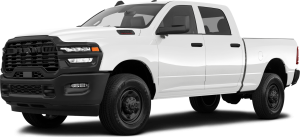
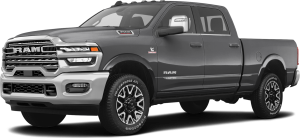
That is the job the exhaust brake on a Ram Heavy Duty with the Cummins was built for. If you are shopping for a diesel that tows, our new Ram 2500 inventory is online, and if yours does not feel like it is braking the way it used to, book it in with our service department. Here is how the system works and how to use it well.
Key Takeaways
- The exhaust brake slows the truck with the engine, not the brake pads. Ram describes it as negative, or braking, torque from the engine, and it works best at higher engine speeds.
- The Cummins uses its variable geometry turbocharger to do it. The turbo's vanes restrict exhaust flow, building backpressure that the engine has to work against.
- There are two modes. Full mode, with a yellow indicator, brakes aggressively to bring speed down. Smart mode, with a green indicator, brakes more smoothly to hold your speed on a descent.
- It works best with Tow/Haul. With the exhaust brake on, the transmission downshifts more aggressively in Tow/Haul, which keeps engine speed up where the braking is strongest.
- Switch it off on ice and slippery roads. Ram's own warning is clear that the extra engine braking can make the rear wheels slide. In a Manitoba winter, that is a real concern, not fine print.
What the Exhaust Brake Actually Is
When you lift off the accelerator in any truck, the engine resists being turned by the wheels. That is engine braking, and in a gas truck it is modest. A diesel does not have a throttle plate to create that resistance, so on its own it coasts more freely, which is exactly what you do not want with a heavy trailer behind you.
The exhaust brake adds that resistance back, and then some. On the current 6.7 litre Cummins, the variable geometry turbocharger has movable vanes inside the turbine housing. In normal driving those vanes adjust to make the turbo respond well at every engine speed. When the exhaust brake is working, the vanes close down and restrict the flow of exhaust leaving the engine. The pistons now have to push against that backpressure on every exhaust stroke, and that effort slows the truck.
Two things follow from how it works.
It is strongest at higher engine speed. More revolutions means more exhaust strokes pushing against the restriction. That is why the transmission's behaviour matters so much, which we will get to.

It is not a replacement for your brakes. It takes a big share of the work on a long descent so your service brakes stay cool and ready for the stop you actually need to make. You still need working trailer brakes and a properly set brake controller.
Turning It On and the Two Modes
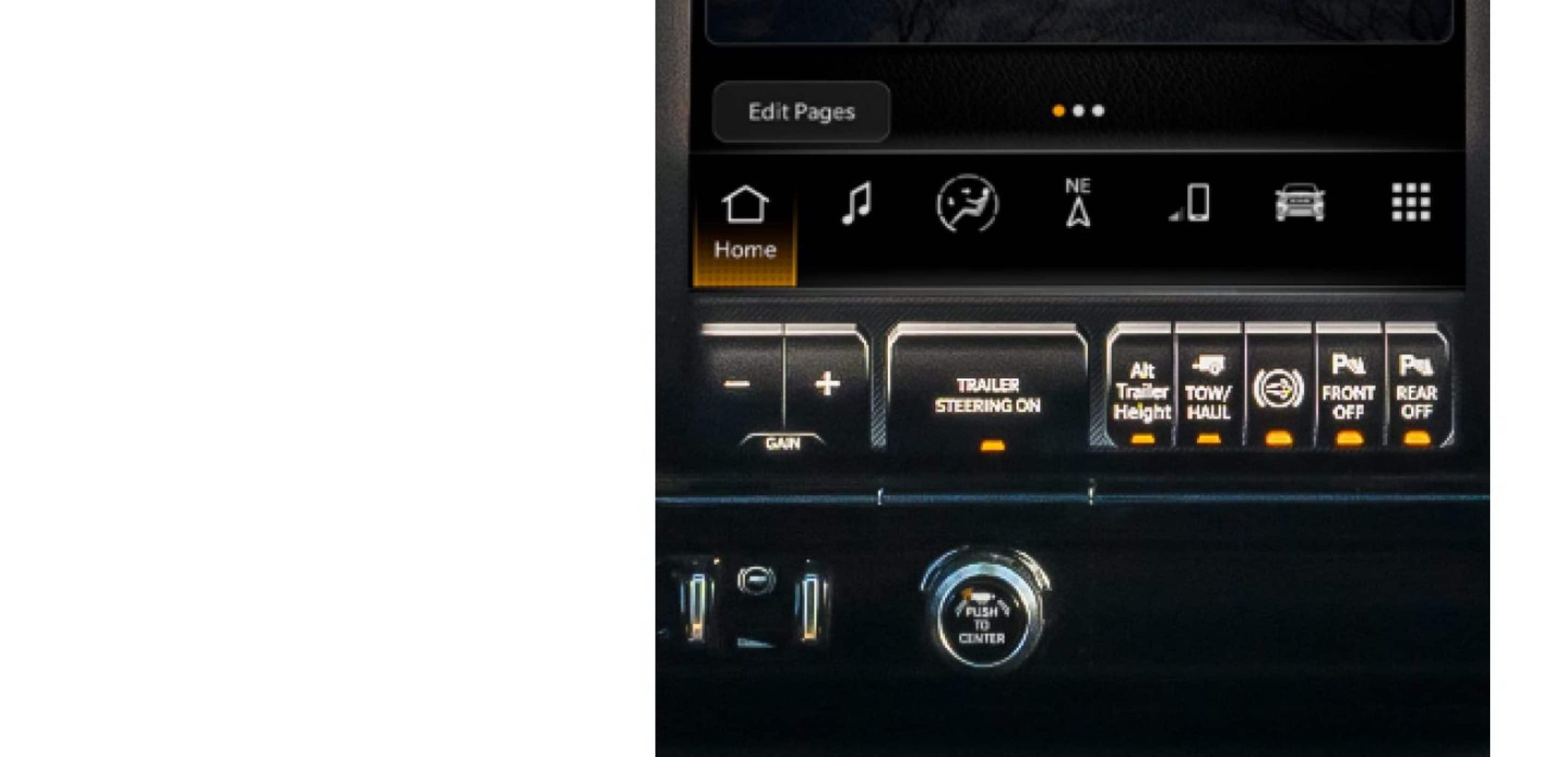
The exhaust brake has its own button. Press it once and the exhaust brake indicator lights up yellow. That is Full mode. Press it again and the indicator turns green. That is Smart mode. Once it is on, it engages on its own when the truck is moving and you take your foot off the accelerator.
Full mode (yellow) is the aggressive setting. It is meant to bring your speed down, and you will feel it the moment you lift. It is the right choice at the top of a long, steep grade with a heavy trailer.
Smart mode (green) is the calmer setting. It varies the braking to help hold your speed on a descent rather than hauling it down hard, and it can still apply full force when the situation needs it. For most everyday driving, and for rolling hills, Smart mode is the one owners live with.
Exhaust Brake vs Tow/Haul Mode
These two get confused, and they do different jobs.
Tow/Haul mode changes how the transmission shifts. It holds gears longer on the way up and downshifts on the way down so the truck is not hunting between gears with a load behind it.
The exhaust brake creates the braking force. It needs engine speed to work well.
Put them together and they multiply. Ram's own guidance is that the automatic transmission downshifts more aggressively in Tow/Haul when the exhaust brake is enabled, which keeps the engine turning faster on a descent, and that is where the exhaust brake is strongest. For optimum braking with a trailer, use both. If you tow regularly, our guide to Ram 2500 towing capacity is worth a read before you hook up something new.
What It Saves on a Loaded Prairie Descent
Picture a loaded stock trailer or a big fifth wheel coming down into a river valley. Without the exhaust brake, you control that speed with the brake pedal the whole way down. The pads and rotors heat up, and hot brakes lose grip. That is brake fade, and it arrives at the worst possible moment, near the bottom of the hill where you need to stop.
With the exhaust brake in Full mode and Tow/Haul selected, the truck holds a lower gear and the engine does most of the holding back. You touch the pedal to trim your speed instead of leaning on it. The brakes reach the bottom of the grade cool, and they last longer over the life of the truck. On a truck that tows every weekend, that shows up as fewer brake jobs, and on a mountain trip it shows up as a calmer drive.
Should You Leave It On in Town
There is no harm in running the exhaust brake around town, and plenty of owners leave it in Smart mode all the time. It is a comfort question more than a mechanical one.
Empty and in traffic, Full mode can feel abrupt. The truck slows hard every time you lift, which makes stop and go driving jerky. Smart mode is the better everyday setting, or leave it off and turn it on before a grade.
Towing in town, Smart mode is genuinely helpful. It takes some of the push out of the trailer as you come up to a light.
The One Time to Always Switch It Off

Ram's owner manual carries a clear warning: do not use the exhaust brake on icy or slippery roads. The extra engine braking goes through the rear wheels, and on ice it can make them lose grip and let the truck swing around, with a real risk of losing control.
That matters here more than most places. A Manitoba highway in December can go from bare pavement to glare ice in a kilometre. Make it a habit: on a slippery day, the exhaust brake goes off before you pull out, and it stays off. Our guide to towing in winter in Manitoba covers the rest of what changes when the roads turn.
Keeping It Working
The exhaust brake depends on the turbo's vanes moving freely, and a diesel's exhaust carries soot. If the braking feels weaker than it used to, or you notice changes in how the turbo responds, have it looked at rather than living with it. The same exhaust system feeds the diesel particulate filter, and our post on Cummins DPF regeneration explains how that side of the system cleans itself.
Our service centre works on Cummins Ram Heavy Duty trucks every week, so if something feels off, bring it in and tell us what you noticed and when.
FAQs
How does the Cummins exhaust brake work?
It uses the variable geometry turbocharger's vanes to restrict exhaust flow. The engine has to push against that backpressure, which creates braking force and slows the truck without using the brake pads.
What is the difference between Full and Smart exhaust brake modes?
Full mode, with a yellow indicator, brakes aggressively to bring speed down. Smart mode, with a green indicator, brakes more smoothly to hold your speed on a descent and can still apply full force when needed.
Should I use the exhaust brake with Tow/Haul mode?
Yes. With the exhaust brake enabled, the transmission downshifts more aggressively in Tow/Haul, keeping engine speed up where the exhaust brake works best.
Is it bad to leave the exhaust brake on all the time?
No, but Full mode can feel abrupt in traffic. Many owners leave it in Smart mode for daily driving. The exception is slippery roads, where it should be off.
Can I use the exhaust brake on snow or ice?
No. Ram warns that the extra engine braking can make the rear wheels slide on icy or slippery roads, which can lead to a loss of control.
The Bottom Line
The exhaust brake is one of the best reasons to tow with a Cummins. It lets the engine hold the truck and trailer back on a long descent, it keeps your brakes cool for the stop that matters, and paired with Tow/Haul it does the job remarkably well. Use Full mode for big grades, Smart mode for everyday driving, and switch it off every time the road turns slippery.
If yours is not braking the way it should, book your Ram Heavy Duty in with our service department. And if you are looking for a diesel to tow with, browse our new Ram 2500 inventory or step up to our new Ram 3500 inventory.