Almost every payload conversation we have starts the same way. Somebody has already bought the trailer, and now they are trying to work out whether the truck they own can legally carry the pin weight. The towing number was the one they shopped on. Payload is the one that actually decides it.
That is the trap in a nutshell, so here is the honest version of the Ram heavy duty payload picture: what Ram Canada publishes for the 2026 Ram 2500 and Ram 3500, why the Cummins diesel gives you back less payload than the gas engine, and how a fifth wheel quietly eats the number. If you are shopping the trucks themselves, our new Ram 2500 inventory is online and we can read the real payload sticker off any unit on the lot in Portage la Prairie.
Key Takeaways
- Ram Canada publishes 4,580 lb, or 2,077 kg, of maximum payload for the 2026 Ram 2500 with the 6.4L HEMI V8, and 3,590 lb, or 1,627 kg, with the High Output 6.7L Cummins turbo diesel.
- The diesel costs you roughly 990 lb of payload on a 2500. The engine, the emissions hardware and the heavier front end all weigh something, and every pound of that comes out of what you can carry. The diesel buys you torque and towing, not carrying capacity.
- The Ram 3500 is the payload truck. Ram Canada publishes 7,590 lb, or 3,443 kg, of maximum payload with the 6.4L HEMI V8. That is the figure that separates a 3500 from a 2500 far more clearly than the towing numbers do.
- A fifth wheel pin weight is payload, not towing. Industry towing guidance puts pin weight at roughly 15 to 25 percent of the loaded trailer weight, and all of it sits in your box. That is where a hauler runs out of truck without ever noticing.
- Every published number is for a base configuration. Ram states it plainly. Options, equipment, passengers and cargo all reduce it. The only number that governs your truck is the one on the door jamb sticker.
The Published Ram Canada Payload Numbers
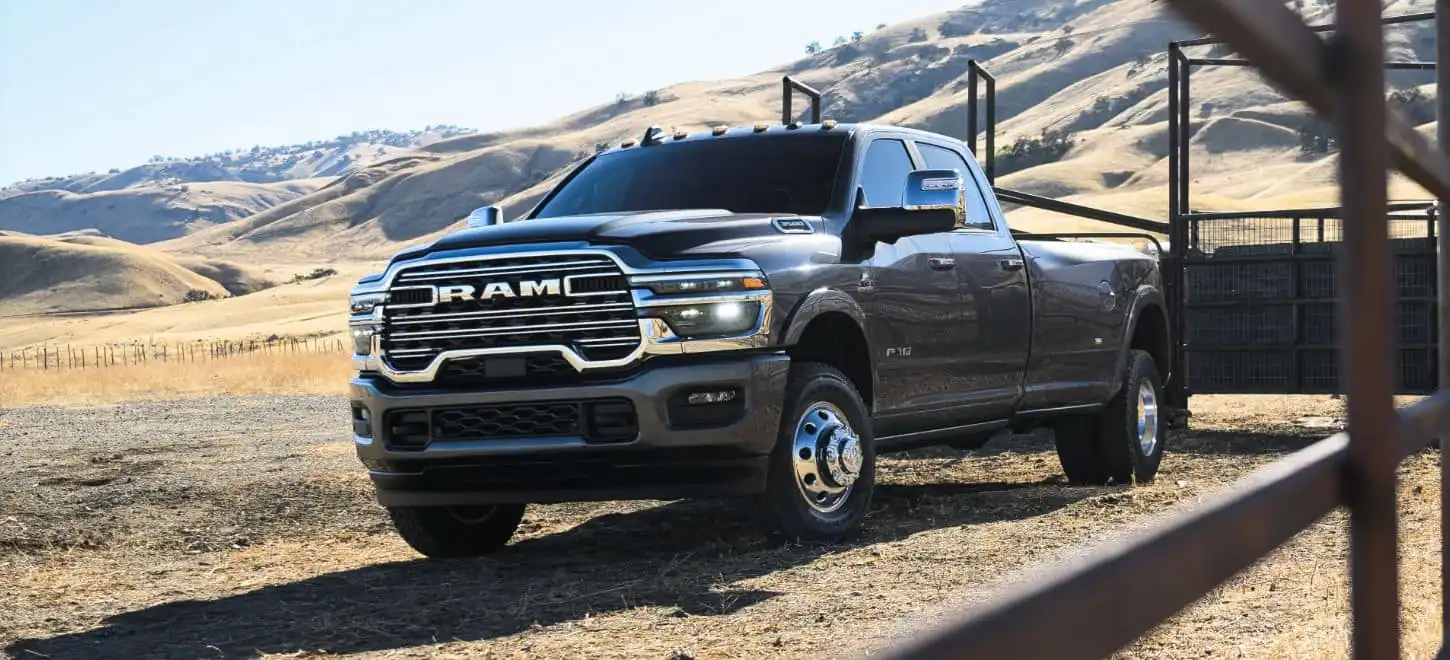
Here is what Ram Canada actually publishes for the 2026 heavy duty lineup. These are maximums for a base configuration, which matters enormously and we will come back to it.

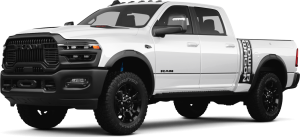
Ram 2500 with the 6.4L HEMI V8. Maximum payload 4,580 lb (2,077 kg). Maximum towing 17,440 lb (7,910 kg). The engine is rated at 405 horsepower and 429 lb ft of torque.
Ram 2500 with the High Output 6.7L Cummins turbo diesel. Maximum payload 3,590 lb (1,627 kg). Maximum towing 20,000 lb (9,071 kg). The engine is rated at 430 horsepower and 1,075 lb ft of torque, which Ram calls best in class base diesel torque.
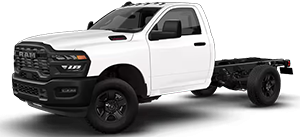
Ram 3500 with the 6.4L HEMI V8. Maximum payload 7,590 lb (3,443 kg). Maximum towing 18,150 lb (8,233 kg). Same 405 horsepower and 429 lb ft as the 2500.

Ram 3500 with the High Output Cummins. Maximum towing 36,610 lb (16,606 kg), which is the headline number of the whole lineup. Ram Canada's capability page publishes the towing figure but does not publish a maximum payload figure alongside it, so we are not going to print one. If a 3500 diesel payload number is what your decision turns on, we will pull it from the build sheet and the door jamb sticker on the actual truck rather than quoting you something we cannot stand behind.
Ram's own footnote on all of these is worth reading twice: max payload and towing ratings are shown for base configuration, and additional options, equipment, passengers and cargo weight affect them. A loaded Limited with a sunroof, a crew of four and a toolbox is not a base configuration.
Why the Diesel Costs You Payload
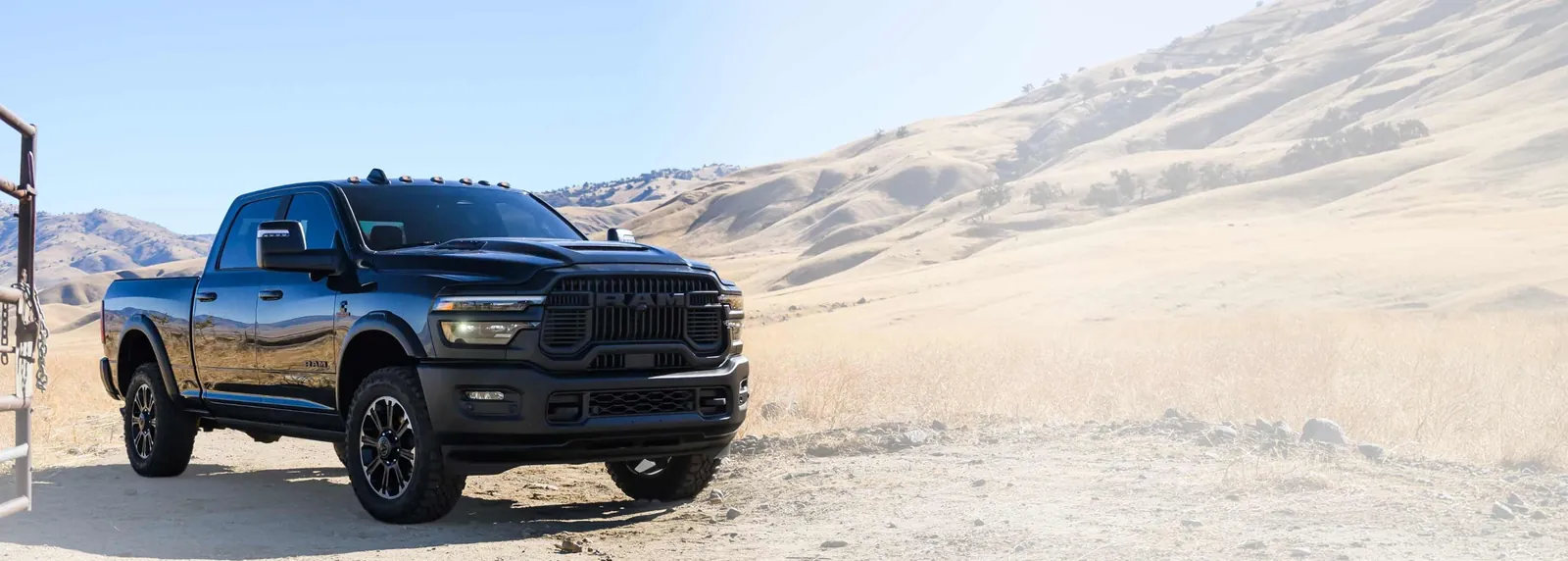
This one surprises people every single time, so it is worth saying plainly. On a Ram 2500, choosing the Cummins over the 6.4L HEMI costs you roughly 990 lb of published maximum payload.
The reason is not complicated. Payload is the difference between what the truck is rated to weigh fully loaded and what the truck already weighs empty. A turbo diesel inline six, its exhaust aftertreatment, the heavier front suspension underneath it and the larger cooling package all add curb weight. Every pound the truck carries for itself is a pound it cannot carry for you.
So the honest way to choose between them is by what you actually do.
The Cummins is the right call if you tow heavy and often. Twenty thousand pounds of conventional towing, 1,075 lb ft of torque and the engine braking on a long grade are a genuinely different experience with a big trailer behind you. If you are pulling a large stock trailer or an equipment trailer regularly, that is the truck.
The gas 6.4L is the right call if you carry heavy. A service body, a welding deck, a slide in camper, pallets of anything. Nearly a thousand extra pounds of payload is a lot of capability, and the HEMI is a simpler, cheaper truck to own if you are not putting on the kind of towing kilometres that pay the diesel back.
We go further into that comparison on its own in our Ram 2500 diesel versus gas post, and the Ram 2500 towing capacity breakdown covers the pulling half of this same decision.
The Fifth Wheel Problem Nobody Sees Coming
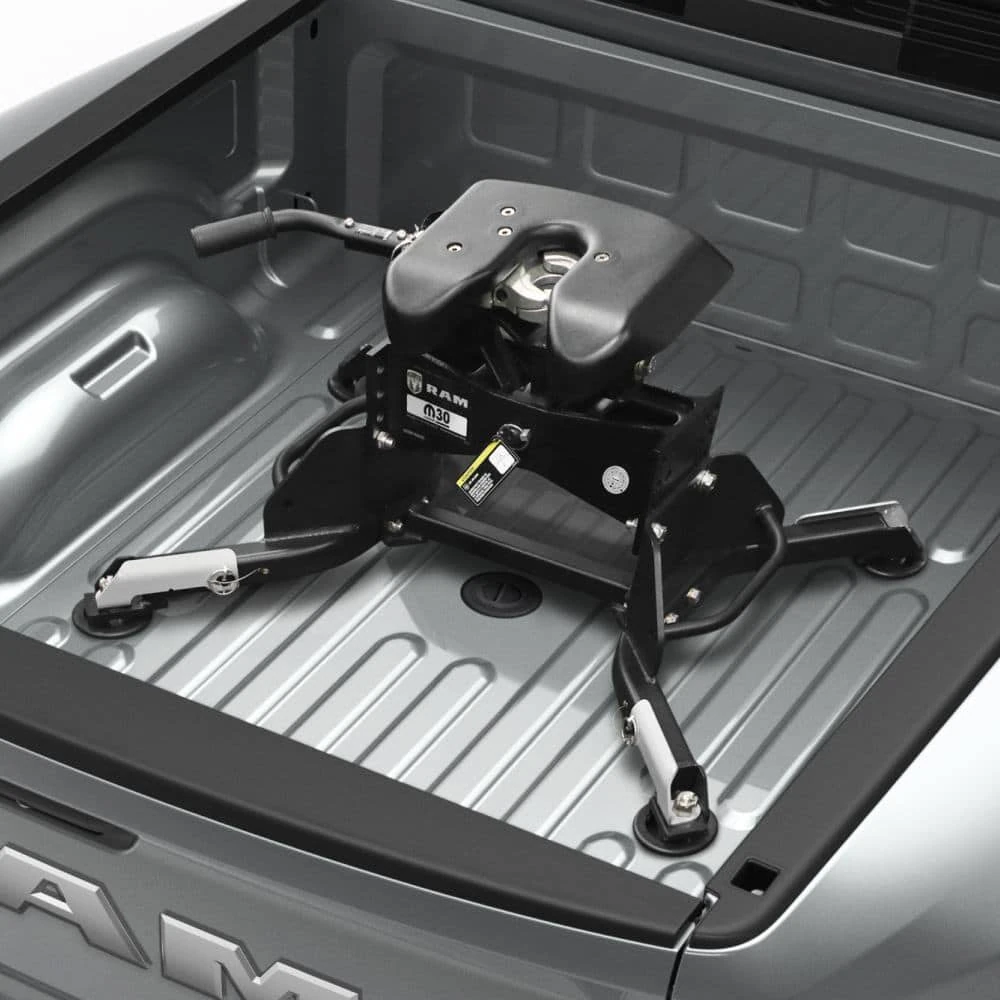
Here is the arithmetic that catches people out, and it catches out experienced haulers, not just first timers.
A conventional trailer puts its tongue weight on a hitch behind the rear axle. A fifth wheel or gooseneck puts its pin weight directly into the box, ahead of the rear axle. Standard towing guidance puts that pin weight at roughly 15 to 25 percent of the loaded trailer weight.
Run the numbers on a real prairie setup. A 14,000 lb loaded fifth wheel at 20 percent puts 2,800 lb of pin weight in your box. Add the hitch itself, which is commonly a few hundred pounds. Add four people, a full fuel tank, a generator and the gear that lives in the back seat of every farm truck. On a Cummins 2500 published at 3,590 lb of base payload, and less than that once you option it up, you are at or over the limit before you have hooked anything on.
That is the exact scenario where a 3500 stops being an upgrade and starts being the correct truck. The towing numbers between a 2500 and a 3500 are closer than people expect. The payload numbers are not close at all. If you are weighing the two, our Ram 2500 versus 3500 post walks the whole decision, and the dually question is its own separate call covered in Ram 3500 dually versus single rear wheel.
This is also worth saying, because it comes up: none of this is about being able to pull the trailer down a flat highway. Almost any heavy duty truck can do that on a good day. It is about being legal, being insured, and having the truck behave the way you need it to on a gravel shoulder in a crosswind with a loaded trailer pushing.
The Only Number That Governs Your Truck
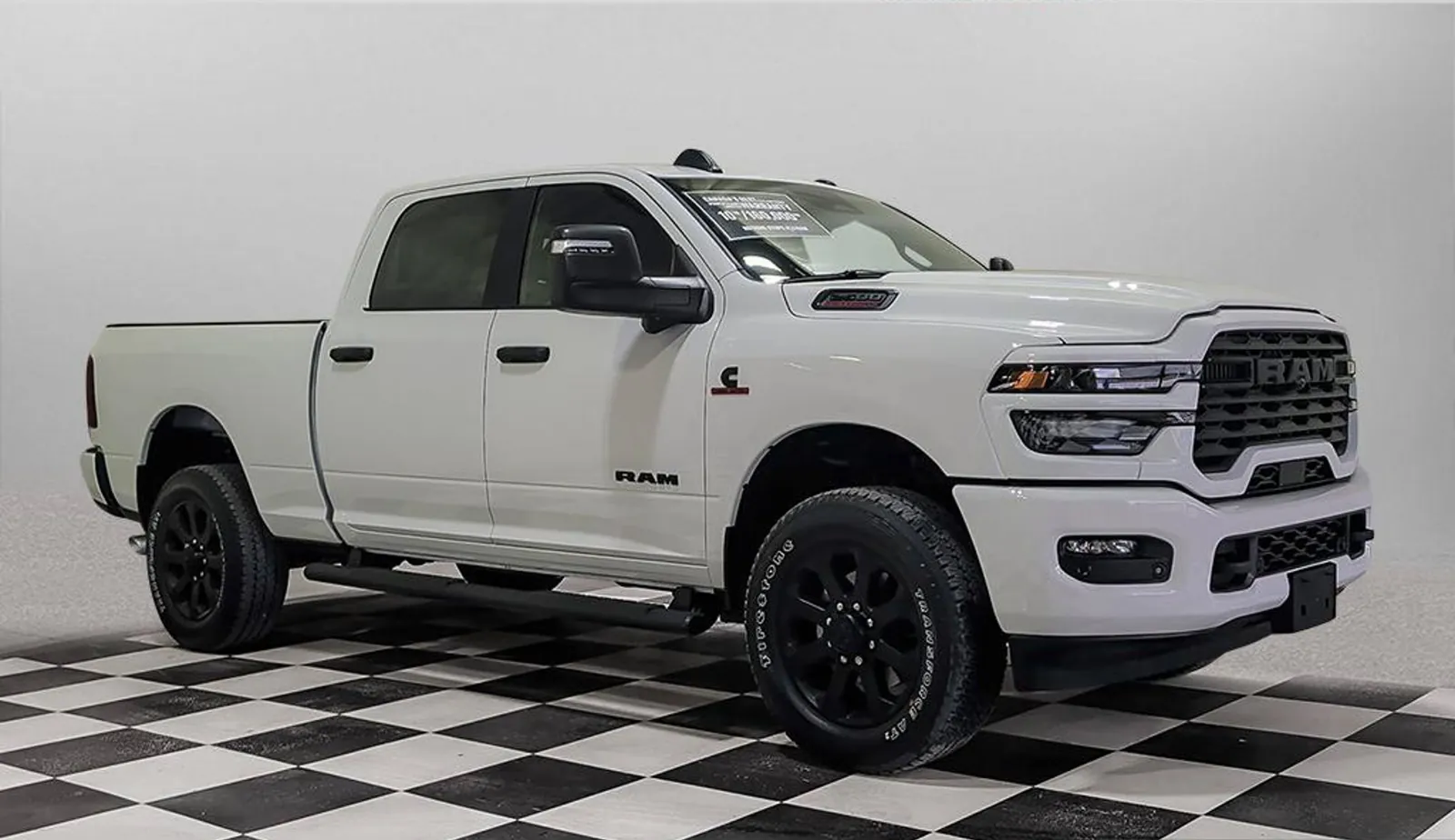
Every figure in this post is a published maximum for a base configuration. Your truck is not a base configuration.
The number that actually governs what you can legally carry is printed on the tire and loading information sticker inside the driver's door jamb, and it is specific to that one truck as it was built. It already accounts for the cab, the box, the axle, the engine and the factory options on that unit. It does not account for the aftermarket bumper, the headache rack or the toolbox you added afterward, so subtract those too.
Two minutes with a door open tells you more than a week of reading spec sheets. When someone brings a truck in and asks whether it can handle a trailer they are looking at, that is the first thing we do, before anyone talks about a trade.
And if your current truck has been carrying near its limit for a few seasons, get the brakes, suspension and rear axle looked at properly. Working a heavy duty truck at the top of its rating is exactly what it was built for, but it is also what wears it. You can book service with us and we will tell you what is honestly due and what can wait.
If a bigger truck turns out to be the right answer, start with our instant cash offer on your trade so you know your number before you shop, then walk the new Ram 3500 inventory and we will read the payload stickers together. Every new Ram we sell carries Dunn's Eh+ value stack, including the maintenance plan, anti theft protection, walkaway coverage and absolutely zero dealer fees, so the quote you get is the price you pay.
FAQs
What is the payload capacity of a Ram 2500?
Ram Canada publishes a maximum payload of 4,580 lb (2,077 kg) for the 2026 Ram 2500 with the 6.4L HEMI V8, and 3,590 lb (1,627 kg) with the High Output 6.7L Cummins turbo diesel. Both figures are for a base configuration, so options, passengers and equipment reduce them.
Why does the diesel Ram 2500 have less payload than the gas one?
Because payload is what is left over after the truck's own weight. The Cummins, its emissions hardware, the heavier front suspension and the bigger cooling package all add curb weight, and every pound of that comes out of your carrying capacity. The diesel trades payload for torque and towing.
What is the payload capacity of a Ram 3500?
Ram Canada publishes a maximum payload of 7,590 lb (3,443 kg) for the 2026 Ram 3500 with the 6.4L HEMI V8. Ram Canada publishes the 36,610 lb (16,606 kg) maximum towing figure for the High Output Cummins 3500 but does not publish a matching maximum payload figure, so ask us to confirm it from the build sheet and door jamb sticker on a specific truck.
Does fifth wheel pin weight count against payload?
Yes, all of it. Pin weight sits in the box, ahead of the rear axle, so it comes straight off your payload. Standard towing guidance puts pin weight at roughly 15 to 25 percent of the loaded trailer weight, and the hitch hardware itself adds a few hundred pounds on top.
Where do I find my truck's real payload number?
On the tire and loading information sticker inside the driver's door jamb. That figure is specific to your truck as it was built and it overrides any published lineup maximum. Subtract anything you added afterward, like a toolbox, a headache rack or an aftermarket bumper.
Do I need a 3500 or is a 2500 enough?
If your load is mostly behind the truck on a conventional hitch, a 2500 covers a lot of ground. If you run a fifth wheel or gooseneck, carry a slide in camper, or run a service body, payload is your limiting factor and the 3500 is usually the honest answer. Bring us the trailer weight and we will do the arithmetic with you.
The Bottom Line
The towing number sells the truck. The payload number decides whether it works. Ram Canada publishes 4,580 lb of maximum payload on a gas 2500, 3,590 lb on a Cummins 2500 and 7,590 lb on a gas 3500, all for base configurations, and your own door jamb sticker is the figure that counts.
Bring us the trailer you are actually planning to pull, or the deck you are planning to build. We will run the pin weight, read the sticker, and tell you straight whether the truck in our new Ram 2500 inventory is enough or whether you want the 3500. It is a better conversation to have before the trailer is in the yard.
Tyler Dunn, Dunn Ram Trucks, Portage la Prairie