
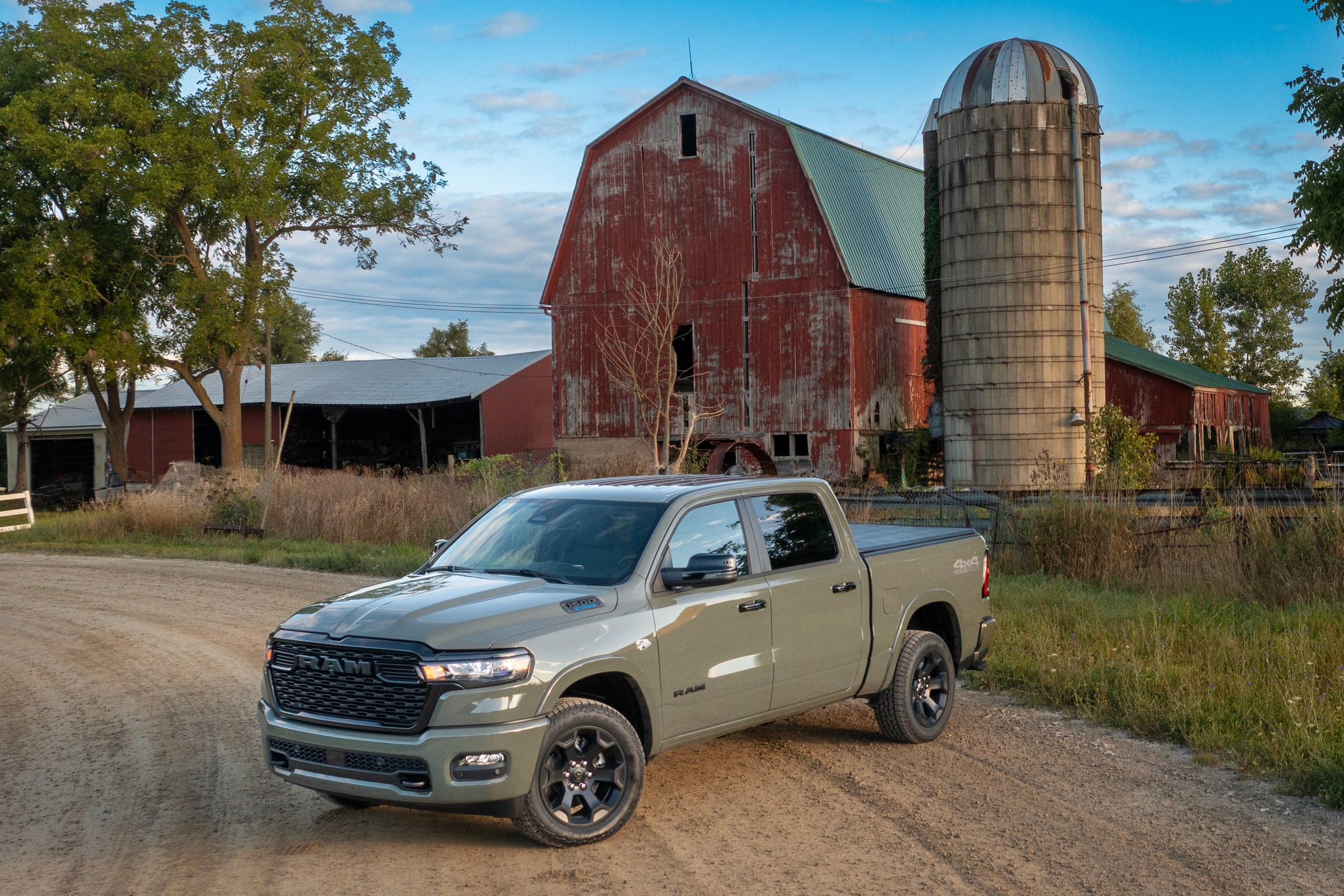
You backed out of the driveway and there it is: a dark spot on the concrete where the front of the truck sat. Maybe it is the size of a loonie. Maybe it is a puddle. Either way you want to know two things. What is it, and how worried should you be? The short answer on an oil leak under a truck: engine oil is light amber to dark brown and lands under the engine, and a few drops after a cold night are less urgent than a puddle after a drive. The spot on the driveway is telling you more than you think. If you would rather not guess, book an oil leak inspection with our service team.
Most of the time the spot can tell you a lot before anyone puts the truck on a hoist. Here is a simple driveway test, and the seals that usually turn out to be the cause. If the spot is growing, or you smell something burning after a drive, skip the reading and have our service centre look at it. Tell the advisor where the spot sits and what colour it is. That is half the diagnosis.
Key Takeaways
- Where the spot sits tells you which part of the truck it came from: front for the engine and cooling system, front or middle for the transmission, back of the engine for the rear main seal.
- Colour sorts the fluid: engine oil runs light amber to dark brown, transmission fluid is usually red, coolant is often green, orange, pink or blue, and plain clear water is usually AC condensate.
- A drip after a cold night and a puddle after a long drive point to different things, and a tech wants to know which one you have.
- The usual suspects: the valve cover gasket, the oil pan and drain plug, the oil filter housing on some engines, and the rear main seal.
- Do not ignore it into winter. Oil chews up a serpentine belt and can leave you with a stained, slippery garage floor by spring.
Step One: The Driveway Test
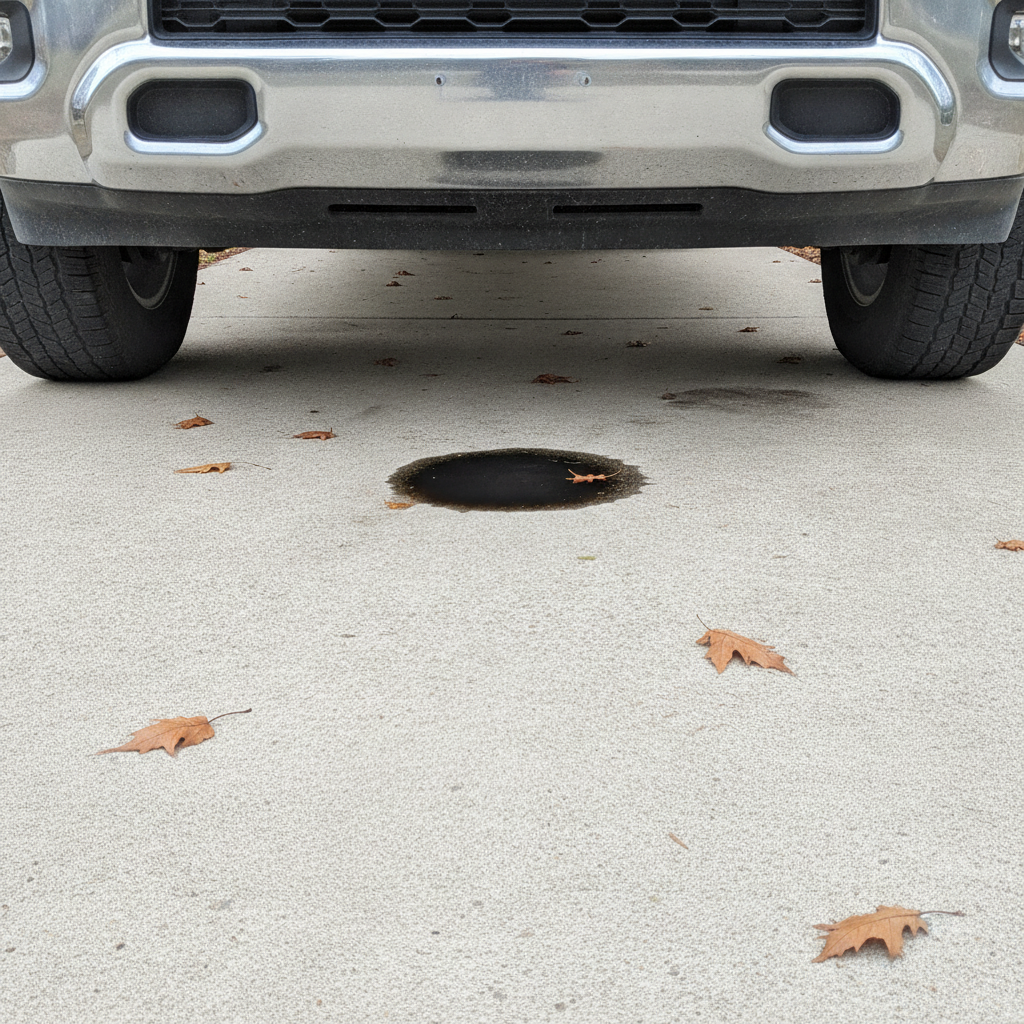
Park the truck where it usually sits, on a cool engine, and slide a piece of white cardboard or a few sheets of paper towel under the front half overnight. In the morning you have three clues.

Where it landed. Fel-Pro, the gasket maker, notes that transmission leaks tend to show near the front or middle of the vehicle. Engine oil and coolant usually land toward the front, under the engine. A drip right where the engine meets the transmission, roughly under the front seats on a pickup, makes a tech think about the rear main seal.
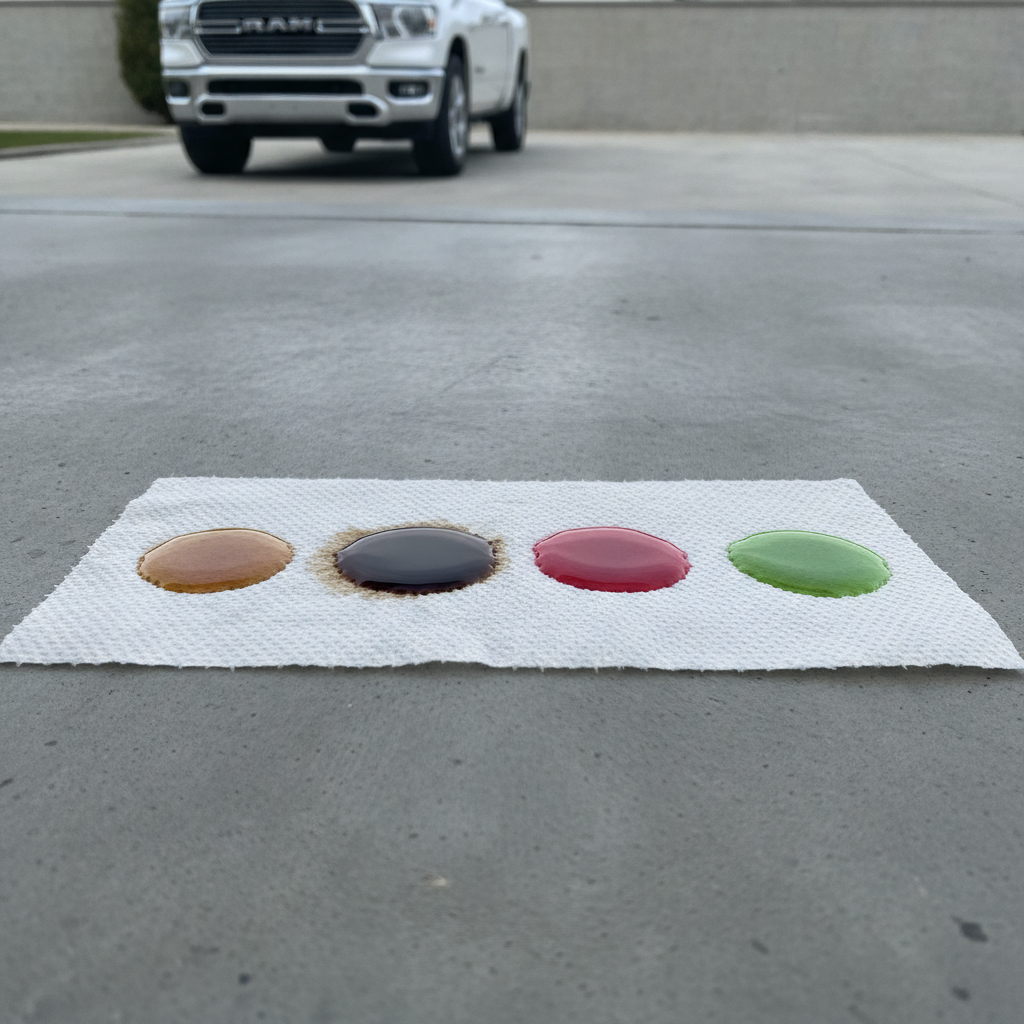
What colour it is. Dab a drop on the white paper:
- Light amber to dark brown, slick between your fingers: engine oil. Fel-Pro describes newer oil as light brown and older oil as dark brown.
- Red or reddish brown, thin and oily: most automatic transmission fluid is dyed red. It darkens as it ages.
- Often green, orange, pink or blue, a little watery, with a sweet smell: coolant. Coolant has a sweet smell you may notice after shutdown. It is toxic to pets, so wipe it up.
- Clear, no smell, feels like water: usually condensate from the air conditioning.
How much and when. A few drops after a cold night usually means a seal that seeps while the truck sits. A puddle after a long highway run, or fresh drips every time you shut it off hot, means oil is getting out under pressure and heat. That is the one to book sooner.

The Clear Water in Winter Is Usually Not a Leak
This one fools a lot of people in January. You run the defrost on the way to work, park, and find clear water dripping under the passenger side. In defrost mode many vehicles switch on the AC compressor to pull moisture out of the air before it hits the windshield, as Jalopnik explains. That moisture condenses on the evaporator and drains out under the truck, the same way it does on a hot July afternoon. Clear, odourless and no slick feel: leave it. On the coldest days the climate system may not run the compressor at all, so you may only see this on milder winter days.
Why the First Minus 20 Morning Shows a Leak
Plenty of trucks go all fall without a spot, then the first real cold snap arrives and there is a drip on the shop floor or the driveway. That is not your imagination. Rubber seals and gaskets harden and shrink a little in the cold, and Fel-Pro points out that on a cold start the oil, the metal and the gasket all warm up at different rates. A tired oil pan gasket can let go in the cold condition, the hot condition, or both. A seal that was just barely holding in September can open up enough to weep at minus 20.
It often slows down again once the engine warms up. That does not mean it fixed itself. It means the seal is on its way out and the cold found it first.
The Seals That Usually Leak
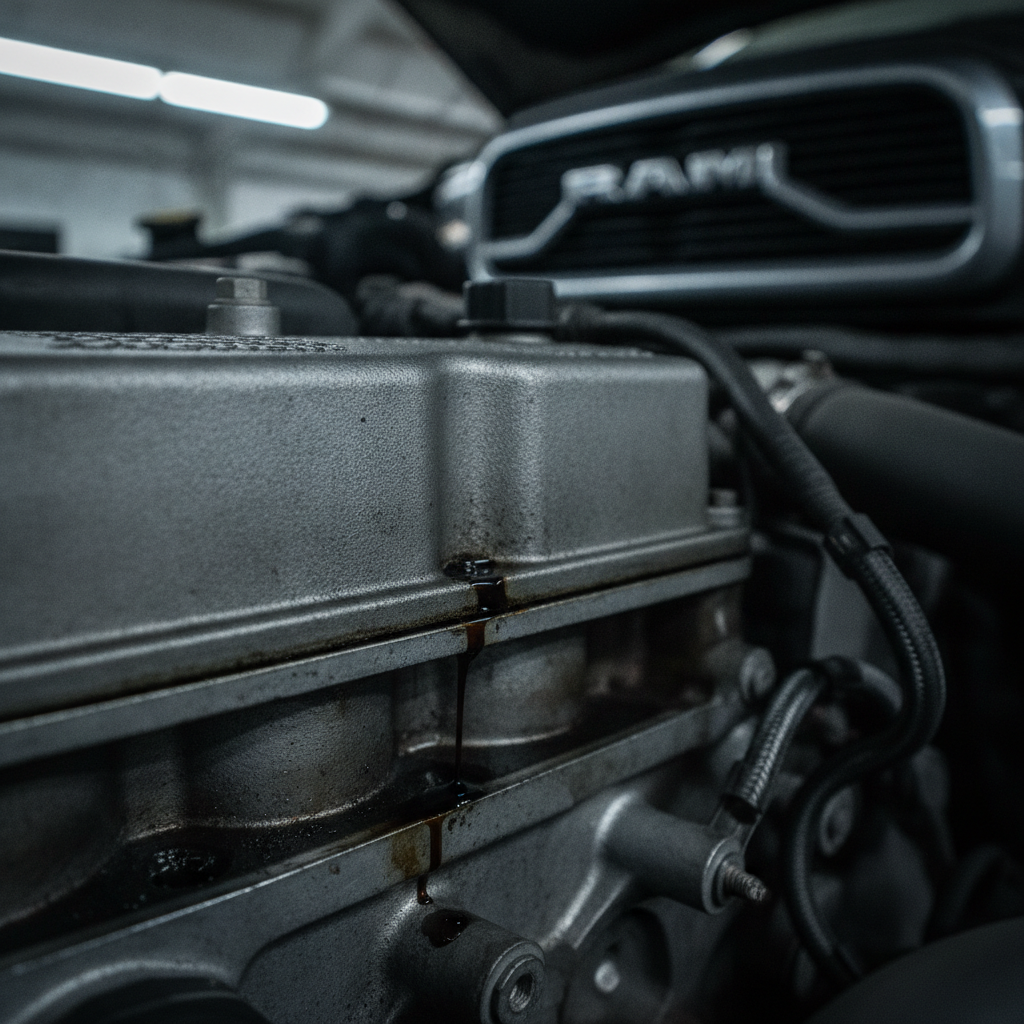
Which seal leaks first, and how it is replaced, depends on the engine, so the exact procedure always comes from the Stellantis service information for your VIN. Our service centre diagnoses and repairs engine seal and gasket leaks, and these are the usual suspects.
1. The drain plug and oil filter seat. Start with the simple stuff. A plug washer that was reused or a filter that is not sealing properly can drip right after an oil change. If the spot showed up within days of a service, look here first.
2. The valve cover gasket. The valve covers sit on top of the engine. When their gaskets harden, oil seeps down the side of the head. It may not even reach the ground. What you notice instead is a burning oil smell after a drive, because the oil is landing on the hot exhaust manifold.
3. The oil pan gasket. The pan sits at the bottom of the engine, so this leak drips straight down under the front of the truck. It is also the one that most often shows itself on that first cold morning.
4. The oil filter housing, on some engines. On some 3.6 litre Pentastar V6 engines, the plastic oil filter housing and cooler sits in the valley under the intake manifold. Chrysler issued Service Bulletin 09-008-15 for oil filter housing leakage on certain 2014 vehicles with this engine, and a technical tip from Mighty Auto Parts notes the valley can hold a fair amount of oil before any shows outside. So a leak here can be bigger than the spot suggests. A service bulletin is not a warranty. Ask our service team about your truck.
5. The rear main seal. This seal sits at the back of the crankshaft, between the engine and the transmission. A leak here drips from where the two meet, and it is often mistaken for a transmission leak until the fluid colour says otherwise.
If your engine is also running rough or shaking, that is a different conversation, and our post on Hemi misfire symptoms covers it.
The Honest Cost Ladder
We will not quote a number for a leak we have not seen. The repair grows with how deep into the engine the seal sits, not with the size of the spot. Here is the ladder from the bottom up:
- Plug washer or filter: a part worth very little, minutes of labour.
- Valve cover gasket: a gasket set, with the covers coming off the top of the engine. Some engines have more parts in the way than others.
- Oil pan gasket: the pan comes off, and on some trucks other parts underneath have to move first.
- Oil filter housing: the housing assembly, and on engines where it sits under the intake, the intake comes off to reach it.
- Rear main seal: the seal is small, but the transmission has to come out to reach it. That makes it the top of the ladder.
The same model can carry different engines, so ask our parts department for the gaskets that fit your VIN.
What a Leak Does Over a Winter
To the serpentine belt. Dayco, a belt maker, warns that motor oil and other petroleum fluids make a belt swell and get noisy, and that a belt soaked in oil should be replaced, not cleaned. A leak at the front of the engine that reaches the belt turns a gasket job into a gasket plus belt job. A squealing belt on a cold start can be the first clue.
To your garage floor. Oil soaks into concrete and stains it, and mixed with the salty slush that drips off a truck all winter it makes a slick patch right where you step out. A drip pan or a sheet of cardboard buys time. It does not fix the seal.
To your oil level. A slow leak over a winter of short trips can drop the level more than you think. Check the dipstick, and if you need to top up, our guide to Ram 1500 oil type and capacity has the right fill.
While You Are Under There: Check the Block Heater Cord
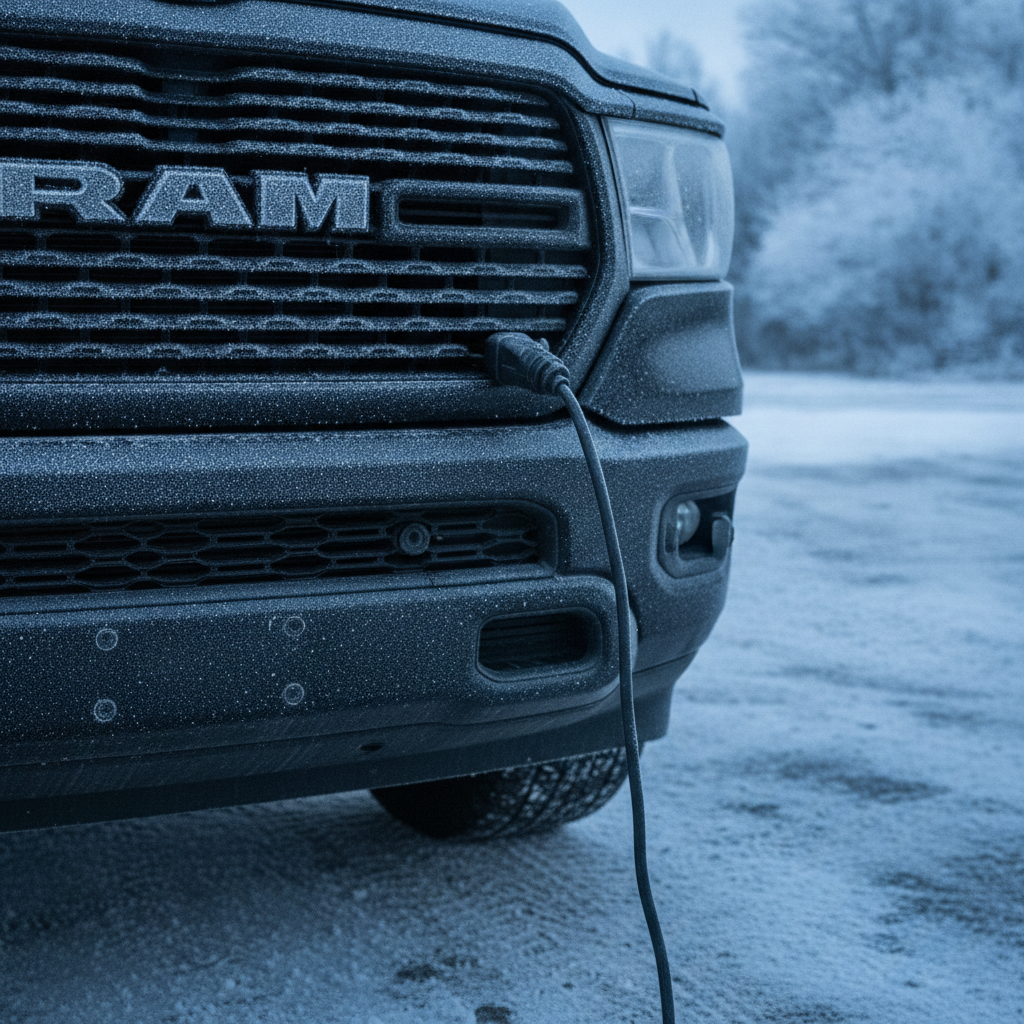
If you are already on your back with a flashlight looking for a leak, follow the block heater cord from the plug at the grille back toward the engine. Look for insulation that is cracked, chafed, melted where it passes near something hot, or shiny with oil. Oil is not kind to rubber, and a cord soaked by a leak above it is worth having us look at. If the cord looks fine but the heater still is not warming the engine, our post on a block heater not working walks through the rest.
FAQs
Is it safe to drive with an oil leak?
A few drops overnight is usually safe to drive while you book it in, as long as the oil level stays up. A puddle, a dropping dipstick, a burning smell or smoke from under the hood means stop and call us.
How do I know if it is oil or transmission fluid?
Colour and spot. Engine oil is amber to dark brown and usually lands under the engine. Transmission fluid is usually red and tends to land near the front or middle of the truck.
Why does my truck only leak in the winter?
Rubber seals harden and shrink a little in the cold. A tired gasket that held in the fall can start to weep on the first very cold morning.
Is clear water under my truck a problem?
Usually not. Clear, odourless water is normally AC condensate, which you can see in summer and on milder winter days when defrost runs the AC.
The Bottom Line
The spot is a clue, not a verdict. Where it sits and what colour it is tell you which system it came from. When it shows up tells a tech how bad the seal is. Catch it early and the fix is usually low on the ladder. Let it soak the belt and the floor all winter, and it climbs.
If yours has started marking the driveway, book an oil leak check in Portage la Prairie. Bring a photo of the spot, and our service team will diagnose where it is coming from.
Tyler Dunn, Dunn Ram Trucks, Portage la Prairie

























