Here is how to check tire pressure: with the tires cold, press a good quality gauge onto each valve stem, compare the reading with the pressure printed on the tire information label on the driver's door edge or door post, add air where it reads low, and do it at least once a month, spare included. That is Transport Canada's advice, and it matters more in Manitoba than almost anywhere, because cold air pulls pressure down. If one tire keeps reading low no matter how often you top it up, book a tire check with our service team in Portage la Prairie.
Here is the Manitoba part. Transport Canada says tires lose about 7 kPa (1 psi) for every 5 degrees Celsius the air cools. Fill a truck to the label in a 20 degree shop in the afternoon, park it outside on a minus 20 night, and by that rule of thumb it reads about 56 kPa (8 psi) lower by morning, without a single leak. The steps below work for any car, truck or SUV, and our guide to Ram 1500 tire pressure shows where the numbers live on a Ram.
Key Takeaways
- Check monthly and check cold. Transport Canada says to measure the pressure of every tire, spare included, at least once a month, and that a tire is cold when the vehicle has sat for at least three hours or been driven no more than 2 km.
- Use the number on the label, not the sidewall. Transport Canada says the recommended pressures are on the tire information label, usually on the edge of the driver's door, the door post, the glove box or the fuel door.
- A pocket gauge beats the pump. Transport Canada says pocket gauges from automotive supply stores are generally more accurate than the gauges on gas station air pumps.
- Cold weather lowers pressure. Transport Canada puts the loss at about 7 kPa (1 psi) for every 5 degree Celsius drop, plus about 14 kPa (2 psi) a month through the tire itself.
- The warning light is a backstop. A gauge tells you the pressure before the light ever comes on.
What You Need Before You Start
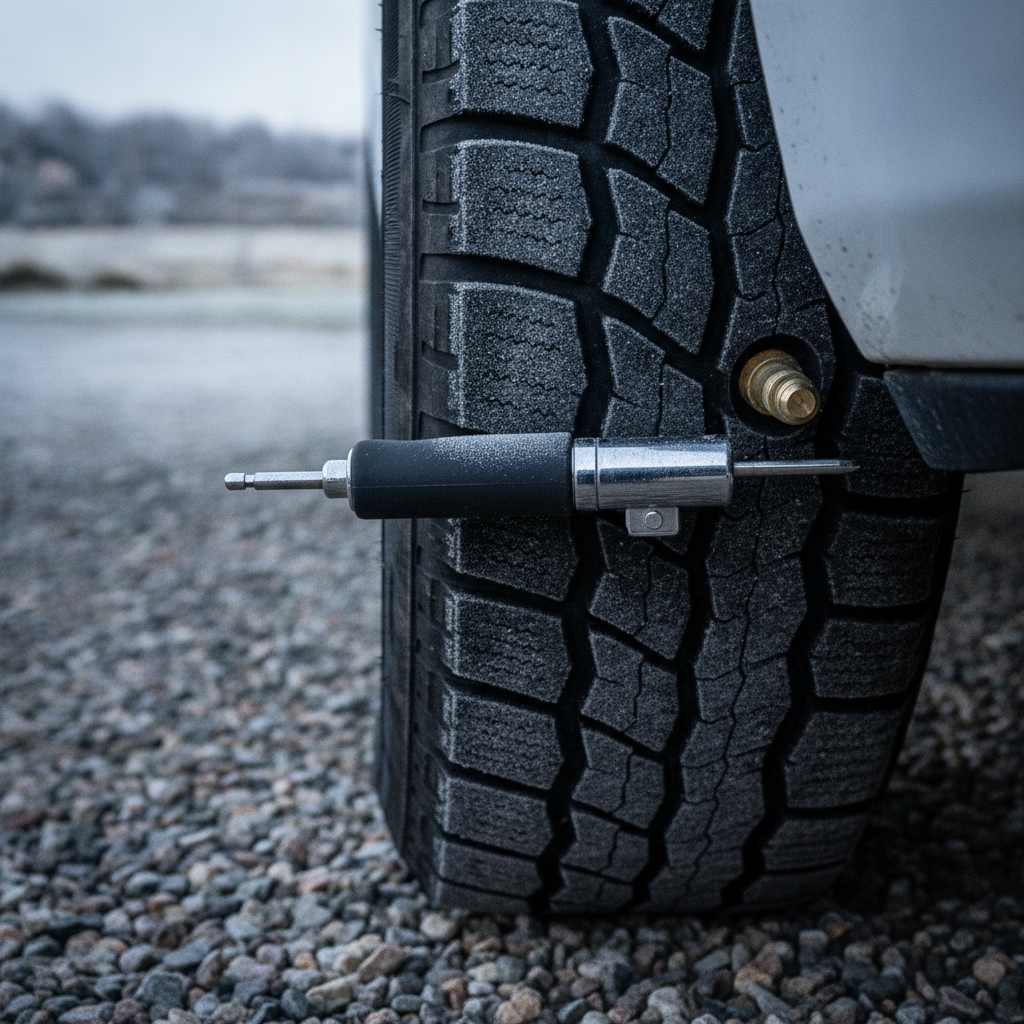
You need two things: a gauge you trust and a source of air.

A gauge. Transport Canada's advice is plain: the pocket gauges sold by automotive supply stores are generally more accurate than the ones on gas station air pumps. A dial gauge or a digital gauge does the same job. Keep it in the glove box and use the same one every time, so the readings can be compared month to month.
Air. A gas station pump works, and so does a small compressor at home. In January a home compressor in the garage is the more pleasant choice, but either one does the job.
Step 1: Find Your Pressure on the Tire Information Label
Open the driver's door and look at the edge of the door and the door post. Transport Canada says the recommended pressures are printed on the vehicle's tire information label, which is usually attached to the edge of the driver's door, the door post, the glove box or the fuel door.

The number moulded into the tire's sidewall is something different. That figure is the most the tire itself can hold, not the pressure your vehicle is set up to run, so leave it out of the decision.
On a pickup the label often gives one pressure for the front tires and another for the rear, and it lists the tire size the numbers apply to. If your truck is on a different size than the one on the label, ask our service team before you pick a number. For the figures on our own trucks, our guide to Ram 1500 tire pressure in PSI walks through where they sit and why they differ by configuration.
Step 2: Check When the Tires Are Cold
Driving warms the air in a tire and raises the reading, so a check after a run into town gives a number that looks better than it is. Transport Canada defines cold this way: the tires are cold if the vehicle has been stationary for at least three hours or has not been driven more than 2 km.
In practice, first thing in the morning before you leave the yard is the best time. If the nearest air is down the road, note the cold readings at home first, so you know how much each tire needs once you get to the pump.
A heated garage changes the picture. Transport Canada's definition is about driving, not the temperature of the room the truck sat in. Its own rule of 7 kPa (1 psi) for every 5 degrees means a tire set to the label in a warm garage will read lower once the truck has spent a winter day outside. Our advice: if your truck lives in a heated garage, check it again after it has sat outside in the cold, and top it up to the label then.
Step 3: Read Each Tire, Spare Included
Take the cap off the valve stem and keep it somewhere you will not drop it in the snow. Press the gauge squarely onto the stem until the hiss stops, then read it. A hiss that keeps going means the gauge is not seated, so press it on again.
Write each reading down, tire by tire. Then do the spare. Transport Canada includes the spare in its monthly check, and on a pickup it usually hangs under the bed, where it is easy to forget until the day you need it on a gravel road outside Gladstone. If you cannot reach its valve stem easily, check it next time the truck is in for service.
Step 4: Add Air and Check Again
Add air in short bursts, then read the tire again. It is easy to overshoot with a strong compressor. If you go past the label, press the small pin in the centre of the valve stem briefly to let a little out, then check again. Put every cap back on: the caps keep grit and moisture out of the valve.
When all four tires and the spare match the label, you are done for the month.
Why the Pressure Drops Between Checks
Two things take pressure out of a tire that has nothing wrong with it, and Transport Canada puts a number on both:
- Cold air. Tires lose pressure as the air gets colder, about 7 kPa or 1 psi for every 5 degree Celsius drop.
- The tire itself. Tires may also lose some pressure through their permeability, about 14 kPa or 2 psi a month.
Put those together across a Manitoba fall. A truck last filled in a warm September and not checked until the first minus 25 morning in December can be well under its label without a nail anywhere near it.
Low pressure costs you in ways you do not see on the first day. Transport Canada says underinflation increases rolling resistance, which reduces tread life and increases fuel consumption, and that it can also lead to sudden tire failure. On a loaded truck on a cold highway, that last one is the reason to own a gauge.
What the Warning Light Does and Does Not Tell You
Most newer trucks, SUVs and cars carry a tire pressure monitoring system with a warning light on the dash. It is a useful backstop, but it is not a gauge. It is there to tell you a tire has dropped well below where it should be, and by the time it comes on the tire has already been running low.
A monthly check with your own gauge catches the slow loss before the light does. If the light comes on during the first cold snap of the season, our post on why the tire pressure light comes on in cold weather explains what is happening and what to do about it.
When a Tire Keeps Losing Air
If one tire is low every time you check while the other three hold steady, the cold is not the reason. A slow leak at a nail, the bead or the valve stem is the usual suspect, and it is worth finding before it leaves you on the shoulder of the Trans-Canada Highway. Our service department supplies and installs new tires and does seasonal tire changeovers, and you can book a tire check or a changeover online.
If you are buying winter tires this season, we are a participating retailer in the MPI Winter Tire Program. As of October 1, 2026 the program covers tires marketed solely as winter tires; all weather and all season tires no longer qualify, even with the mountain snowflake mark. Manitoba Public Insurance sets who is eligible, and our guide to the MPI Winter Tire Program explains how it works.
FAQs
How do I check tire pressure?
With the tires cold, press a good gauge onto each valve stem, read it, and compare the reading with the pressure on the tire information label, usually on the edge of the driver's door or the door post. Add air to any tire that reads low, check it again, and include the spare. Transport Canada recommends doing this at least once a month.
How often should I check my tire pressure?
At least once a month, spare included, which is Transport Canada's recommendation. In Manitoba it is worth an extra check after the first real cold snap of the fall, because Transport Canada says tires lose about 7 kPa (1 psi) for every 5 degree Celsius drop in air temperature.
Should I check tire pressure hot or cold?
Cold. Transport Canada says tires are cold if the vehicle has been stationary for at least three hours or has not been driven more than 2 km. A reading taken after a drive is higher than the true cold pressure.
Where do I find the right tire pressure for my vehicle?
On the tire information label. Transport Canada says it is usually attached to the edge of the driver's door, the door post, the glove box or the fuel door. The number on the tire's sidewall is the tire's maximum, not the pressure your vehicle is set to run.
Why is my tire pressure low in cold weather?
Because cold air takes up less room. Transport Canada says tires lose about 7 kPa (1 psi) for every 5 degree Celsius drop in temperature, so a big overnight drop can lower every tire at once with no leak at all. Top them up to the label when they are cold.
Are gas station air gauges accurate?
Not always. Transport Canada says the pocket gauges sold by automotive supply stores are generally more accurate than those on gas station air pumps, so use your own gauge to read the tire even when you fill it at the pump.
The Bottom Line
Knowing how to check tire pressure comes down to four habits: check cold, use your own gauge, match the tire information label, and do it every month with the spare included. In Manitoba, add one more check after the first hard frost, because the cold alone pulls pressure down.
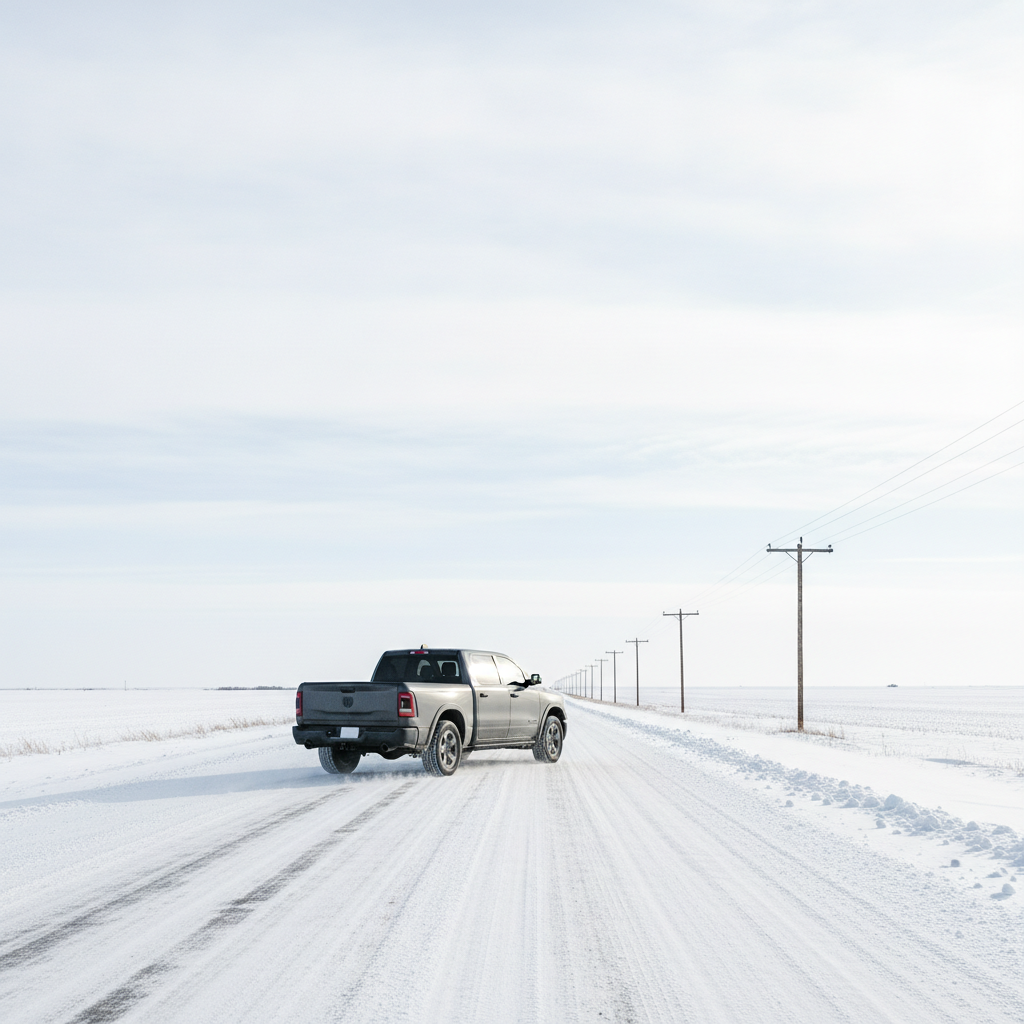
If a tire will not hold its pressure, or it is time to swap to winter tires, book it with our service team. And if your truck is due for more than tires, you can browse our new Ram 1500 inventory from anywhere in Manitoba.
Tyler Dunn, Dunn Ram Trucks, Portage la Prairie