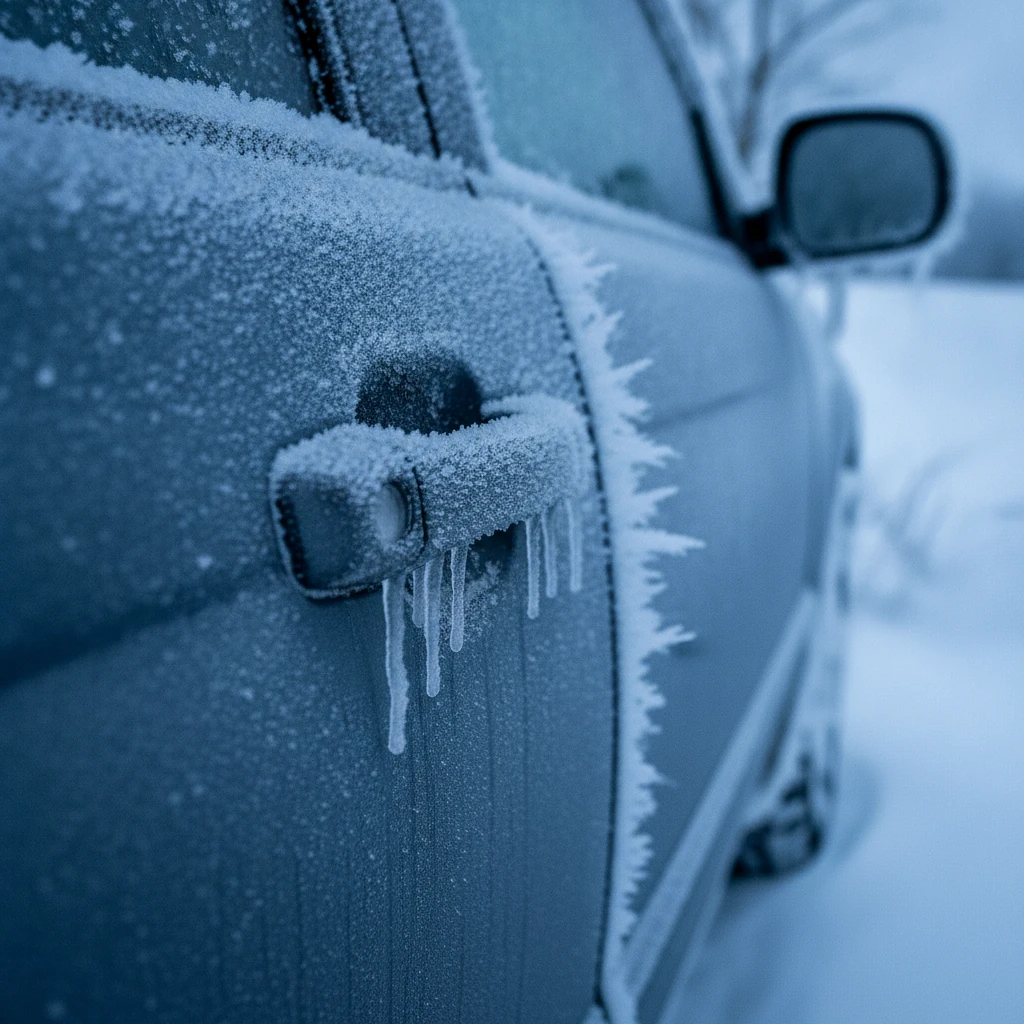
You are already running late, you grab the handle, and the door will not budge. Or it opens but the lock will not turn, or the whole door is sealed shut by a rubber gasket frozen to the frame. Every Manitoban has stood in their driveway at 30 below having this exact fight with their vehicle. The wrong move here can crack a handle, tear a door seal, or snap a key off in the lock, so it is worth knowing the right way before you are standing out there with your breath fogging and a meeting to get to.
This is the prairie tested version. How to safely get into a frozen door, how to thaw a frozen lock without wrecking it, what absolutely not to do, and the simple habits that keep it from happening at all.
Key Takeaways
- Do not force a frozen door or yank the handle hard. Frozen plastic and rubber are brittle. Pulling hard can snap a handle clean off or tear the rubber door seal, turning a minor freeze into a real repair.
- The usual culprit is the rubber door seal frozen to the frame, not the door mechanism itself. Breaking that ice bond gently is the whole job.
- For a frozen lock, warm the key, never pour hot water on the vehicle. Hot water on frozen glass or metal can crack it, and it refreezes worse than before.
- Lock deicer is the right tool and costs a couple of dollars. Keep a bottle at home and one in your bag or office, never only inside the locked vehicle.
- Prevention is easier than the fix. A little silicone or a proper protectant on the door seals in the fall, and keeping the gaskets clean, stops most frozen doors before they start.
Why Car Doors and Locks Freeze Shut
Understanding why it happens tells you how to fix it without breaking anything.

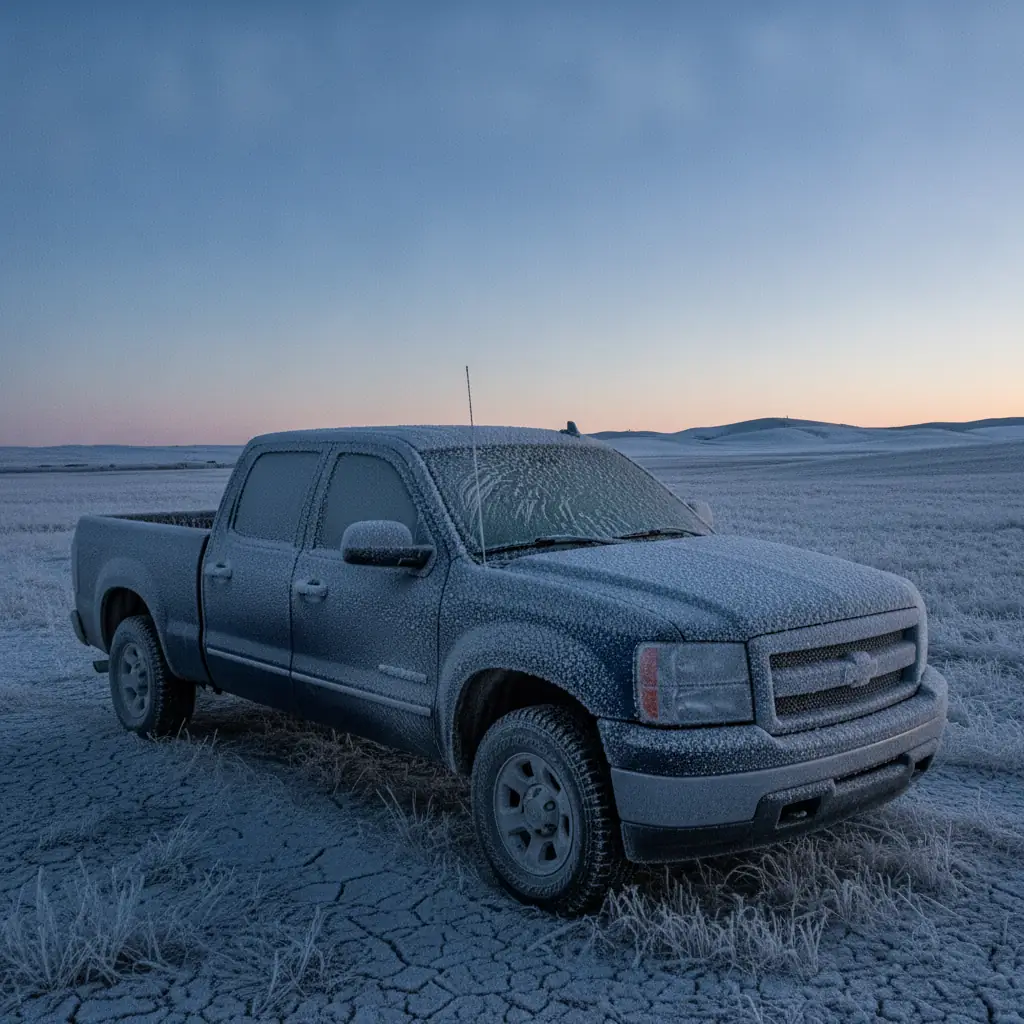
A door usually freezes shut not because the latch is frozen, but because the rubber weather seal around the door has frozen to the body. Any moisture there, from melted snow, slush, a car wash, or just humidity that condensed and froze, turns into an ice bond between the rubber and the metal. The door is mechanically fine. It is simply glued shut by a thin layer of ice. That is why forcing it is the wrong move. You are trying to rip rubber away from steel, and the rubber loses.
Locks freeze for a related reason. Moisture works its way into the lock cylinder, and when it freezes it stops the mechanism from turning. On a key lock this jams the key. On most modern vehicles with remote entry and a push button, you may never touch a key lock, but the door seal freeze still gets you, and the key lock matters the day your remote battery dies and you need the physical key.
Frozen wiper blades stuck to the windshield and frozen mirrors are the same story, water plus cold equals an ice bond. The fix is always the same idea. Break the bond gently with warmth or careful force, never with brute strength.

How to Get Into a Frozen Door Without Breaking It
Work through these in order, gently.
- Try a different door first. If the driver's door is frozen, the passenger or rear doors may not be. Get in any door you can, then deal with the stuck one from inside with the warmth of the running vehicle if needed.
- Press firmly around the door edges and seal. Push on the door itself and along the rubber seal with steady hand pressure to crack the ice bond. Often a firm, even press all the way around pops the seal free without any yanking on the handle.
- Rock the door gently, do not yank the handle. Pull the handle to release the latch, then apply slow, steady, increasing pressure to the door, easing off and trying again rather than one hard jerk. You want to crack the ice, not snap the handle. If the handle starts to flex worrisomely, stop.
- Use warmth if you have it. Warm water, not boiling, poured along the seal will melt the ice bond. Lukewarm is the rule, because very hot water on cold glass or metal can crack it and it will refreeze fast, so only do this if you can drive off right away. A hair dryer on an extension cord, or even your gloved hand held against the seal, works too.
- Once it opens, get the moisture out. Wipe the seal dry so it does not just refreeze the moment you close it. This is the step that stops you repeating the whole fight tonight.
The golden rule through all of it is patience over force. Plastic handles and rubber seals get brittle in deep cold, and the repair for a torn seal or a snapped handle costs far more than the few minutes it takes to do this gently.
How to Thaw a Frozen Lock Safely
If it is the key lock itself that is frozen, here is the safe way.
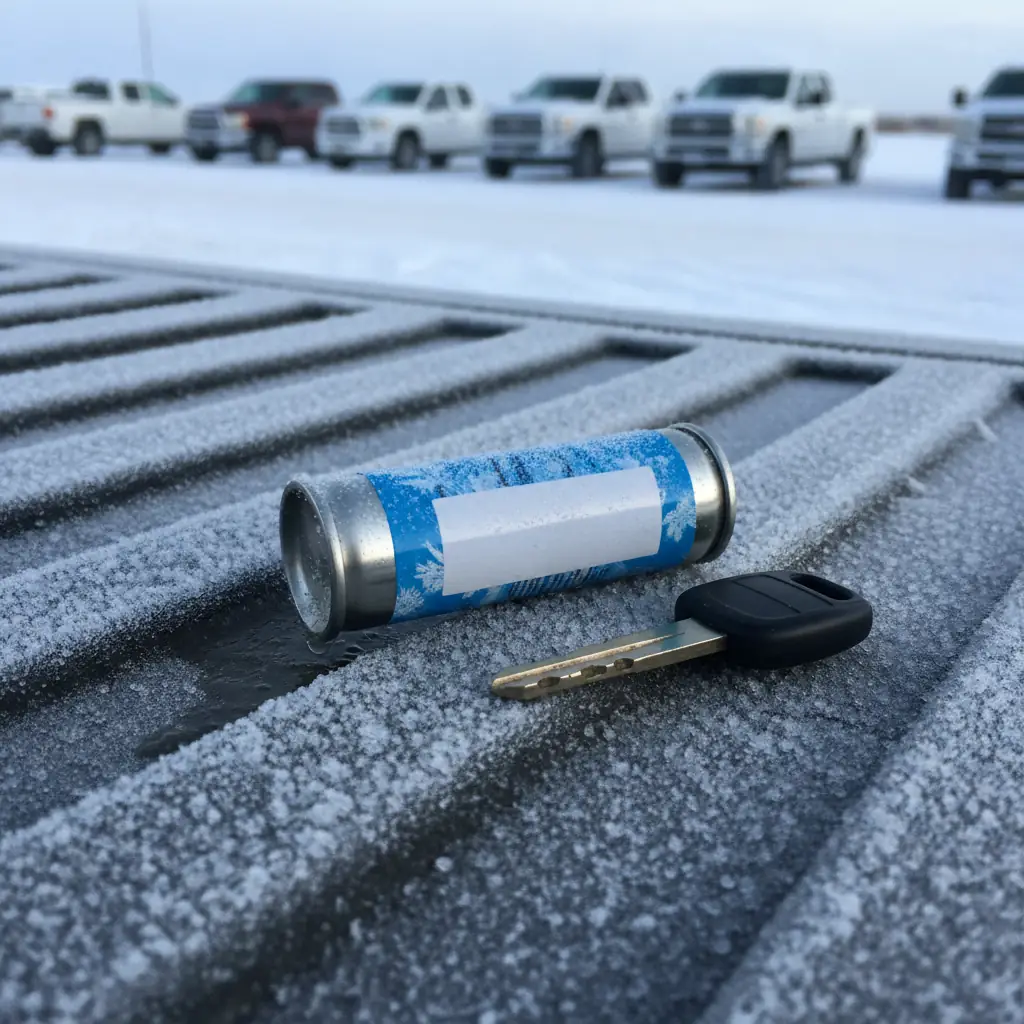
- Lock deicer is the best tool, and it is cheap. A small bottle of lock deicer sprayed into the cylinder thaws it in seconds. It costs a couple of dollars at any parts counter. The only catch is the bottle has to be somewhere you can reach, which is the whole point of the warning below.
- Warm the key, then work it gently. With no deicer handy, carefully warm the metal key, with a lighter held to it briefly or simply in your warm hand or pocket, then slide it into the lock and let the warmth transfer. Repeat a couple of times. Do not force a stuck key, because a cold key under hard turning pressure can snap off in the lock, which turns a two minute problem into a tow.
- Hand sanitizer in a pinch. Alcohol based hand sanitizer worked into the cylinder can help melt the ice, since alcohol lowers the freezing point. It is a backup, not a first choice, but it can get you in.
- Never pour hot water on the lock or glass. It is tempting and it is a mistake. Hot water on a frozen lock or cold window can crack glass, and the water refreezes inside the lock and around the door worse than before.
The key prevention point, and the mistake everyone makes once: do not keep your only bottle of lock deicer inside the vehicle. The day you need it is the day it is locked in there with you on the wrong side of the door. Keep one at home and one in your bag, coat, or office desk.
Stop It From Happening in the First Place
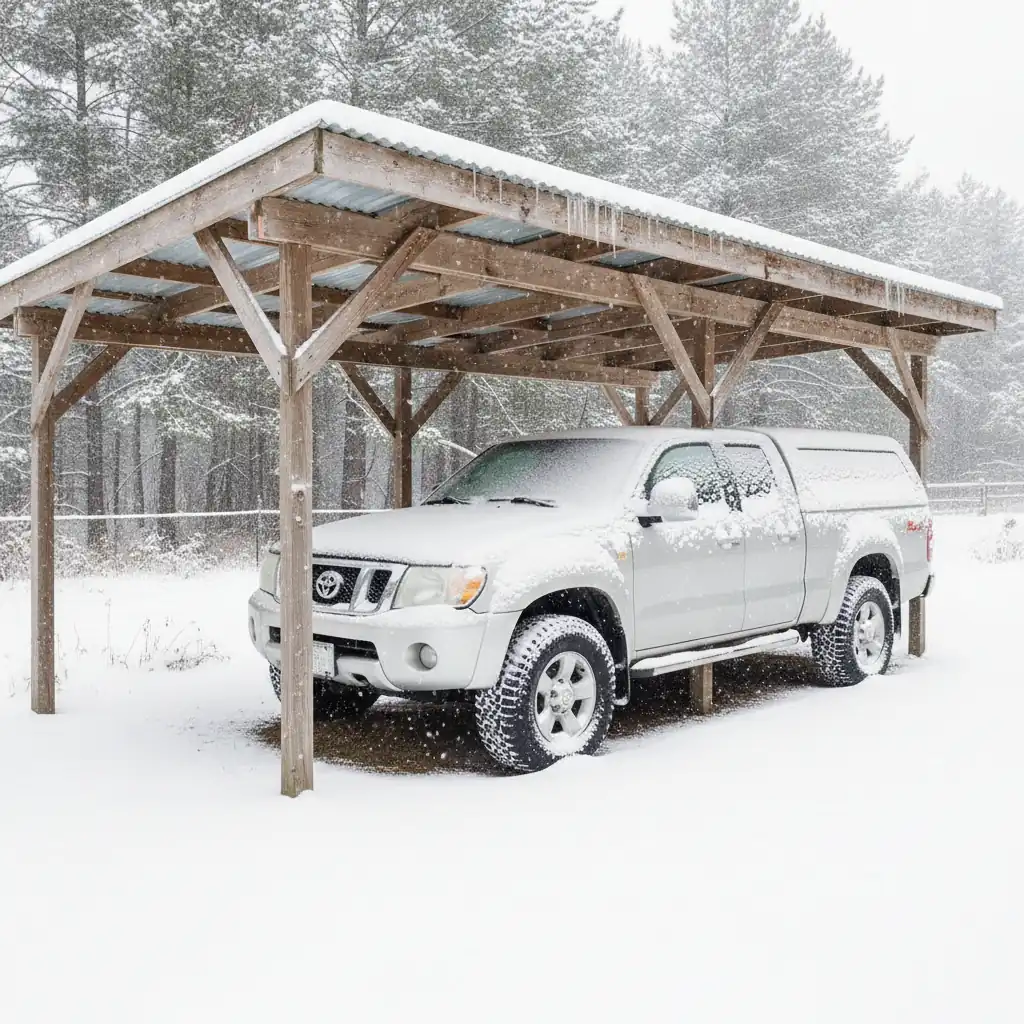
A few minutes of prevention in the fall saves you the driveway fight all winter.
- Treat the door seals. Wipe the rubber weather seals clean and apply a silicone based protectant or a proper rubber seal conditioner before winter. It keeps water from bonding the seal to the body and keeps the rubber from getting brittle and cracking. This is the single best frozen door prevention there is.
- Keep a little lock lubricant in the cylinders. A graphite or proper lock lubricant helps keep moisture out and the mechanism free. A spray of lock deicer occasionally does double duty.
- Park sheltered when you can. A garage, a carport, even parking with the most used door away from the wind helps. Less exposure means less frost bond.
- Get the moisture out after a wash or a slushy day. Wiping down the seals after a winter car wash, and not letting slush sit frozen in the door gaps, prevents the worst of it.
- Keep your remote battery fresh. If your vehicle uses a remote and a push button, a dead remote battery is the day you suddenly need that frozen key lock. A fresh battery means you never get forced to fight the physical lock at all. Our parts department can sort a remote battery and the right seal protectant in one stop.
Sort these in October and the frozen door simply stops being part of your winter. Cold mornings are enough of a fight without adding a wrestling match with your own vehicle.
When the Cold Is Beating Your Vehicle Everywhere
A frozen door now and then is just prairie life. But if the doors freeze, the locks jam, the seals are cracked and leaking, the heater struggles, and the thing barely starts, you are fighting a vehicle that is wearing out in every direction at once, and every January is a battle. There is a point where a newer vehicle with sound seals, working locks, a strong heater, and modern remote entry simply ends the daily fight.
If that is where you have landed, our new Ram 1500 inventory is on the lot here in Portage, built to shrug off this climate, and our used inventory has well kept options if you want to keep it affordable. Either way, treat the seals, keep the deicer handy, and never force a frozen door. Patience beats brute force every time the mercury drops.
FAQs
How do I open a frozen car door without breaking it?
Try another door first, then press firmly around the door edge and rubber seal to crack the ice bond. Pull the handle to release the latch and apply slow, steady, increasing pressure to the door rather than one hard yank. Use lukewarm water along the seal or a hair dryer if you have power. The key is patience over force, because brittle cold handles and seals break when you yank them.
Why is my car door frozen shut?
Usually the rubber weather seal around the door has frozen to the body. Moisture from snow, slush, a car wash, or condensation freezes into an ice bond between the rubber and the metal. The door mechanism is fine, it is simply glued shut by a thin layer of ice. That is why gently breaking the bond works and forcing the door does not.
How do I thaw a frozen car lock?
Spray lock deicer into the cylinder, which thaws it in seconds and is the best tool. Without deicer, briefly warm the metal key and work it gently into the lock to transfer heat, repeating a couple of times, but never force a stuck key because it can snap off. Alcohol based hand sanitizer in the cylinder can help in a pinch. Never pour hot water on the lock.
Can I pour hot water on a frozen car door or lock?
No. Hot water on cold glass or metal can crack it, and the water refreezes quickly, often making the problem worse than before. If you use water at all, use lukewarm water along the rubber seal, and only when you can drive off right away so it does not refreeze. Lock deicer or gentle warmth is the safer choice.
How do I keep my car doors from freezing shut?
Clean the rubber door seals and apply a silicone based protectant or rubber seal conditioner in the fall, which keeps water from bonding the seal to the body. Keep a little lock lubricant in the cylinders, park sheltered when you can, wipe moisture out of the seals after a wash or slushy day, and keep your remote battery fresh so you avoid the key lock entirely.
Where should I keep lock deicer?
Anywhere except only inside the vehicle. The day you need it is the day it is locked in the frozen car with you on the wrong side of the door. Keep one bottle at home and another in your bag, coat pocket, or at the office, so you always have access to it when a lock freezes up.
Patience Beats the Cold
A frozen door or lock is one of winter's smaller indignities, but it wrecks a morning and it wrecks a door handle if you fight it wrong. Break the ice bond gently, warm a lock instead of forcing it, never reach for the hot water or the brute strength, and treat your seals in the fall so it mostly stops happening. A couple of dollars of deicer and a few minutes of prevention beat standing in your driveway at 30 below losing a fight with your own vehicle.
Want to get ahead of it? Our parts department can set you up with lock deicer and the right seal protectant, and if the cold is beating your vehicle everywhere at once, come see what is on the lot in our new and used inventory. Stay warm and stay patient out there.
Tyler Dunn, Dunn Ram Trucks, Portage la Prairie