Ask somebody when they last had their brakes done and you will get a confident answer about pads. Ask when the brake fluid was last replaced and you usually get a pause, then a guess, then the honest version, which is never.
That is not carelessness. It is a gap in the reminders. Pads announce themselves with a squeal and get quoted at every oil change. Fluid degrades silently, on a clock rather than a wear surface, and nothing in the truck tells you about it. If you want a straight answer for your specific vehicle, the fastest route is to book it in and have the fluid tested, because the honest answer depends on what is actually in your system rather than on a number somebody read online.
Here is why this one falls through the cracks, and what actually matters about it out here.

Key Takeaways
- The maintenance schedule in the Ram owner's manual does not carry a brake fluid replacement line. It calls for checking the brake master cylinder fluid level about once a month, and for inspecting pads, shoes, rotors, drums, hoses and the park brake at every oil change. Replacement of the fluid itself is not a scheduled item there.
- Brake fluid absorbs water from the air. That is not a defect, it is how glycol based fluid is designed to behave, and it is why the interval is a time interval rather than a distance one.
- Water lowers the boiling point, and the standards quantify it. Under the federal brake fluid standard, DOT 3 must boil no lower than 205 degrees Celsius when new but only 140 degrees once wet, and DOT 4 goes from 230 down to 155. "Wet" in that standard means 3.7 percent water by weight.
- Out here the corrosion matters as much as the boiling point. Water sitting in a hydraulic system rots it from the inside, and Manitoba brake lines are already fighting road brine from the outside.
- A fluid test takes two minutes. It measures what is actually in your system, which beats arguing about intervals.
Why This Service Falls Through the Cracks
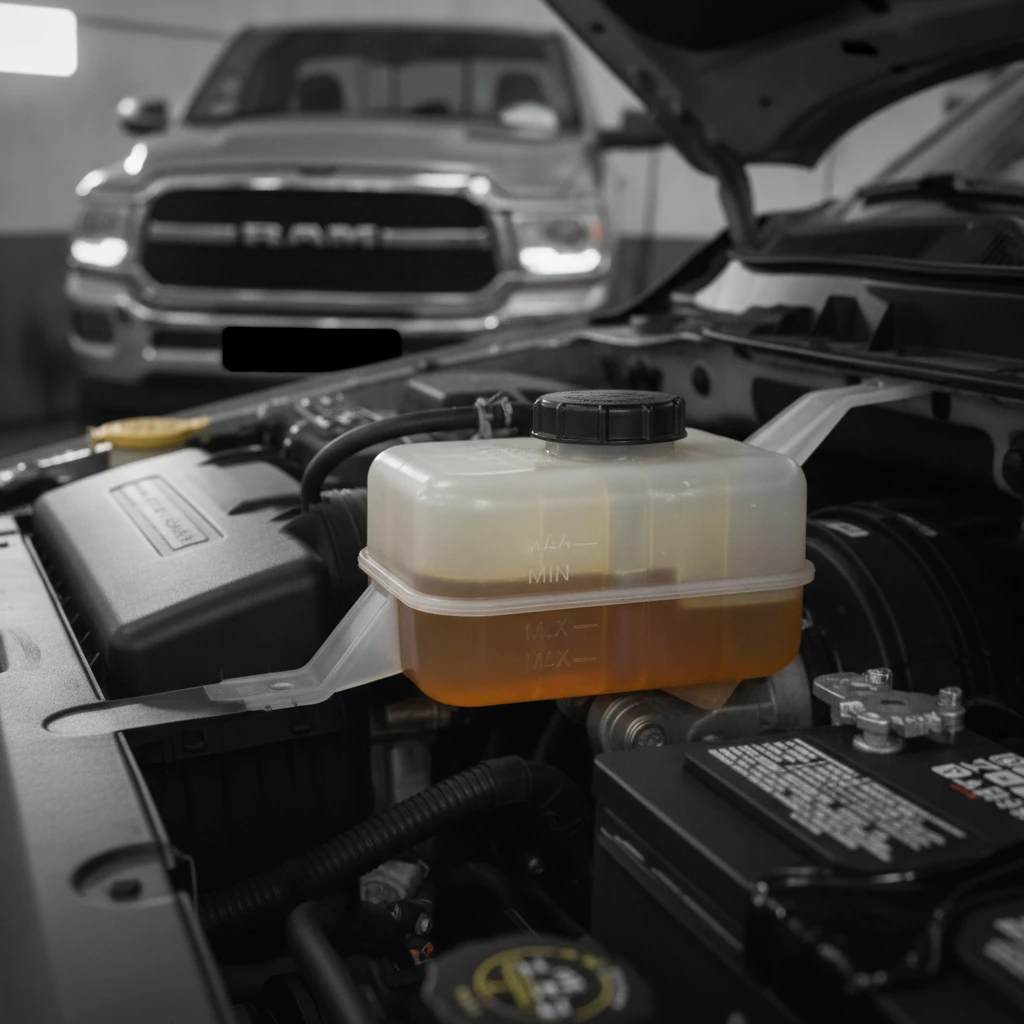
Look at what the schedule actually asks for and the gap becomes obvious.
The Ram owner's manual maintenance schedule includes checking the fluid levels of the coolant reservoir, brake master cylinder and other systems about once a month or before a long trip. At every oil change interval it asks for an inspection of brake pads, shoes, rotors, drums, hoses and the park brake. Both of those are good practice. Neither one is a fluid replacement.
So there is no odometer trigger, no reminder in the cluster and no line item on the service menu that fires automatically. The fluid only gets replaced when somebody deliberately decides to replace it, or when a repair opens the system anyway.

Intervals vary by manufacturer, by model and by model year, and some brands do publish a time based brake fluid interval while others do not. The only correct source for your vehicle is the maintenance schedule in your own owner's manual for your own model year. What we can say without guessing is that if nobody has ever mentioned it to you, it has probably never been done, and after enough years that becomes worth acting on.
What the Fluid Is Actually Doing
Brake fluid has two jobs. It transmits your foot pressure to the calipers, and it has to do so without compressing or boiling.
Glycol based brake fluid, the DOT 3 and DOT 4 you find in almost everything on the road, is hygroscopic. It pulls moisture out of the air over time, through the reservoir vent, through flexible hoses and through seals. That is deliberate. Water that gets into the system stays dispersed in the fluid instead of pooling in one low corner of a caliper and freezing or flashing to steam.
The trade off is that the whole volume of fluid gradually becomes a water and glycol mixture, and its properties drift.
The federal motor vehicle brake fluid standard puts numbers on it. A DOT 3 fluid must have a boiling point of at least 205 degrees Celsius when new, and at least 140 degrees when wet. DOT 4 must reach 230 degrees new and 155 degrees wet. The standard defines wet as fluid containing 3.7 percent water by weight. That is not much water, and the boiling point falls by 65 to 75 degrees to get there.
Boiling matters because liquid does not compress and vapour does. If the fluid at the caliper boils, your pedal goes to the floor and the brakes stop working. That happens under sustained heat: a long grade with a loaded trailer, or repeated hard stops.
The Part That Matters More in Manitoba
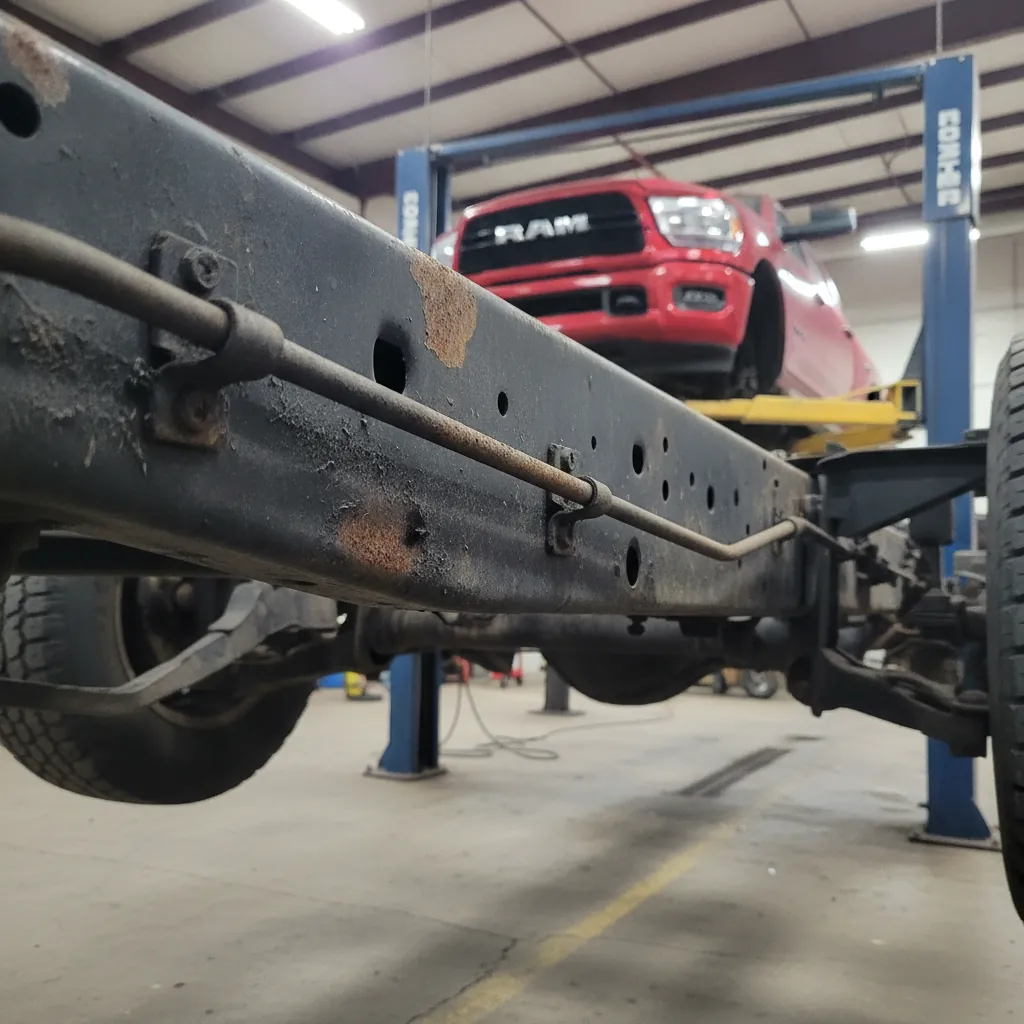
Honestly, most people here will never boil their brake fluid. We do not have mountain passes. If boiling point were the only concern, this would be a niche article for people who tow in the Rockies.
The reason it matters out here is corrosion, and it works from both directions.
From outside, road brine finds every steel line, fitting and bracket under the truck. That is a known Manitoba problem and we have written about rusted brake lines in Manitoba separately, because it is one of the most common serious findings on a safety inspection here.
From inside, the water your fluid has absorbed is doing quiet damage to the components the brine cannot reach: the bores of the calipers and wheel cylinders, the master cylinder and the internals of the anti lock brake module. Modern fluid carries corrosion inhibitors, but they are consumed over time. Once they are used up, the water is working on bare metal.
That is the part that turns a fluid service into a real economic argument. A brake fluid flush is an inexpensive scheduled job. An ABS module or a seized caliper is not, and the second one is what people actually end up paying for. On a vehicle that has spent ten winters on treated Manitoba highways, the inside of the hydraulic system deserves the same attention as the outside.
How a Fluid Test Answers It
You do not have to argue about intervals, because the condition is measurable.
The common shop tools measure two different things, and it is worth knowing which one you are being shown.
A moisture meter puts a probe in the reservoir and estimates water content electrically. It is quick, and it gives you a percentage you can compare against the 3.7 percent that defines a wet fluid in the standard.
Test strips change colour based on the depletion of the corrosion inhibitor package rather than on water directly. That is arguably the more useful measure for our climate, because inhibitor depletion is what precedes internal corrosion.
Either way, the test takes a couple of minutes with the hood open and it turns a vague question into a number. If the fluid is fine, you are told it is fine and you carry on. If it is not, you have an objective reason to do the work rather than a sales pitch.
Two things a test cannot see, which is why the visual inspection still matters. It cannot tell you about the condition of the lines and the hoses, and it cannot tell you the fluid was contaminated with the wrong product at some point. Both of those need eyes on the vehicle.
What Actually Gets Done
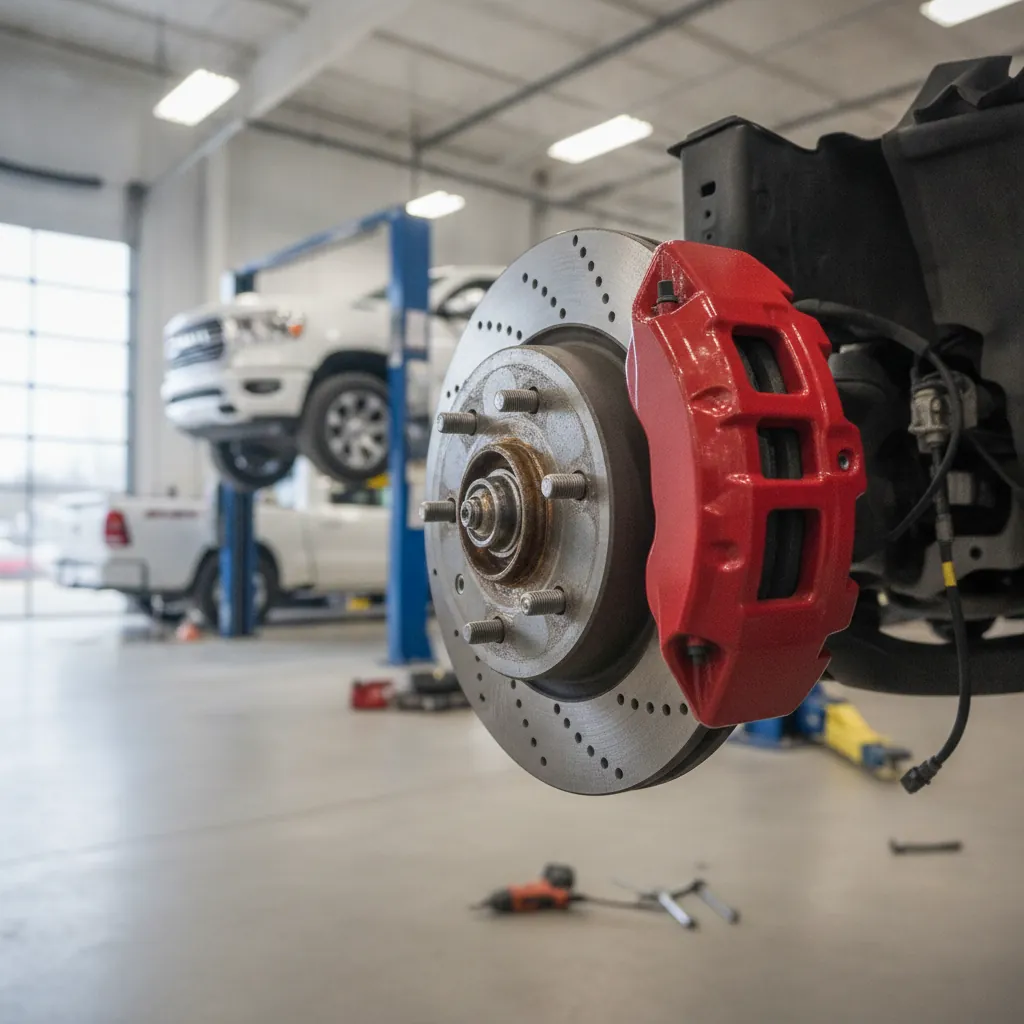
A proper brake fluid service is a flush, not a top up. Adding fresh fluid to a reservoir full of old fluid changes almost nothing, because the fluid sitting at the calipers is the fluid that has been getting hot and holding water.
The job pushes fresh fluid through the entire system, bleeding each corner in the sequence the vehicle calls for, until clean fluid comes out at every wheel. On a vehicle with anti lock brakes and stability control, parts of the system may need to be cycled with a scan tool so the fluid trapped in the module is replaced too, which is one reason this is not a great driveway job.
The correct fluid specification is printed on the reservoir cap and in the owner's manual, and it is not interchangeable. Putting the wrong specification in is a real way to damage seals. Our parts department can confirm what your vehicle takes.
While the wheels are off is also the sensible time to look at the pads and rotors properly, which we cover in our guide on when to replace brake pads on a truck. Doing both together saves you a second visit.
FAQs
How often should brake fluid be changed?
Follow the maintenance schedule in your own owner's manual for your model year, because it varies by manufacturer and model. The Ram owner's manual schedule includes a monthly master cylinder level check and a brake inspection at every oil change, but does not list a fluid replacement interval. When there is no published interval, the practical answer is to have the fluid tested and act on the result.
Does brake fluid go bad if I do not drive much?
Yes. Moisture absorption happens over time, not over distance, so a low kilometre vehicle can have fluid in worse condition than a high kilometre one. This is a calendar item.
What happens if brake fluid is never changed?
Two things, slowly. The boiling point falls, which only shows up under sustained heavy braking. More relevant here, the corrosion inhibitors deplete and water works on the inside of the calipers, wheel cylinders, master cylinder and the anti lock brake module. The failures that follow are expensive compared with the flush.
Can I just top up the reservoir instead?
No. Topping up changes the level, not the condition of the fluid already in the lines and calipers. A dropping level usually means the pads are wearing down and the caliper pistons are extending, or you have a leak. Either way, find out which before adding fluid.
Is a brake fluid flush worth it on an older truck?
Often it is one of the better value services on an older Manitoba vehicle, precisely because the hydraulic system has had a decade of winters to accumulate moisture. Have it tested. If the fluid is clean, you have spent nothing.
The Bottom Line
Pads are the wear item and they get all the attention. Fluid is the moisture item, it degrades on a calendar, and nothing in the truck is going to remind you.
Next time you are in for an oil change, ask us to test it. It takes two minutes, it costs you nothing to ask, and it turns a service everybody defers indefinitely into a decision based on your actual fluid. Our service department will show you the reading either way.
And if you are looking at a used truck that has spent its life on Manitoba highways, a brake fluid test and a good look at the lines belongs on your inspection list. Same goes for anything in our used inventory, or on a new Ram 1500 once it has a few prairie winters behind it.
Tyler Dunn, Dunn Ram Trucks, Portage la Prairie