
Your truck started fine all summer and it will probably start fine through October. The question is whether the battery under the hood has one more Manitoba winter in it, and a battery rarely tells you the answer on a mild day. It tells you at 7 a.m. on the first minus 30 morning, in the driveway or the rink parking lot, when you have somewhere to be.
So here is the honest answer to how long a truck battery lasts out here, what shortens it, the signs it is close to the end, and why the smart time to replace one is before the cold rather than after it strands you. If your battery is already a few winters old, the simplest move is to book a battery and charging system check with our service team this fall, while it is still your choice and not the tow truck's.
Key Takeaways
- The battery makers put typical life at roughly three to five years, and they are clear that heat and cold both cut into it. No honest source gives one number.
- Summer heat does the lasting damage; winter cold exposes it. A battery weakened by a July heat wave can still pass in September and quit in January.
- CAA says a battery loses about 60 percent of its power at minus 18. Out here that is not even a hard morning.
- Warning signs: a slower crank on the first cold morning, dim lights at idle, a swollen or cracked case, a rotten egg smell, and a date code that says it is well into its life.
- Replace like with like. Trucks with Stop/Start may carry a different battery type and, on some Ram models, a second auxiliary battery. The VIN settles it.
The Honest Range, and Why Ours Runs Shorter
Ask three battery makers how long a car or truck battery lasts and you get close to the same answer. Interstate Batteries puts typical life expectancy at 3 to 5 years. Optima says three to five years, maybe less in hotter climates and maybe more in temperate ones. CAA gives the same three to five years and adds that all the electronics in a modern vehicle push it closer to three.

Notice what every one of them says next: climate matters. Manitoba is not a temperate climate. We get prairie heat in July and long stretches below minus 25 in January, so a battery here gets hit from both ends of the thermometer. Nobody publishes a clean Manitoba number, and we are not going to invent one. What the makers' range tells you is this: once a battery is heading into its fourth or fifth winter, it is living on the back half of its expected life, and the first real cold snap is where that shows.
That is also why a battery's age matters more than how it felt last week. CAA lists a battery more than three years old as a warning sign all on its own.
Heat Ages It, Cold Collects the Bill
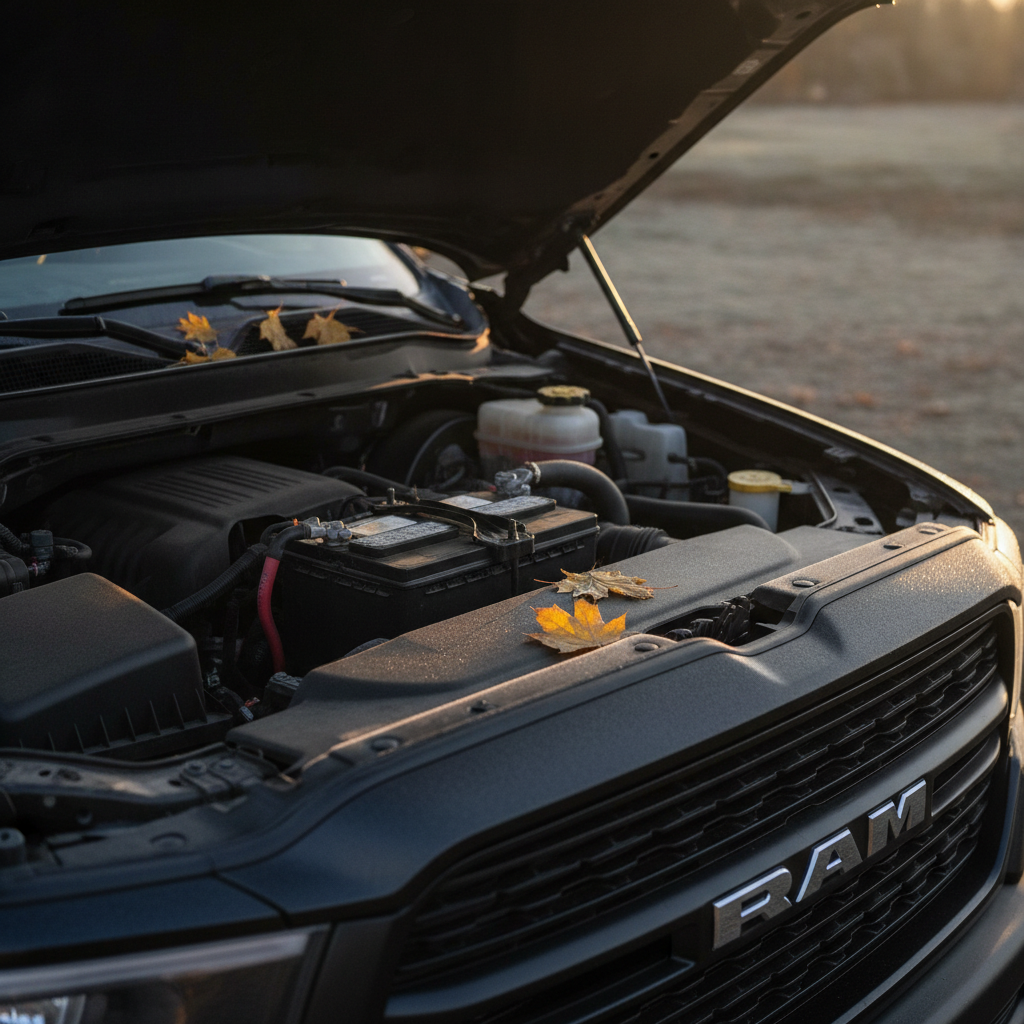
Most people blame winter for dead batteries, and winter is when they die. But the battery makers say the damage often happens months earlier. Interstate says extreme summer temperatures leave permanent damage on a battery. Optima puts it plainly: the damage was probably done during the hottest summer months, and the cold weather just makes a battery work harder.

Then the cold arrives and does two things at once. It slows the chemistry inside the battery, so it has less to give, and it thickens the engine oil, so the starter needs more. CAA's Automotive Research Centre found a battery loses about 35 percent of its strength at 0 and about 60 percent of its power at minus 18. In Portage la Prairie, minus 18 is a normal January morning, not a cold one.
Short trips make it worse. A run into town for coffee and the mail never gives the alternator long enough to put back what the start took out, and Optima notes a charging system is built to keep a battery near full charge, not to recover one that has been run down. Stack a few weeks of that on a battery that cooked last summer and you have the classic January no start.
Why It Passed in September and Quit in January
This is the one that frustrates people. The battery got checked in the fall, it was fine, and it still died.
A fall test is taken on a mild day, when the battery has plenty of margin. A battery that is weak but not yet failing can still start a warm engine easily, and it can show a decent reading. Interstate describes exactly this: a fragile battery will start the engine when it is easy, but if the temperature drops or it does not get a proper charge, it dies. Between September and January you take away up to 60 percent of its power and ask for more cranking effort. The margin that was there in the fall is gone.
That is why the result on the test sheet matters more than a pass or fail light. When a tech tells you a battery is marginal in September, believe it. On a truck parked outside all winter, marginal in the fall usually means a boost by February. Our post on what size battery a Ram 1500 takes explains why cold cranking amps, the rating measured at minus 18, is the number that decides it.
The Signs a Battery Is Near the End
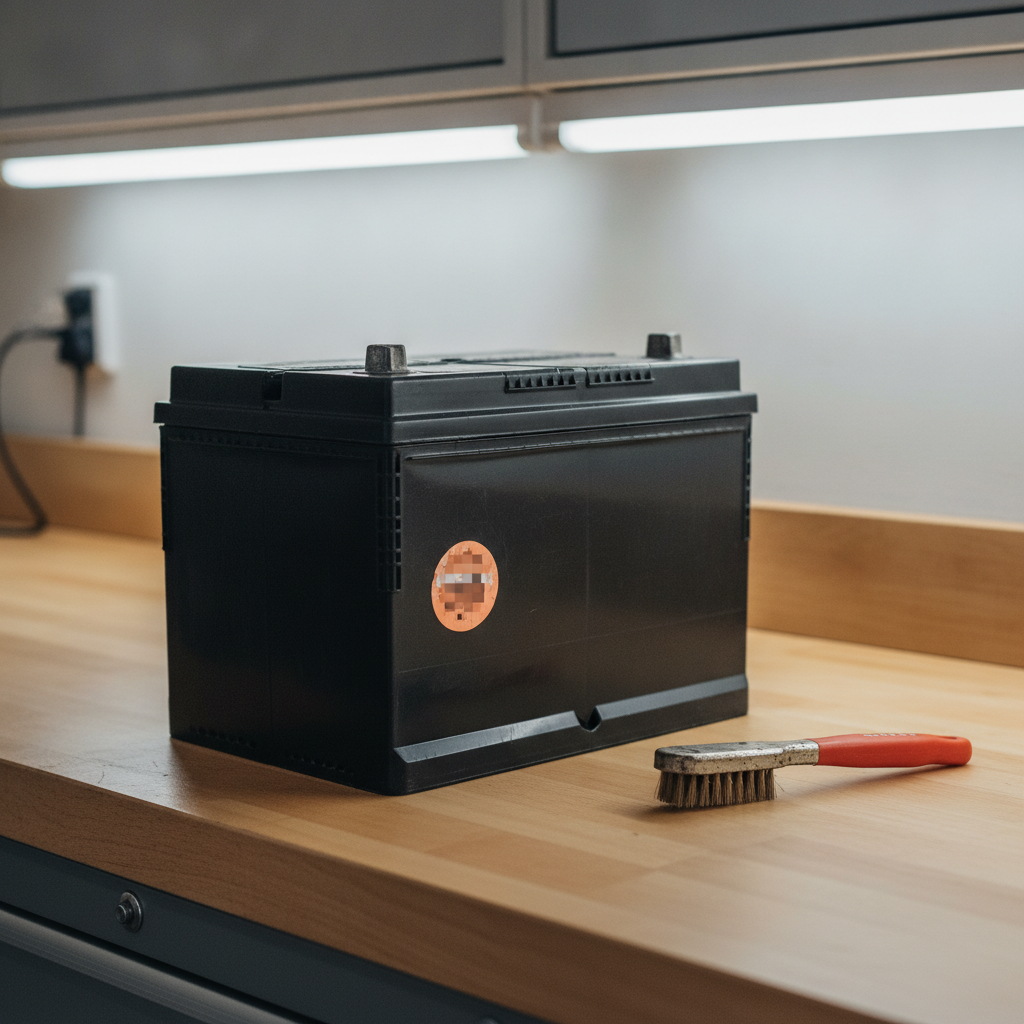
A battery nearly always gives notice. These are the ones worth acting on.
A slower crank on the first cold morning. Not a no start, just a crank that sounds lazier than it did in spring. That is the battery telling you it has less in reserve than the cold is about to ask for.
Dim lights at idle. Headlights that look yellow or brighten when you rev the engine, or interior lights that flicker, are on CAA's list of warning signs.
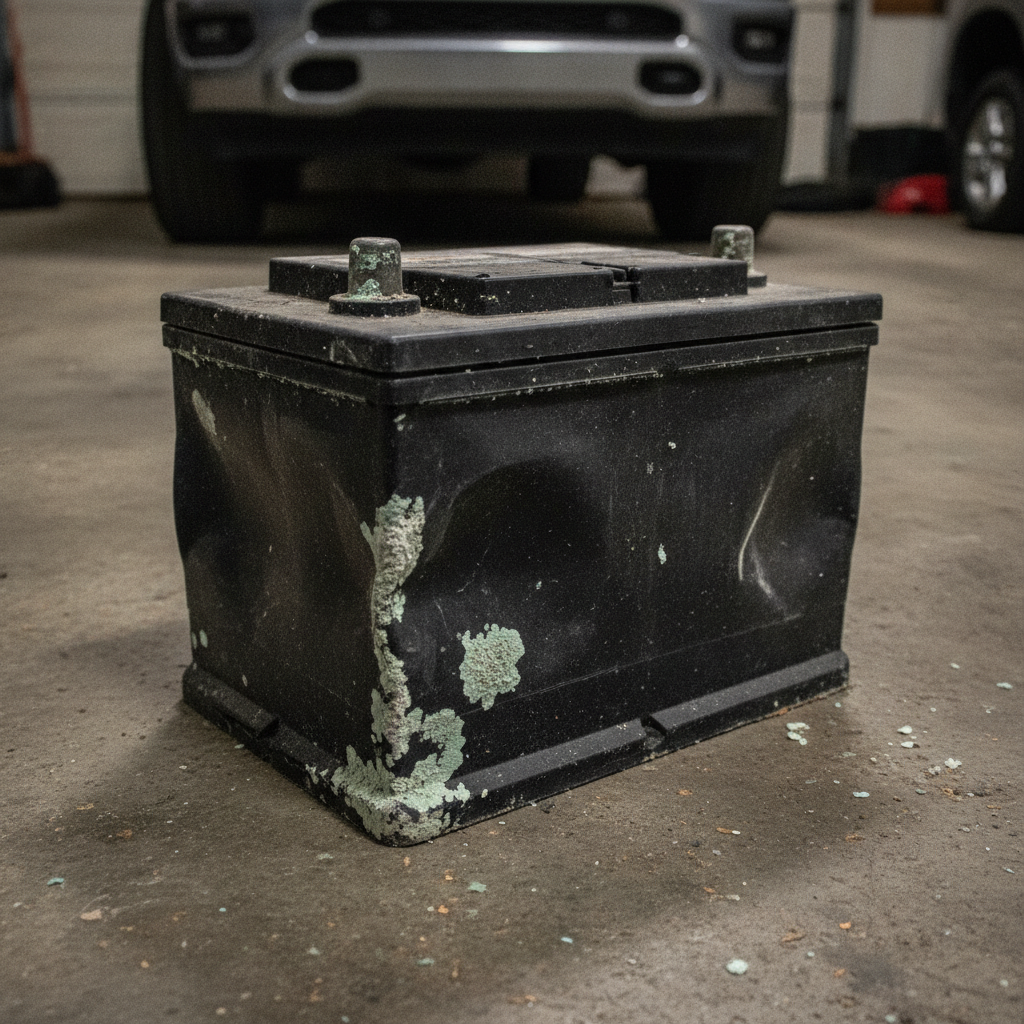
A swollen, cracked or corroded case, or a rotten egg smell. CAA lists all of these too. A case that bulges at the sides is not a battery to nurse through another season. Have it looked at, and do not try to boost it.
The date code. Most batteries carry a date code. Interstate says it is a two digit code stamped into the cover or printed on a label on the top or side, with a letter for the month and a digit for the year. Formats differ between makers, so if you cannot make sense of yours, ask us and we will read it. A rough rule of thumb: if the battery is older than the last set of tires you put on the truck, it deserves a test before the snow flies.
It needs a boost, or it keeps dying. One boost is a warning. If the battery keeps going flat after a few days parked, the cause may not be the battery at all, and our post on a truck battery draining overnight covers how a parasitic draw gets found.
Some Ram Trucks Have More Than One Battery
Before you buy a replacement, know how many batteries your truck actually has.
Heavy duty diesels. Ram's own heavy duty owner's manual says that if you have a diesel engine, you may have two batteries, and it covers them in the jump starting section. On a Cummins with two batteries, both are doing the work in the cold, and a tired one drags the other down.
Trucks with Stop/Start. Mopar's official parts catalogue lists an auxiliary battery for recent Ram 1500 trucks, tied to the Stop/Start system. It is a small second battery, separate from the main one. Not every truck has one, and the arrangement varies by year and build, so check the battery section of your owner's manual or give us the VIN. If your Stop/Start has quietly stopped working, that can be a battery clue too, since Ram's owner's manual lists a discharged battery among the conditions that keep Stop/Start from engaging.
AGM or Flooded on a Truck With Start Stop
The two common types are a conventional flooded battery and an AGM, short for absorbed glass mat. Interstate describes AGM batteries as built for many newer vehicles with start stop technology, and it recommends them for vehicles that already come with an AGM. It also lists enhanced flooded batteries as start stop friendly.
The practical advice is simple. Replace the battery with the type your truck was built for, per the owner's manual or the VIN, and do not downgrade to save a few dollars. A truck with start stop cycles its battery far more than an older truck that starts once a trip, and the wrong type is a short cut to your next dead morning. Our parts department matches the Mopar battery to your VIN, including the auxiliary one if your truck carries it, so the type, the size and the cold cranking amps are all right the first time.
When to Replace It: Before the Cold, Not During
Here is how we would handle it on our own trucks.
- Know the age. Read the date code or check your service records.
- Test it every fall once it is about three years old, which lines up with the point where CAA starts calling age a warning sign. A load test measures what the battery can deliver, not just whether it holds a charge, and our post on the winter battery test explains what the result means.
- Treat marginal as a replacement. If the test says weak in October, it will not get stronger in January.
- Test the charging system at the same time. A new battery on a tired alternator will not last either.
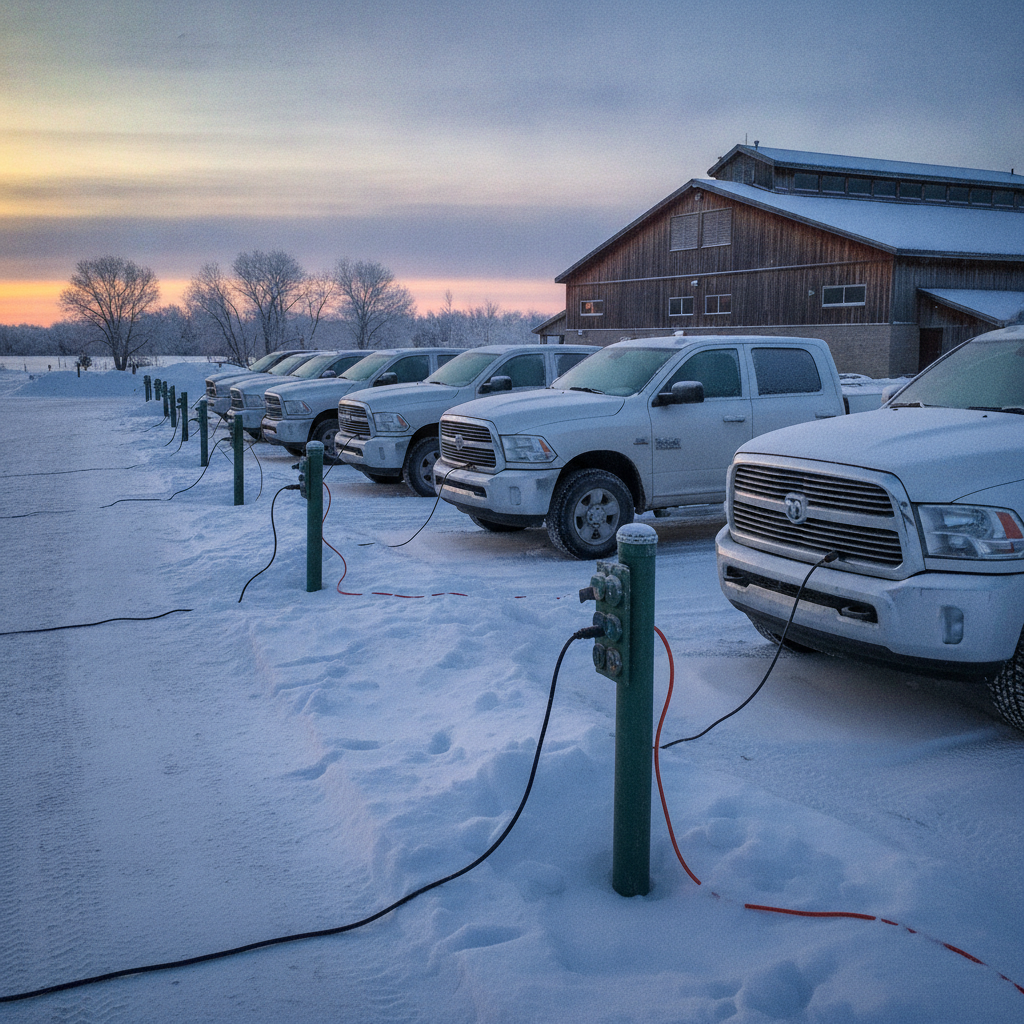
- Help it through the winter. A plugged in block heater means a warmer engine that is easier to turn over. Our block heater guide for Manitoba covers how long to leave it on.
A planned battery swap in the fall is a short visit. The same battery on the coldest morning of the year is a boost, a tow, or a missed day. Our service centre tests the battery and the charging system together, replaces the battery when it needs it, and tells you straight when it does not.
FAQs
How long does a truck battery last?
Interstate, Optima and CAA all put typical life at about three to five years. Heat, cold and short trips shorten it, so in Manitoba, test it every fall once it reaches about three years old.
Why does my battery die in winter if heat is what damages it?
A battery weakened by summer heat can still start a warm engine. Cold cuts its power, by about 60 percent at minus 18 according to CAA, and thickens the oil, so the weakness shows in January.
How can I tell how old my truck battery is?
Look for the date code, usually a letter for the month and a digit for the year on the cover or a label. Formats vary, so we can read it for you.
Does a Ram truck have two batteries?
Some do. Ram's heavy duty owner's manual says diesel trucks may have two batteries, and Mopar lists an auxiliary battery for recent Ram 1500 trucks with Stop/Start. Check your owner's manual or give us the VIN.
Should I put an AGM battery in my truck?
Replace it with the type the truck was built for. Trucks with start stop often use an AGM or an enhanced flooded battery, and downgrading can shorten battery life.
The Bottom Line
The makers' three to five years is a fair starting point, but a Manitoba truck lives at both ends of the thermometer, and the battery pays for it. Summer heat wears it down, the first deep cold shows it, and a battery that passed in September can still quit in January. Know its age, watch for the lazy crank and the dim lights, and treat a marginal test as a replacement.
Get ahead of it this fall. Book a battery and charging check before the first real cold snap, and if it needs replacing, we will put in the right Mopar battery for your truck and send you into winter with one less thing to worry about.
Tyler Dunn, Dunn Ram Trucks, Portage la Prairie

























