

You picked up a chip somewhere between harvest and the first frost. A stone off a gravel truck on Highway 1, or off the grid road into the yard. It has sat there, small and quiet, all fall. Then comes the first morning the truck wears a coat of frost, you start it, crank the defroster to get moving, and by the time you reach town there is a line running out of that chip toward the edge of the glass.
That is how a small fix turns into a whole new windshield in this province, and it is mostly preventable if you get ahead of the cold. If you already have a chip or a short crack, our MPI glass repair team in Portage la Prairie can look at it now, while it is still a repair. Below is why the cold does this, what to do tonight, and the honest answer on how long a crack can wait.
Key Takeaways
- The cold does not crack good glass. It finds the damage. The outside of the windshield shrinks in the cold while the defroster warms the inside, and that tension lets go at the weakest point, which is your chip.
- High heat on a frozen pane is the trigger. Start the defroster gentle and let the glass come up slowly.
- Never pour hot water on the glass, and do not scrape hard across a chip.
- Cover a chip with clear tape tonight to keep water and grit out until it is filled.
- A crack that reaches the edge is a replacement. A short crack that has not reached the edge may still be repairable under MPI's criteria, but only if you move before winter grows it.
Why a Chip Runs on a Cold Morning
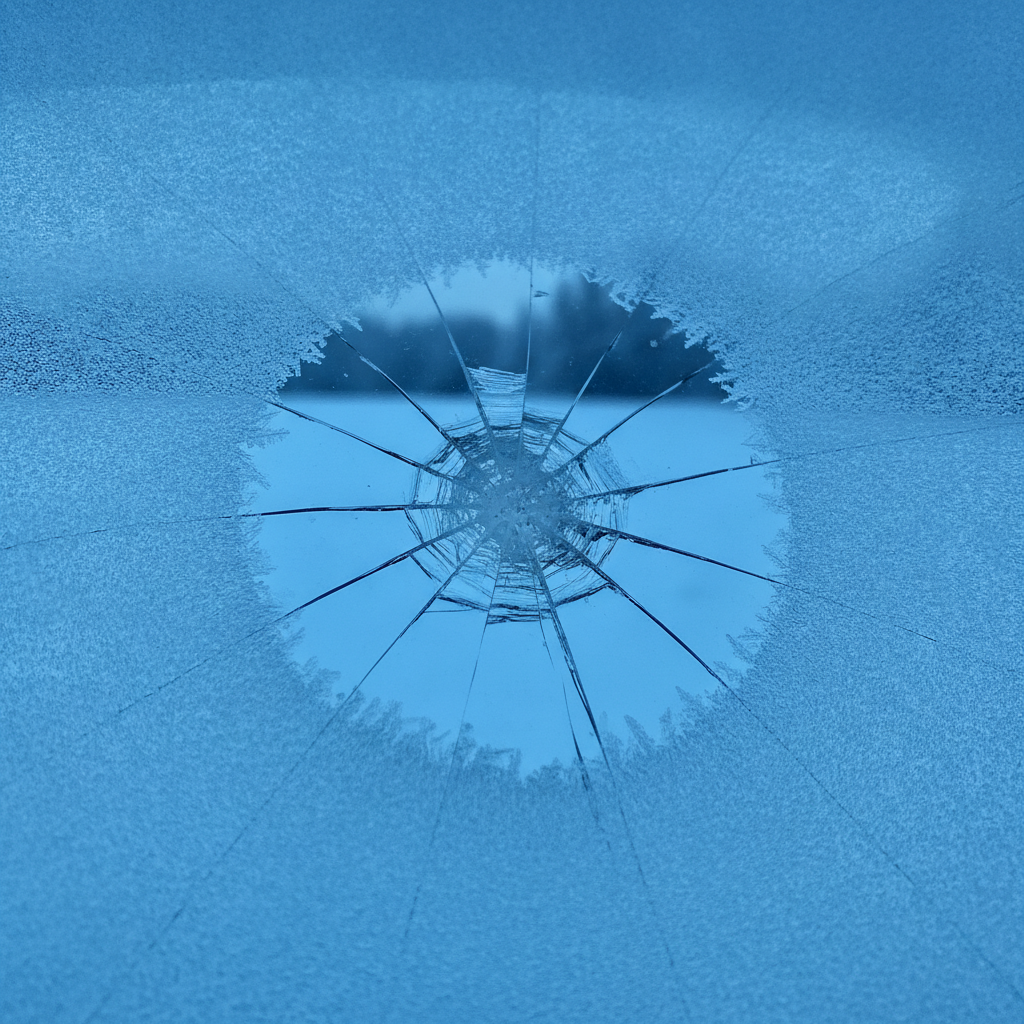
Glass grows and shrinks with temperature, like almost everything else on the truck. Safelite, the glass company, puts it plainly: "In cold weather, the outer surface of your windshield cools and contracts while the inner surface, warmed by your car's heater, stays relatively warm. That difference in temperature creates tension across the glass."

Now put numbers of your own to it. On a minus 25 morning, the outside face of the windshield is at minus 25. Inside the cab, the defroster is pushing air across the inside face, and the hotter you set it, the faster that face warms. Your windshield is two sheets of glass bonded to a plastic layer in the middle, so the inside and the outside are not moving together. One is being pulled tight by the cold while the other is being pushed out by the heat.
Undamaged glass handles that. A chip is a break in the outer sheet with tiny fractures running off it, and every one of those is a place where the tension can concentrate. Safelite again: "Pointing high heat directly at a cold windshield creates an intense temperature gradient across the glass. If there is existing damage, that stress often causes it to spread immediately."
Two more Manitoba things stack on top of that.

Water in the chip. A chip that has sat open through the fall rains takes on moisture. Safelite notes that "if moisture gets into a chip or crack and freezes, the expansion of the ice forces the glass apart from the inside." Our fall does this over and over: above zero in the afternoon, well below overnight.
The body of the truck. A windshield is glued into the cab. A long, rough gravel approach, a hard slam of the door, a frozen rut in the yard all twist the body a little, and the glass rides along. Near the edge, where the glass meets the frame, that twist does the most.
What to Do Tonight
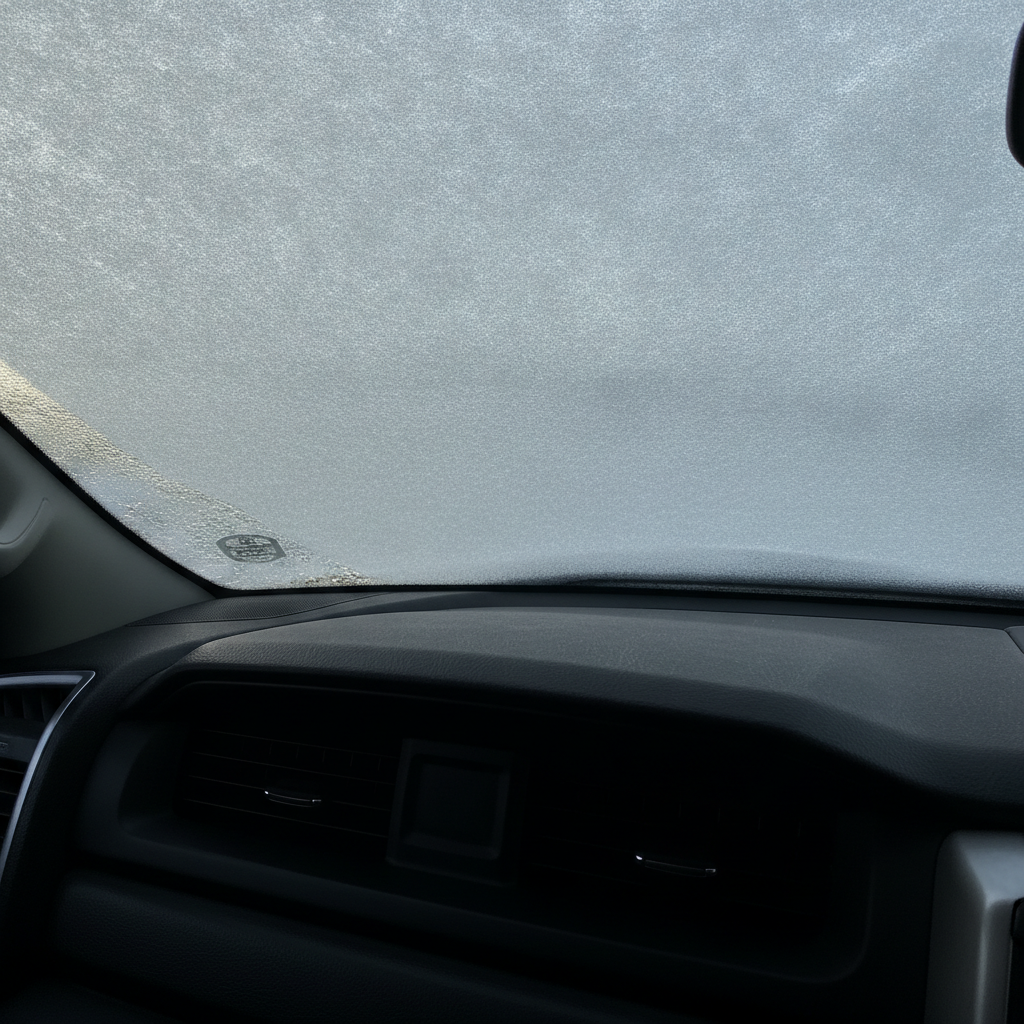
You cannot change the weather. You can change how hard you hit the glass with it.
Start the defroster gentle. Fan low to medium, temperature warm rather than hot, and let the glass come up with the cab. If you have remote start, use it and give it time, so the heat arrives gradually instead of in a blast when you climb in. Our post on how to defrost your windshield walks through the full routine, and it matters twice as much when there is damage in the glass.
Never pour hot water on the windshield. It is the old farmyard trick, and it is the fastest way to turn a chip into a crack. AAA is blunt about it: never use hot water to clear ice off your glass, because the thermal shock can crack it.
Scrape around the chip, not across it. Safelite warns that ice scrapers can make cracks and chips worse. Work the scraper away from the damage and let the defroster lift the ice over it.
Cover the chip. An insurance broker's glass advice sums it up: "Dry the area off and cover the chip with a piece of scotch tape to keep it dry and clean." Clear tape on the outside will not stop a spread, but it keeps water and grit out of the break, so the repair takes better when you bring it in.
Go easy on the doors. The same advice warns that if the chip or crack sits within 8 inches of the edge, don't slam the doors. Close them, do not throw them.
Park it in if you can. A shop or a garage keeps the glass out of the deepest overnight cold and takes the edge off the morning swing.
When the Crack Means a New Windshield
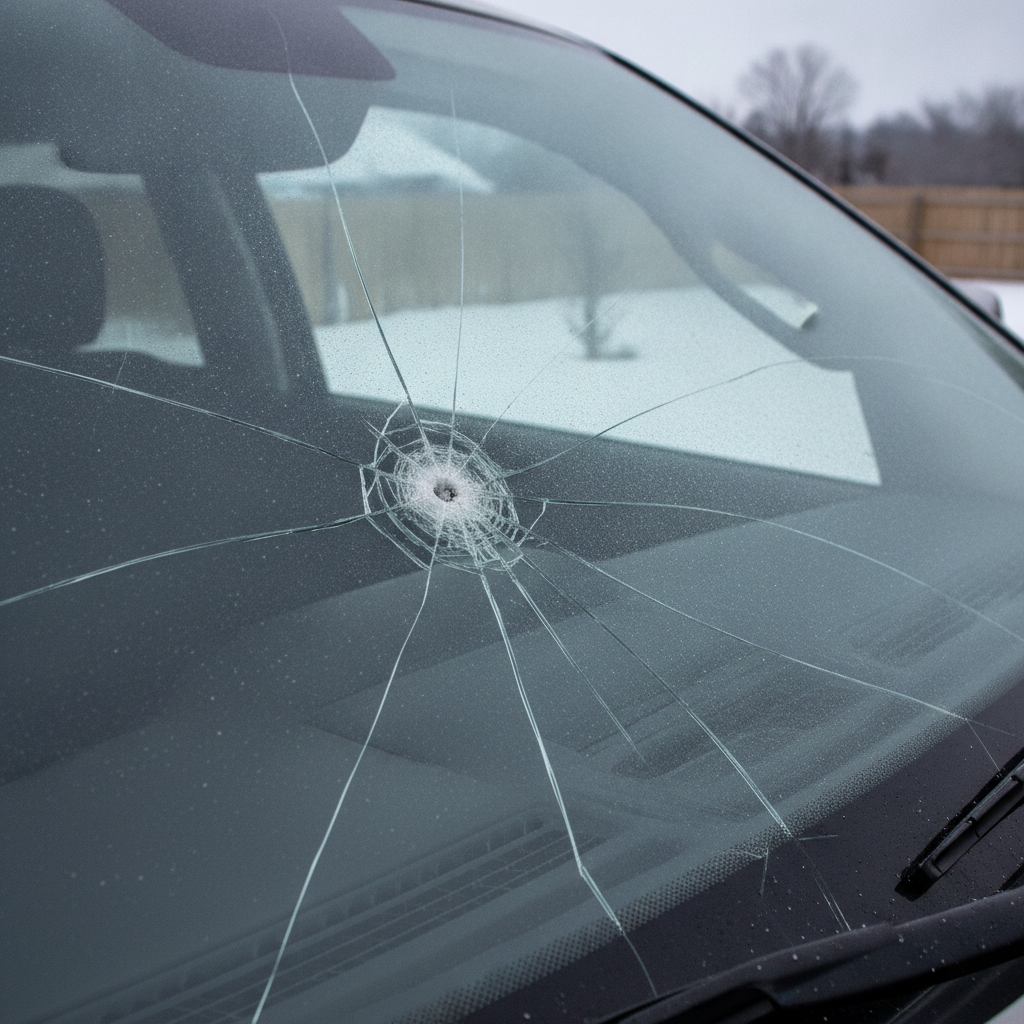
Manitoba Public Insurance publishes exactly what it will repair, and the crack rule is short. Under MPI's criteria, a crack can be repaired when "the crack is up to 12 inches in length and its edges do not meet the edge of the windshield." Our post on rock chip repair versus windshield replacement covers the full list, chip counts and the loonie rule included.
For this post, the part that matters is the edge. Once a crack meets the edge of the glass, the break has run into the zone where the windshield is bonded to the cab, and it is no longer a repair. A crack that has grown longer than MPI's limit is past repair too.
Then there is the driver's view. Even a crack that technically qualifies can sit right where your eyes go on a low winter sun, and a repair there can leave a faint mark. For a long line across your sightline, replacement is usually the better answer, and we will tell you straight which side of that line yours is on.
If the glass does come out, remember what sits behind your mirror. MPI's glass page notes a full replacement may require recalibration of your vehicle's Advanced Driver Assistance Systems. Our post on windshield camera recalibration covers why the forward facing camera needs it and what the visit looks like.
Will a Cracked Windshield Fail a Safety in Manitoba?
This is a question we hear a lot right after "can you fill it," and we are careful with it on purpose. MPI points inspection stations to the Vehicle Inspection Handbook for Manitoba, and that handbook sets the rules on cracks and damage in the driver's view. We are not going to quote you a measurement from memory, because the difference between a pass and a fail depends on the exact wording and where the damage sits on the glass.
If you have a safety coming up, whether you are selling, registering from out of province or putting a truck back on the road, bring it in or ask our service centre before the inspection. We will tell you whether the glass needs attention first, so you are not finding out at the inspection.
How Long Can You Wait?

The honest answer is that nobody can give you a date. A chip can sit for months in the fall and hold. It can also run on the first cold morning with the defroster on high. There is no safe number of days, and anyone who gives you one is guessing.
What we can tell you is how the odds move:
- In the fall, a chip is a race you are winning. Filling it takes a short visit, and it is the cheapest outcome you will ever get on that glass.
- Once the cold settles in, every morning is another round. Safelite says it this way: "Cold weather will continue to stress the crack every day it goes unaddressed."
- A short crack that has not reached the edge is borrowed time. It may still qualify for repair under MPI's criteria today. Over a Manitoba winter it is far more likely to grow than to stay put.
- A crack at the edge or across your sightline has already made the call. It is a replacement, and waiting only means driving the winter looking through it.
There is a money reason to move early too. MPI states that windshield repair claims will not impact your insurance premiums. A chip filled in October is a small claim. The same chip in January, after it runs, is new glass and a camera recalibration.
Getting It Looked At in Portage la Prairie
We are an MPI accredited repair shop, and glass is a big part of what our bays do all year, from a chip filled in a short visit to a full replacement with the camera calibrated in house. Book your glass in with our MPI glass repair team. If the crack came with bigger damage, our collision department handles the glass as part of the repair. Or just book a service visit and tell the advisor it is a chip, and we will set the right time aside.
FAQs
Why does a windshield crack spread in cold weather?
The outside face of the glass contracts in the cold while the heater warms the inside face. That difference puts the glass under tension, and an existing chip or crack is where it releases. Water frozen inside the chip adds more pressure.
Can I use the defroster with a cracked windshield?
Yes, but start it low and warm, not high and hot. High heat on a frozen windshield creates the sharpest temperature difference, which is exactly what makes damage spread.
Is it safe to pour warm water on a frozen windshield?
No. AAA warns that hot water can cause cracks through thermal shock, and on glass that is already chipped it is the fastest way to lose the windshield.
Can a crack in a windshield be repaired in Manitoba?
Sometimes. MPI's criteria allow repair of a crack up to 12 inches long as long as its edges do not meet the edge of the windshield. Past that, it is a replacement.
How long can I drive with a chip before winter?
There is no safe number of days. The earlier it is filled, the better the result, and in Manitoba the first hard cold is when a lot of chips run.
The Bottom Line
The cold does not break good glass. It finds the chip you have been meaning to deal with and finishes it. Tape it, go gentle with the defroster, keep the hot water in the house, and get it filled before the cold settles in. That is the difference between a short visit and a new windshield.
If you are looking at a chip right now, bring it to our MPI glass repair shop in Portage la Prairie this week, before the first real cold decides for you.
Tyler Dunn, Dunn Ram Trucks, Portage la Prairie

























