
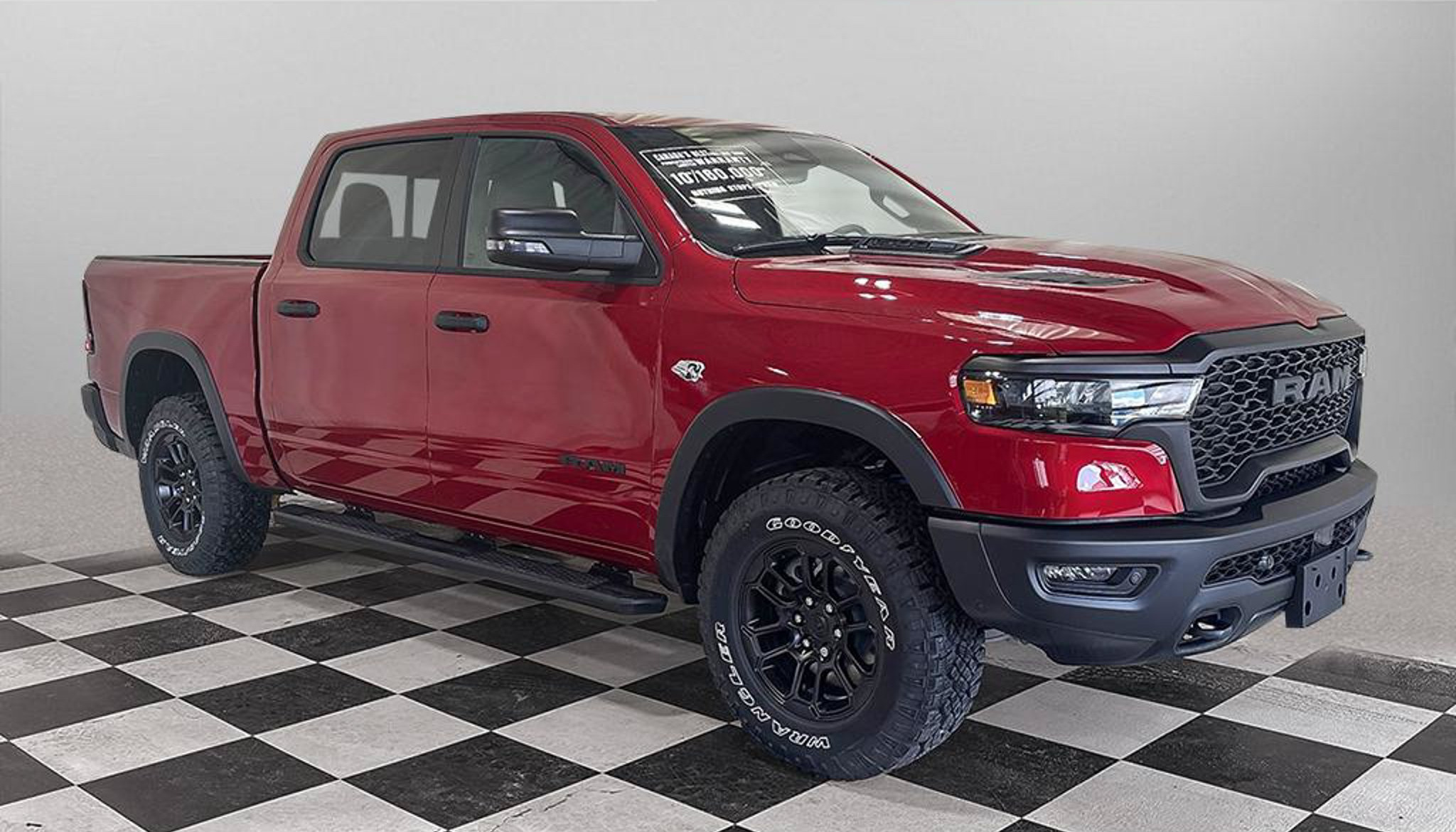
The pitch for an all weather tire is a good one, and it is why the question lands on our parts counter every September. One set of tires. No storage bill. No changeover appointment twice a year. A three peak mountain snowflake stamped on the sidewall, which means it is a severe snow rated tire and not a pretender. If that works, why would anybody bother owning two sets.
It is a fair question, and the honest answer is that it depends on what your truck does between October and April. It also changed for Manitoba this year, because of a rule most people have not heard about yet. Before you spend the money, it is worth getting the difference straight, and our parts department can price both options on your exact truck so you are comparing real numbers rather than guesses.
Key Takeaways
- An all weather tire is a real winter rated tire, not a marketing badge. It carries the three peak mountain snowflake, which means it passed the ASTM F1805 driving traction test on medium packed snow. It is a genuine step above an all season tire.
- A dedicated winter tire is still the better winter tire. Softer compound, deeper tread, far more siping. The Tire and Rubber Association of Canada puts the gap at up to 30 percent shorter stopping distances just below freezing, compared to all seasons.
- The MPI rule changed. As of October 1 2026, the MPI Winter Tire Program will only finance tires designed and marketed solely for winter driving. Tires marketed as all weather, all season, four season or year round are no longer eligible, even when they carry the snowflake. That is a real dollar difference on a truck set.
- The all weather case is genuinely strong for one kind of driver: low annual kilometres, town and highway pavement, a heated garage or a short commute, and no appetite for storing and swapping a second set. If that is you, an all weather tire is not a compromise you should feel bad about.
- The all weather case gets weak fast the moment your truck sees a gravel grid road at 5 in the morning, an unplowed approach, a loaded trailer, or a stretch of polished ice on a Portage la Prairie intersection in January.
What the Snowflake Actually Certifies
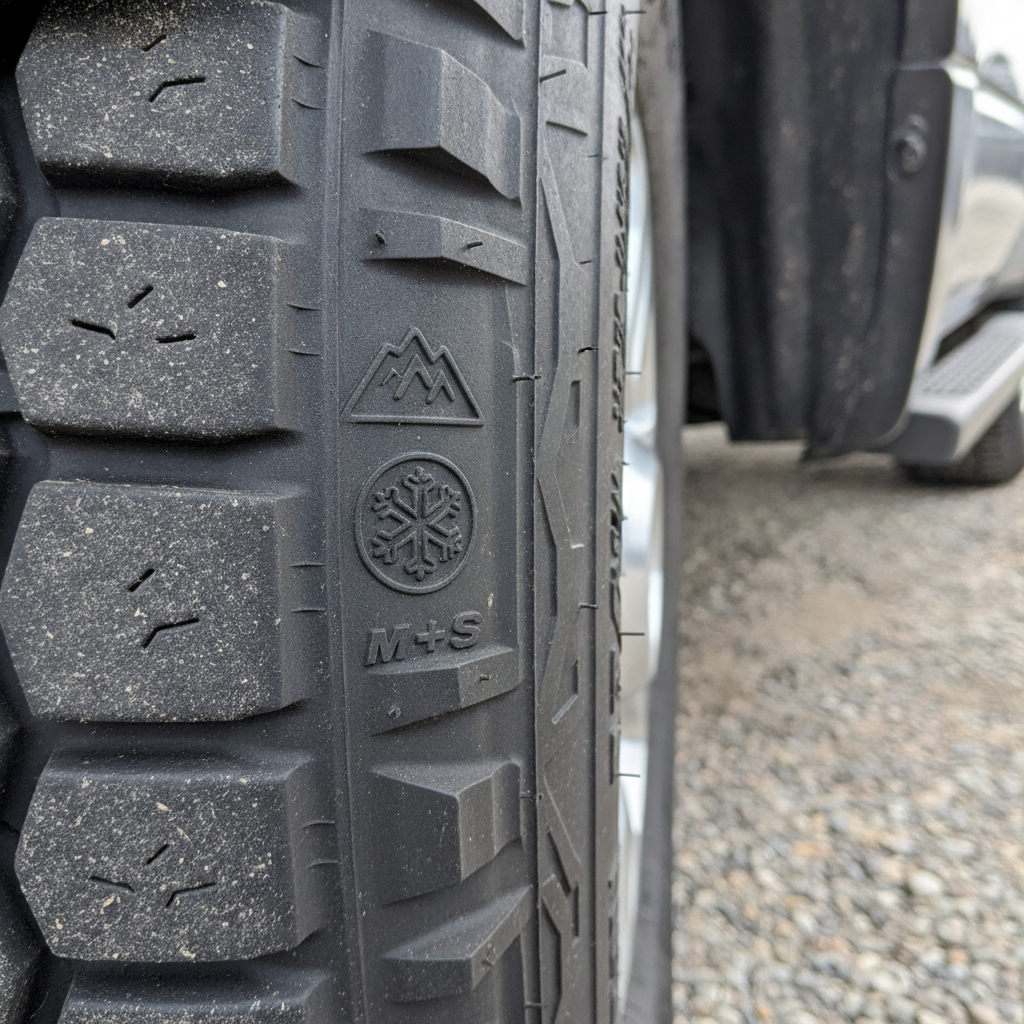
Start here, because this is where most of the confusion lives.

The three peak mountain snowflake symbol came out of a test method the Canadian tire industry helped write. The Tire and Rubber Association of Canada led the creation of the ASTM F1805 test, and since 1999 a tire that wants the snowflake has to pass a driving traction test on a medium packed snow surface. It is a performance standard, not a sticker a marketing department can order.
That matters because it means an all weather tire and a dedicated winter tire have both cleared the same bar. Anyone telling you an all weather tire is "basically an all season with a logo" is wrong. An all season tire does not carry the snowflake at all, and the reason is simple: below 7 degrees Celsius, Transport Canada notes that all season and summer compounds begin to lose elasticity, which costs you traction. An all weather compound is built to stay pliable through that.
So what is the difference between the two snowflake tires. It is the trade the engineer made. A dedicated winter tire only has to be good from October to April, so its compound can be as soft as it likes and its tread can be as open and as heavily siped as it likes. An all weather tire has to survive a July long weekend at 30 degrees with a camper on the hitch, so the compound is firmer and the tread is shallower and tighter. It is a compromise, and it is an honest one. It is just a compromise.

The MPI Change That Takes Effect October 1 2026
This is the part that is new, and it is the reason this comparison reads differently in Manitoba than it does anywhere else in the country.
The MPI Winter Tire Program lets eligible Manitobans finance up to $2,000 per vehicle at prime plus 2 percent, over one to four years, with monthly withdrawals. On a set of truck tires and rims that is not a small thing. It is often the difference between doing it properly this fall and putting it off another winter.
As of October 1 2026, MPI tightened what qualifies. The tire has to carry the three peak mountain snowflake and be designed and marketed solely for winter driving conditions, including snow and ice. Tires marketed as all weather, all season, four season or year round no longer qualify, even with the snowflake on the sidewall.
Read that plainly. If you buy an all weather tire this fall, you are buying it with your own money. If you buy a dedicated winter tire, MPI financing is on the table. That does not automatically make the winter tire the right call, but it does change the arithmetic, and a lot of people running the numbers in their head are running last year's numbers.
None of this is a legal requirement. Manitoba does not mandate winter tires the way Quebec does, and we cover exactly where the law sits on our winter tires and the law in Manitoba page. This is a financing rule, not a ticket.
What Actually Happens on a Prairie Road
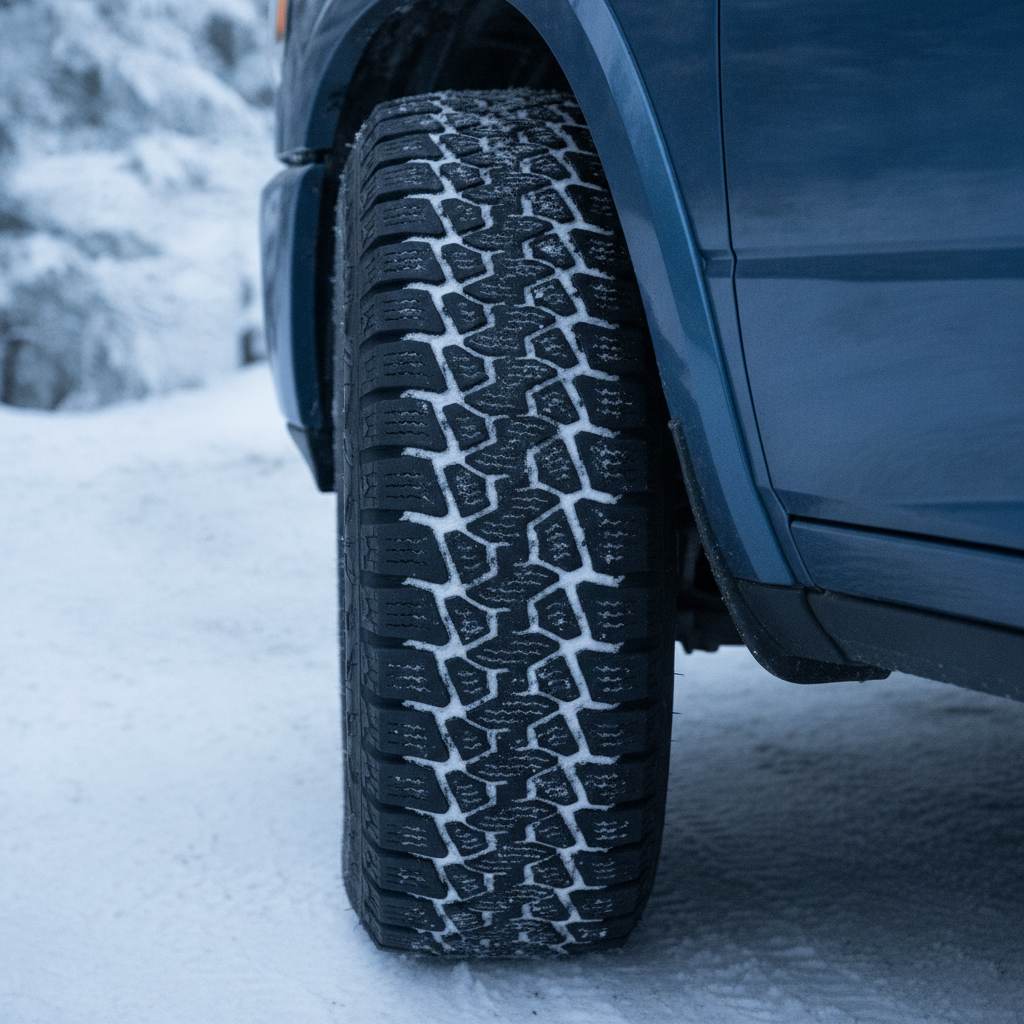
Numbers on a page are one thing. Here is where you feel the difference.
Compound temperature, not snow depth, is the real story. Most people picture winter tires as a snow product. The bigger win is cold. The Tire and Rubber Association of Canada makes the point bluntly: winter tires deliver better traction on an ice or snow covered surface at minus 30 than all seasons manage at plus 4. A lot of our worst mornings out here are not deep snow days at all. They are clear, dry, minus 28 days where the pavement looks fine and the grip simply is not there.
Siping is what grabs ice. Those hundreds of tiny slits across each tread block open under load and bite into a polished surface. A dedicated winter tire has far more of them than an all weather tire does, and on the packed and polished ice that forms at a controlled intersection after a week of traffic, that is the whole ballgame. This is the surface that catches people out, not the highway.
Weight works against you. A three quarter ton truck at 30 below with an empty box is a heavy vehicle with very little over the rear axle. Stopping distance is where that shows up first. If you have ever felt the back end step out on a turn off Saskatchewan Avenue, that is the combination.
Gravel is its own problem. A lot of our customers run a grid road every day. Gravel under a skim of snow chews tread and rewards a tire that can flex and clear itself. An all weather tire's tighter tread packs up faster.
If your truck is already showing its age on the current set, the first question is whether it needs tires at all or whether it needs something else. Our guide on when to replace truck tires covers the tread depth and age thresholds, and Manitoba's legal minimum is 1.6 millimetres, which is a long way past the point where a tire is actually doing its job in winter.
When an All Weather Tire Is Genuinely the Right Call
We are a dealer with a tire counter, so it would be easy to tell you everyone needs two sets. That is not true, and the customers who get sold something they did not need do not come back.
An all weather tire is the right answer when most of these describe you:
- You drive fewer than roughly 15,000 kilometres a year, almost all of it on maintained pavement in town and on the highway.
- Your truck is parked in a garage or a shop overnight, so you are rarely starting cold and immediately asking for grip.
- You have nowhere sensible to store a second set of tires, and paying a storage fee every year annoys you more than the performance gap costs you.
- You genuinely will not get the changeover done on time. A great winter tire sitting in a shed through a November storm is worth nothing. An all weather tire that is actually on the truck beats a winter tire that is not.
- You are in and out of the province or heading somewhere warm mid winter, where a soft winter compound wears quickly on hot dry pavement.
That last point is the one people forget. The best tire is the one on the vehicle when the weather turns. We would rather put a good all weather tire on your truck and have you drive on it all winter than sell you the perfect winter tire you never get around to mounting.
When to Stop Considering It
The other side is just as clear. Go dedicated winter if you tow through the winter, run gravel or unmaintained approaches, start outside every morning, drive before the plows in the early hours, or put on serious kilometres. Also go dedicated if the truck is your work and being stuck is not an inconvenience but a lost day.
And if the MPI financing is what makes the job affordable this fall, that decision is close to made for you now.
Whichever way you go, the fitment has to be right for the truck. Load rating on a truck tire is not a detail you can eyeball, and we cover it in truck tire load ratings explained. If you are running a half ton, our Ram 1500 winter tire size guide has the common fitments.
Getting It Done Before the Rush
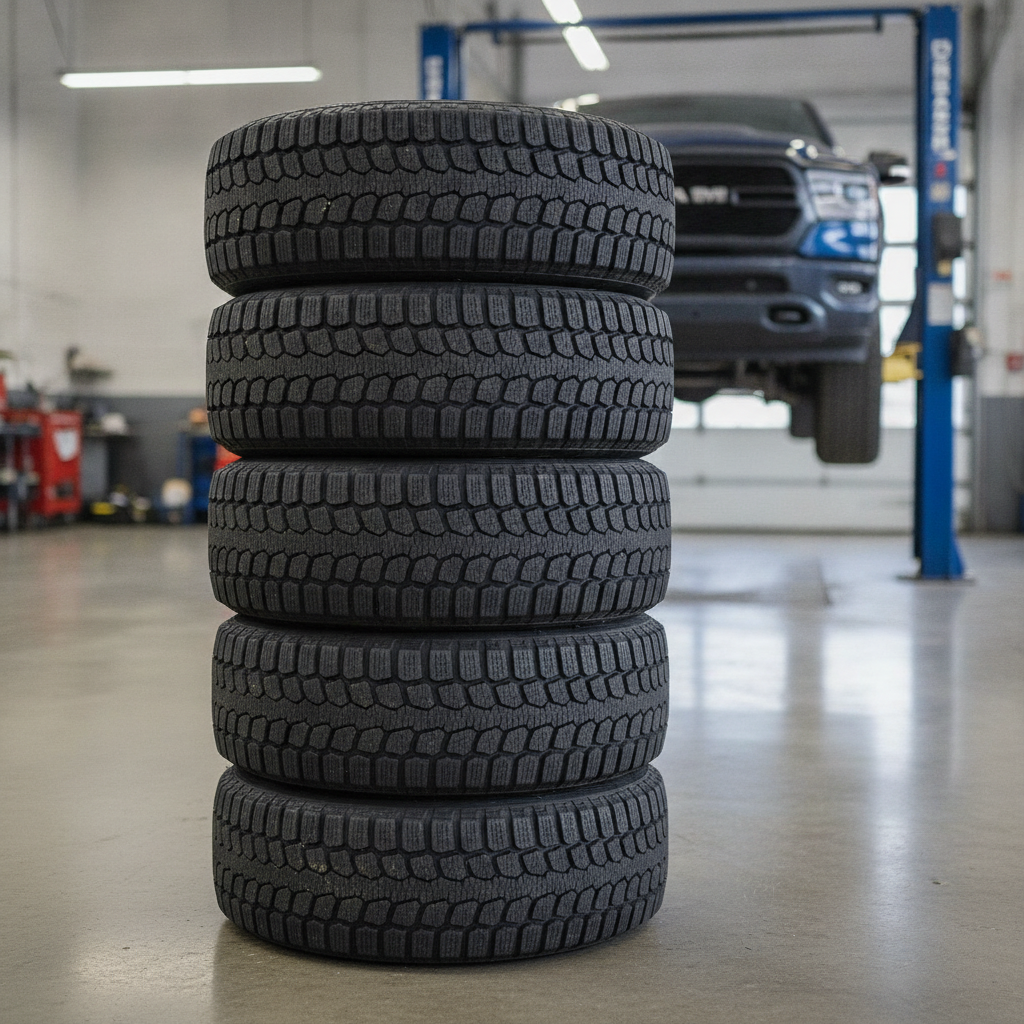
Every year the same thing happens. The first real storm hits, and the phone does not stop for two weeks. The people who called in late September got the appointment they wanted. The people who called after the storm waited.
If you are going dedicated winter, the mounted on rims question is worth asking now, because it changes the cost of every changeover for the rest of the truck's life with you. And if you already have a set sitting somewhere, winter tire storage covers how to keep them from aging badly between seasons.
You can book your changeover online, and our parts department will quote both the all weather and the dedicated winter option on your exact truck so you can see the two numbers side by side, MPI financing included where it applies. If the truck itself is getting tired and you are weighing tires against trading, the current new Ram 1500 inventory and our used inventory are both online.
FAQs
Are all weather tires good enough for a Manitoba winter?
For a lot of drivers, yes. An all weather tire carries the three peak mountain snowflake, which means it passed a real snow traction test, and it stays flexible in cold where an all season hardens. It is a genuine winter rated tire. It is not as good as a dedicated winter tire on ice or in deep snow, because its compound is firmer and it has less siping, so the question is whether your driving asks for that last margin.
What is the difference between all weather and all season tires?
They sound alike and they are not close. An all weather tire carries the three peak mountain snowflake and is rated for severe snow. An all season tire does not carry it, and below 7 degrees Celsius its compound starts to lose elasticity and grip. If you are choosing between the two for a Manitoba winter, the all weather is the only one of the pair that belongs in the conversation.
Does the MPI Winter Tire Program cover all weather tires?
Not after October 1 2026. MPI now requires the tire to carry the three peak mountain snowflake and to be designed and marketed solely for winter driving. Tires marketed as all weather, all season, four season or year round are excluded, even with the snowflake. Dedicated winter tires remain eligible, with financing up to $2,000 per vehicle at prime plus 2 percent over one to four years. Confirm your own eligibility with MPI or with us before you buy.
Do I need all four tires the same?
Yes. Transport Canada is direct about it: install winter tires in sets of four, matched in type, size, speed rating and load index. Two winter tires on one axle and two of something else on the other gives you a vehicle that behaves differently at each end, which is worse than either set on its own.
Will winter tires wear out faster if I leave them on into spring?
Yes, noticeably. A dedicated winter compound is soft by design and it wears quickly once pavement warms up. Plan to come off in spring. Separately, if you run studs, Manitoba's rule is that studded tires are not legal between April 30 and October 1, so that date is fixed regardless of the weather.
The Bottom Line
An all weather tire is a real product and a reasonable choice for a truck that lives on pavement, sleeps indoors and does not see a gravel road at 6 in the morning. A dedicated winter tire is still the better winter tire, and the gap shows up exactly where it hurts, on cold dry pavement and on polished ice.
What changed this year is the money. With MPI financing now closed to all weather tires as of October 1 2026, the dedicated winter set got easier to pay for and the all weather set got harder. That is worth knowing before you decide.
Come see us and we will quote both on your truck, tell you which one we would put on it, and say so plainly if the cheaper answer is the right one for how you actually drive.
Tyler Dunn, Dunn Ram Trucks, Portage la Prairie

























