
Nobody asks this question because they are curious about oil. They ask it because they are trying to decide one thing: do I wait for it, or do I drop the truck off and get on with my day. That is a scheduling question, not a mechanical one, and most answers online get it wrong because they tell you how long the work takes instead of how long the visit takes. Those are two very different numbers.
Here is the honest version for a Ram or a Jeep, including the part most shops leave out. If you would rather just get it booked and choose a time that suits you, you can book service with us and we will tell you exactly what today's wait looks like when you call, because that is the number that actually changes.
Key Takeaways
- The work is short. The visit is not always short. The hands on portion of an oil and filter change on a half ton is a modest job. What stretches a visit is the queue ahead of you, not the drain plug.
- A truck is not a car. A 5.7 litre HEMI takes roughly 6.6 litres of oil, about 7 quarts, and a 6.7 litre Cummins takes roughly 11.4 litres, about 12 quarts. Draining and filling almost twelve litres of cold diesel oil is simply slower than draining four and a half out of a sedan.
- The inspection is part of the job, not an upsell. A proper lubrication, oil and filter service on a truck includes a walk around the vehicle: tires, brakes, fluids, belts, lights, steering and suspension. That is where a lot of the time goes and it is the most valuable part of the appointment.
- Booked beats walk in, especially in October. From the first cold snap onward the service drive fills with winter tire changeovers. A booked appointment is a different experience than arriving unannounced in the middle of that.
- We will not print a stopwatch number on this page. Our real average and whether an express option is running changes with the season and the staffing. Call or book online and you will get today's actual answer instead of a number from a blog post.
Where the Minutes Actually Go
Break the job into its actual pieces and the timing stops being mysterious.

Getting the truck in position. Drive it in, get it on the hoist or over the pit, lift it. On a lifted truck or one wearing a running board, that is not instant.
Draining. This is the step people underestimate. Oil drains at the speed oil drains, and a bigger sump takes longer. Warm oil drains faster than cold, which is one reason a truck that has been sitting outside overnight in November behaves differently on the hoist than one that just came in off the highway.
The filter. On some engines the filter is right there. On others it is tucked behind something and the access is the job. Diesel filters and their housings are their own conversation.

Filling and checking. Put the right volume of the right specification oil in, run it, check for leaks at the plug and the filter, then check the level properly once it has settled. Skipping the settle and check is how a truck leaves a shop half a litre low.
Resetting the oil change indicator. The truck's own reminder system has to be reset or it keeps telling you the oil is old. It is a small step and it gets forgotten more often than you would think. Our post on resetting the oil change indicator on a Ram or Jeep walks through it if yours is still counting down after a service somewhere else.
The inspection. Tires and tread depth, brake pads and rotors, all the fluid levels, belts and hoses, lights, wipers, steering and suspension components, exhaust. On a truck that spends its life on gravel this is the single most useful ten minutes of the whole appointment, because a loose tie rod end or a cracked boot found in October is a cheap fix and the same part found in February is a tow.
Time in the Bay Versus Time in the Waiting Room
This is the distinction that answers the actual question.
Bay time is how long a technician is working on your truck. Visit time is how long you are here. On a quiet Wednesday those two numbers are close together. On a booked Saturday morning in the middle of the October changeover rush, they are not, because every hoist in the building is committed and your truck waits its turn like everyone else's.
That is not a shop being slow. It is a fixed number of hoists and a fixed number of hours, and everybody in the province deciding on the same week that it is time. Our piece on winter tire storage in Winnipeg shows what that wave looks like from the customer side. From inside the service drive it looks like six weeks where the constraint is Tuesday morning, not tires.
So the practical rules are simple:
- Booking is worth more than an early arrival. A booked slot is a reservation on a hoist. Showing up first thing without one is a reservation on a chair.
- Ask when you book whether to wait. We will tell you honestly. Some mornings the right advice is to wait with a coffee, and some mornings the right advice is to leave it with us and pick it up at lunch.
- Combine jobs deliberately. If the truck needs an oil change and a tire rotation and a winter changeover, doing all three in one booked visit costs far less of your day than three separate trips. Our post on how often to rotate tires in Manitoba explains why that pairing makes sense anyway.
What Makes a Truck Take Longer Than a Car
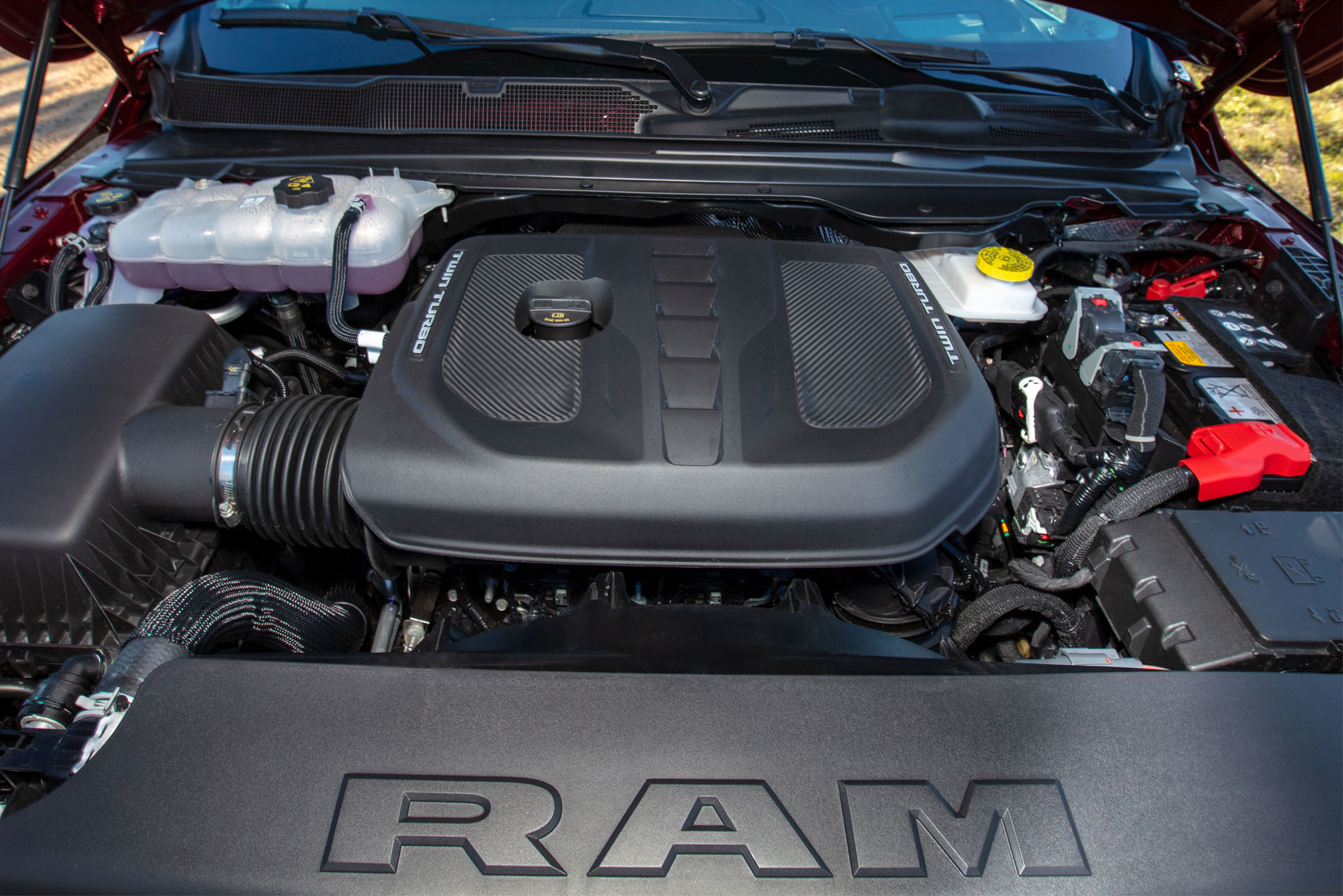
Volume is the first thing. A 5.7 litre HEMI holds roughly 6.6 litres, around 7 quarts, and a 6.7 litre Cummins holds roughly 11.4 litres, around 12 quarts, including the filter. Confirm the exact figure for your engine and model year in your owner manual, because it varies across the lineup. But the direction is clear: a diesel is close to three times the volume of a small car, and every litre of that has to come out and go back in.
Second is access and hardware. Skid plates, undercovers, a lift kit, oversized tires, a snow plow prep package or a heavy aftermarket bumper all change how quickly a technician gets to the plug and the filter. None of that is a problem, it is just time.
Third is specification. The right oil for your engine is not a suggestion and it is not interchangeable. Diesel and gas engines want different oils, and within the gas lineup the requirement has moved over the years. Our post on synthetic versus conventional oil in a Ram 1500 covers why the specification on the cap matters more than the brand on the jug, and our parts department stocks the filters and the correct oil for the trucks we sell so the job does not stall waiting on a part.
Fourth is what the inspection finds. If the technician spots a tire down to the wear bars or a leaking shock, telling you about it takes a minute and deciding what to do about it takes a conversation. That is a good use of the visit, but it is part of why the clock moves.
The Manitoba Timing That Actually Matters

The more useful question than how long is when.
A truck that spent August and September on gravel roads pulling a grain trailer has been running an air filter and an oil filter through a lot of dust, and the oil in it is not the oil that went in. A pre winter oil and filter change on a working truck in late September or early October is one of the cheapest things you can do for it, and it lands the truck on fresh oil right before the cold arrives, when the oil has the hardest job it will do all year.
The other reason to do it now is scheduling. Book it in the first half of October and you are choosing between appointment times. Wait until the first real snow and you are in the same queue as every winter tire changeover in the region. Our guide to fall gravel truck prep in Manitoba covers the rest of that list, and how often you actually need an oil change on a Ram 1500 answers the interval question this one does not.
If the truck is at the point where the service list is getting longer every visit, we will give you a straight read on whether to keep spending on it. Have a look at the new Ram 1500 inventory and ask us, and we will tell you honestly when the answer is to just keep changing the oil in the one you have.
FAQs
How long does an oil change take on a Ram 1500?
The hands on work is a modest job, but the length of your visit depends far more on how booked the shop is that day than on the truck. Call or book online and ask for today's wait. If it is the middle of the October winter tire rush, plan on dropping it off rather than waiting.
Is it faster to wait or drop the truck off?
Dropping it off is almost always less of your day, because your truck moves through the queue whether you are sitting here or not. Waiting makes sense on a quiet day or with a booked early slot. Ask when you book and we will tell you which one today is.
Why does an oil change take longer on a diesel?
Volume mostly. A 6.7 litre Cummins holds roughly 11.4 litres, around 12 quarts, including the filter, against roughly 6.6 litres for a 5.7 litre HEMI. Draining and filling that much oil simply takes longer, and diesel filter housings add a step.
Do I need an appointment for an oil change?
You do not need one to be helped, but you want one. A booked slot reserves hoist time. From the first cold snap through the end of the changeover season an unbooked arrival can mean a long wait, because every bay is committed to tire work.
Does the oil change include an inspection?
Yes. A proper service includes a walk around: tires and tread, brakes, fluid levels, belts, lights, steering and suspension. On a truck that runs gravel that inspection is the most valuable part of the visit, and it is why the appointment is worth booking rather than chasing the fastest possible number.
What if my oil change light is still on afterward?
The indicator has to be reset separately from the service itself. If yours is still counting down, it was likely missed. It is a quick fix and our post on resetting the oil change indicator covers it.
The Bottom Line
The work is short and the visit depends on the day. That is the honest answer, and anybody giving you a flat number without asking what you drive or when you are coming in is guessing.
The move that actually saves you time is booking, and booking early in the fall rather than after the first storm. Book service with us, tell us whether you want to wait, and our service centre will give you the real number for that morning. Pair it with the tire changeover while you are here and you will spend one appointment instead of two.
Tyler Dunn, Dunn Ram Trucks, Portage la Prairie

























