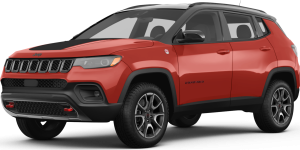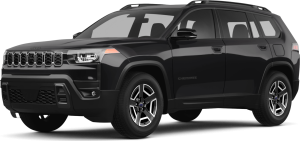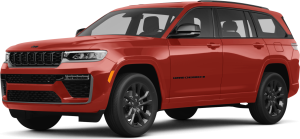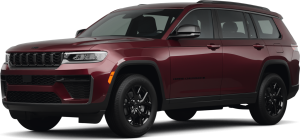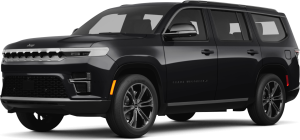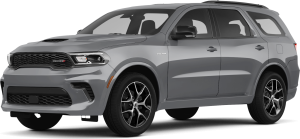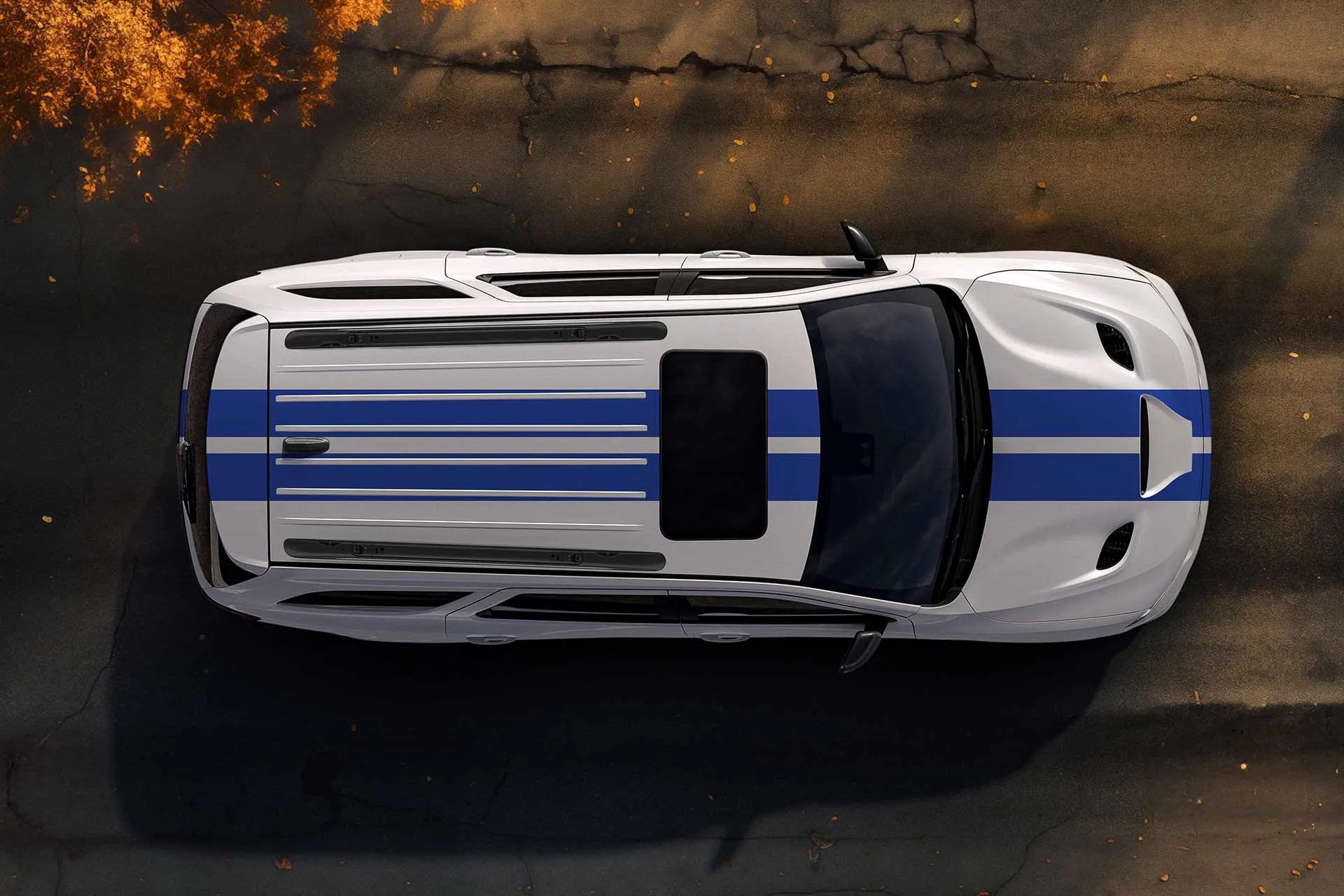
This one happens on our lot most weeks. A family walks in needing a third row, and they end up standing between a Dodge Durango and a Jeep Grand Cherokee L with no obvious way to choose. Both seat the whole crew, both come with four wheel drive standard in Canada, and both are ours, which means nobody here has a reason to talk you out of either.
Shopping already? Browse our new Dodge Durango inventory in Portage la Prairie.
So here is the honest read rather than a sales pitch. If towing and price are what is driving the decision, take a look at the new Dodge Durango inventory first, because it starts lower and it is the only one of the two that gets anywhere near a serious trailer rating. If refinement and fuel bills matter more, the Grand Cherokee L is the better answer, and we will say so.
Every figure below comes from Dodge Canada and Jeep Canada for the 2026 model year, checked in August 2026.

Key Takeaways
- The Durango is the cheaper way in and the far stronger tow rig. Starting At $54,890 for the SXT versus $62,390 for the Grand Cherokee L Laredo. With the 5.7 litre HEMI V8 the Durango is rated up to 3,266 kg (7,200 lb), and up to 3,946 kg (8,700 lb) with the Tow N Go package. Both three rows top out at 2,812 kg (6,200 lb) on their base engines.
- The Grand Cherokee L is the more efficient one, and with the turbo four it is also the more powerful one. Jeep Canada rates the 2.0 litre turbo at 324 horsepower and 332 lb ft, against the Durango V6's 295 horsepower and 260 lb ft. Combined fuel consumption runs 10.7 L/100 km for the turbo L and 11.9 for the Durango SXT.
- Count the seats on the exact trim, not the model. Durango SXT seats five. Durango GT and GT Plus seat seven. On the Grand Cherokee L side, Laredo, Laredo X, Limited and Summit are listed at six with second row captain's chairs, while Altitude comes in at seven.
- Cargo is a genuine tie. Maximum luggage volume is 2,409.8 L in the Durango and 2,395.6 L in the Grand Cherokee L. Nobody is winning that argument.
- The Durango carries more and holds more fuel. Payload 658 kg versus 621 kg, and a 92 L tank versus 87.1 L. On long prairie runs between fills, that is not nothing.
Where the Durango Genuinely Wins
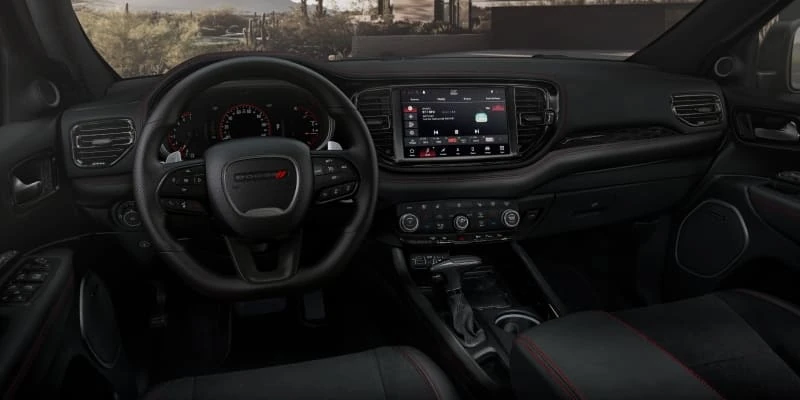
Towing, and it is not close. This is the single biggest separator between these two. Both start at the same 2,812 kg (6,200 lb) rating on their standard engines, so if you never pull more than a small utility trailer, the ratings are a wash. But the Durango is the one that keeps climbing. Dodge Canada rates the 5.7 litre HEMI V8 at up to 3,266 kg (7,200 lb), and up to 3,946 kg (8,700 lb) with the Tow N Go package. The supercharged 6.2 litre HEMI carries the same 3,946 kg. There is nothing on the Grand Cherokee L side that answers that. If you are pulling a bigger travel trailer, a stock trailer, or a boat with a real hull under it, this comparison is already over.
Worth being straight with you though: V8 availability moves around by model year and by allocation, and the Canadian lineup does not always carry every V8 trim the U.S. gets. Ask us what we can actually order right now rather than assuming a V8 Durango is a phone call away.
The price of entry. $54,890 to start on an SXT versus $62,390 on a Grand Cherokee L Laredo is a real gap, and it buys the same basic thing: a three row family vehicle with four wheel drive standard. Both of those are Starting At figures, and that matters, because a Starting At price is not an MSRP. It already includes freight, the federal air conditioning surcharge and any applicable levies, and it already has current manufacturer discounts taken off, less any applicable incentives on top. Check our current pricing here for the most up to date pricing information, because those numbers turn over monthly.

Payload and range. 658 kg of payload versus 621 kg, and a 92 L tank versus 87.1 L. If you routinely load seven people plus gear, or you drive the kind of distances where the difference between fills actually shows up, the Durango has the edge.
The small Manitoba detail. The Durango leaves the factory with a block heater as standard equipment. That is a genuinely useful thing on a February morning in Portage, and it is one less thing to add on later.
Where the Grand Cherokee L Genuinely Wins
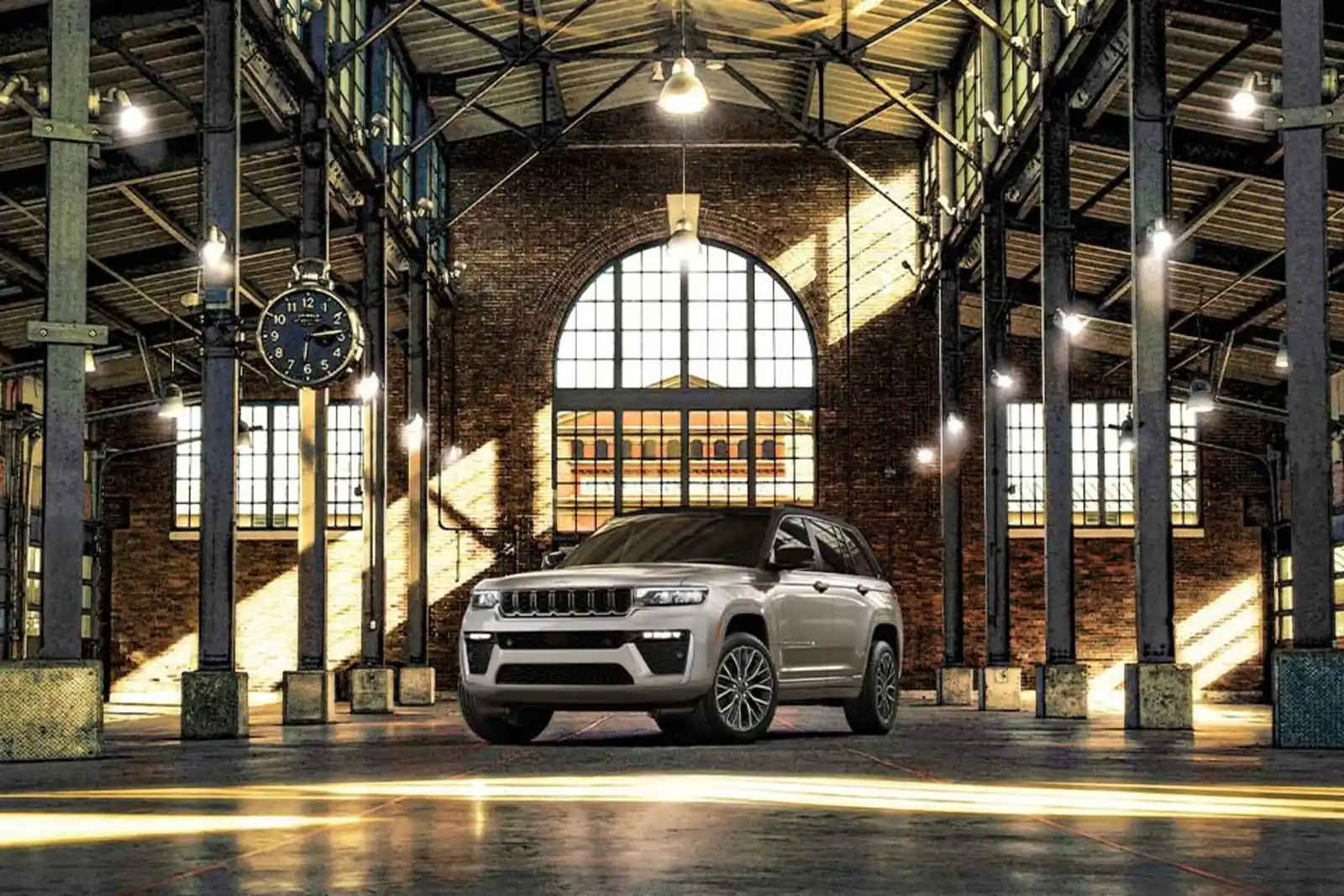
Fuel, on both engines. The Grand Cherokee L Laredo's V6 is rated 13.0 city and 9.4 highway, for 11.3 combined. The Durango SXT sits at 13.5 and 9.9, for 11.9 combined. Step up to the L's 2.0 litre turbo and combined drops to 10.7. Over a year of Highway 1 running that adds up to a real number on the credit card, and it is the argument people underrate when they are standing on the lot getting excited about a V8.
More power, from the smaller engine. This one surprises people. Jeep Canada rates the 2.0 litre Hurricane turbo four at 324 horsepower and 332 lb ft. The Durango's 3.6 litre V6 makes 295 horsepower and 260 lb ft. So unless you go V8 in the Durango, the four cylinder Grand Cherokee L is the stronger vehicle, and it uses less fuel doing it. It also happens to be the trim where the L gets its seven seat configuration, on the Altitude.
The suspension and the 4x4 hardware. The Grand Cherokee range offers the Quadra Lift air suspension, which lowers at highway speeds and raises for clearance, along with Quadra Trac I, Quadra Trac II and the Quadra Drive II system with its electronic limited slip rear differential. Jeep calls the 10.3 inches of available ground clearance best in class for the segment. If your driveway is a quarter mile of drifted approach, or if you actually leave pavement, that hardware is not marketing.
The cabin. This is subjective and we will not pretend otherwise, but sit in a Grand Cherokee L Limited and then sit in a Durango GT Plus, and most people notice the difference in materials and road noise immediately. The Durango is the more honest, more truck flavoured thing. The L is the quieter place to spend four hours.
If you want the full two row versus three row Jeep story first, our post on the Grand Cherokee versus Grand Cherokee L covers that side, and there is a Durango buyer's guide for Winnipeg shoppers as well.
The Seat Count Trap

This catches people, so it is worth its own section.
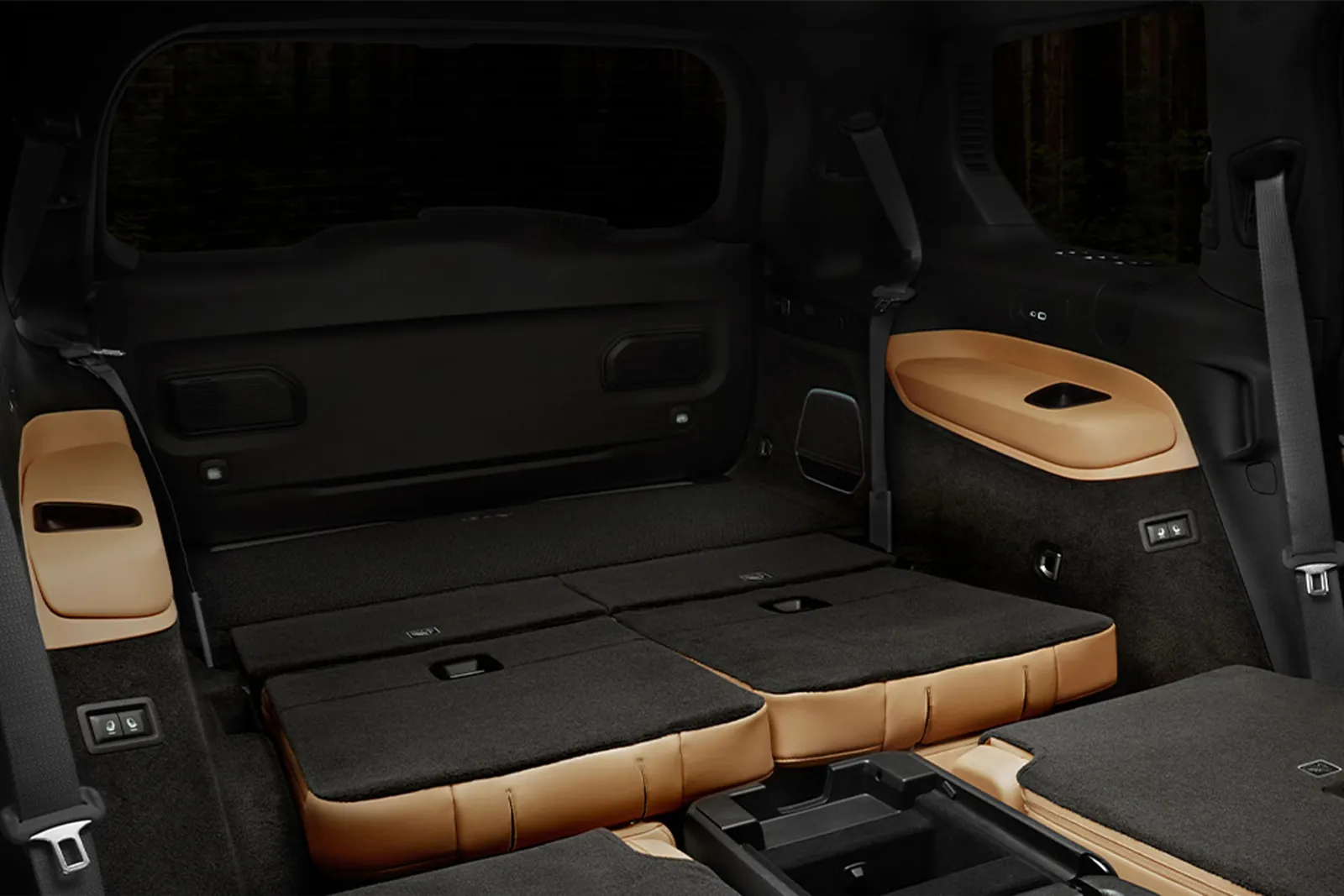
You cannot shop these by the badge. On the Grand Cherokee L, Jeep Canada lists Laredo, Laredo X, Limited and Summit at six seats, because the second row is captain's chairs with a walkway between them. Altitude is the one listed at seven. Over on the Durango side, SXT is a five seater, and you need GT or GT Plus to get to seven.
So a family of seven walking in and pointing at the cheapest Durango on the lot is pointing at a five seater. And a family that specifically wants captain's chairs so the kids stop touching each other is going to prefer the six seat Grand Cherokee L to a seven seat bench.
Neither configuration is better. They just are not interchangeable, and the number on the window sticker is the one that counts. Ask us and we will tell you exactly what is in front of you.
What We Actually Ask People
When someone is genuinely stuck between these two, three questions usually settle it.
What is the heaviest thing you will pull, honestly? Not the boat you might buy in three years. The one in the yard now. If the answer is under 2,812 kg, towing is off the table as a tiebreaker and you should pick on fuel, cabin and price. If the answer is above it, you are buying a Durango with a V8.
How many kilometres a year, and on what road? High mileage highway drivers should weigh the L's fuel numbers heavily. Someone doing 12,000 km a year mostly around town will barely feel the difference, and that person should buy the nicer cabin or the lower price, whichever they care about more.
Who is in the second row? Three kids in car seats is a different problem than two adults. Go sit in both with the actual car seats. We will hand you the keys and get out of the way.
If you are trading something in to make this work, get a real number first with our instant cash offer, and the finance application will show you what each one actually looks like as a payment. There are current offers worth checking on the Durango Eh Plus page too.
FAQs
Which tows more, the Dodge Durango or the Jeep Grand Cherokee L?
The Durango, by a wide margin, once you go V8. Both are rated up to 2,812 kg (6,200 lb) on their standard engines, but Dodge Canada rates the 5.7 litre HEMI V8 Durango up to 3,266 kg (7,200 lb), and up to 3,946 kg (8,700 lb) with the Tow N Go package. The Grand Cherokee L has no equivalent option.
Which one is cheaper?
The Durango. The 2026 SXT starts at $54,890 against $62,390 for the Grand Cherokee L Laredo. Both are Starting At figures that include freight and applicable surcharges and already reflect current manufacturer discounts, less any applicable incentives, so ask us for the real number on the unit you are looking at.
Which is better on fuel?
The Grand Cherokee L on both engines. Its V6 is rated 11.3 L/100 km combined and its 2.0 litre turbo 10.7, against 11.9 for the Durango SXT.
Do both seat seven?
Not on every trim. Durango SXT seats five, and GT and GT Plus seat seven. On the Grand Cherokee L, Altitude is listed at seven while Laredo, Laredo X, Limited and Summit are listed at six with second row captain's chairs. Check the specific trim.
Is the four cylinder Grand Cherokee L actually strong enough?
Yes, and it is stronger than the Durango's V6. Jeep Canada rates the 2.0 litre turbo at 324 horsepower and 332 lb ft against 295 and 260 for the Durango's 3.6 litre. The turbo also uses less fuel. The V6 Grand Cherokee L, at 293 horsepower, is the one that sits closest to the Durango on paper.
Which is better for a Manitoba winter?
Both come with four wheel drive standard in Canada, so neither is a bad answer. The Durango arrives with a block heater as standard equipment. The Grand Cherokee L offers the Quadra Lift air suspension and up to 10.3 inches of ground clearance, which is the better answer for a long drifted approach. Our guide on whether you need 4x4 in Manitoba goes deeper.
The Bottom Line
The Durango is the value and capability answer. It costs less to get into, it carries more, and with a V8 it tows about 40 percent more than anything on the Grand Cherokee L side. It is the more truck flavoured of the two, and for a household with a trailer that is exactly right.
The Grand Cherokee L is the refinement and efficiency answer. It uses less fuel on either engine, its turbo four is genuinely more powerful than the Durango's V6, and the cabin is a nicer place to spend a long drive. For a family doing school runs and highway trips without a trailer behind them, it is the better daily vehicle.
The good part is that they are parked on the same lot. Come drive them back to back on the same afternoon, on the same roads, and the decision usually makes itself in about twenty minutes. Bring your trailer weight and your car seats, and we will give you the straight answer either way.
Tyler Dunn, Dunn Ram Trucks, Portage la Prairie