Half the people who walk in asking about a 2500 do not need one, and about a fifth of the people who walk in asking about a 1500 do. That is not a sales line, it is just what happens when a decision this expensive gets made off a single number on a spec sheet. The real question behind "Ram 1500 vs Ram 2500" is almost never which truck is better. It is whether the job you actually have requires a heavy duty, and the honest answer is often no. Have a look at what is on the ground in our new Ram 1500 inventory while you read, because the truck that suits you is usually sitting there already.
Here is the version we give across the desk in Portage la Prairie, with Ram Canada's own published figures and no thumb on the scale.
Key Takeaways
- The Ram 1500's ceiling is higher than most people think. Ram Canada publishes up to 11,220 lb (5,089 kg) of towing on the 3.0L Standard Output Hurricane twin turbo inline six and up to 10,170 lb (4,613 kg) on the 5.7L HEMI V8, when properly equipped. That covers a very large share of what people actually pull.
- The Ram 2500's advantage is not just the tow number, it is payload and duty cycle. Ram Canada publishes the 2500 at up to 20,000 lb (9,071 kg) of towing with the available High Output 6.7L Cummins Turbo Diesel and up to 4,580 lb (2,077 kg) of payload with the 6.4L HEMI V8, properly equipped.
- The 1500's engine lineup is genuinely broad. Hurricane Standard Output at 420 hp and 469 lb ft, Hurricane High Output at 540 hp and 521 lb ft, the 5.7L HEMI V8 at 395 hp and 410 lb ft, and the 3.6L Pentastar V6 with eTorque at 305 hp and 269 lb ft.
- The 2500 rides like what it is. Heavier springs and a heavier duty chassis mean a firmer ride when the box is empty, and on washboard gravel that difference is something you feel every single day, not just on tow days.
- The honest split: if you tow under about ten thousand pounds occasionally and the truck is also your daily vehicle, the 1500 is very likely the right answer. If you tow heavy regularly, carry real weight in the box, or need a diesel duty cycle, the 2500 earns its keep.
What Each Truck Actually Does

Both are full size Ram pickups. Beyond that they are built for different duty cycles, and the numbers show it.

The Ram 1500, per Ram Canada's published figures. The 3.0L Standard Output Hurricane twin turbo inline six makes 420 hp and 469 lb ft and tows up to 11,220 lb (5,089 kg), with payload up to 1,840 lb (835 kg). The 3.0L High Output Hurricane makes 540 hp and 521 lb ft and tows up to 10,000 lb (4,536 kg), with payload up to 1,510 lb (685 kg). The 5.7L HEMI V8 makes 395 hp and 410 lb ft and tows up to 10,170 lb (4,613 kg). The 3.6L Pentastar V6 with eTorque makes 305 hp and 269 lb ft and tows up to 8,110 lb (3,679 kg), with payload up to 1,790 lb (812 kg). All figures are when properly equipped, and options, equipment, passengers and cargo all move them.
Worth noting, because it surprises people: the High Output Hurricane makes more power but carries a lower published maximum tow rating than the Standard Output. That is not a typo, it reflects which trims and configurations each engine lives in. This is exactly why the engine you want and the number you need have to be checked together rather than assumed.
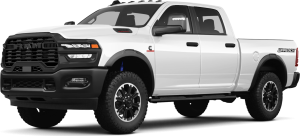
The Ram 2500, per Ram Canada's published figures. The 6.4L HEMI V8 makes 405 hp and 429 lb ft, tows up to 17,440 lb (7,910 kg) and carries payload up to 4,580 lb (2,077 kg). The available High Output 6.7L Cummins Turbo Diesel makes 430 hp and 1,075 lb ft, tows up to 20,000 lb (9,071 kg) and carries payload up to 3,590 lb (1,627 kg). Again, properly equipped, and configuration dependent.

The number that decides it is rarely the tow rating. Payload is where a half ton actually runs out first, especially with a fifth wheel or a heavily loaded box. If you are hauling gravel, a slide in camper, or a trailer with real tongue weight plus a cab full of people, that is a payload conversation, not a horsepower one. Our post on Ram 1500 payload breaks that down properly, and the Ram 1500 towing capacity post covers the other side.
Where the 1500 Genuinely Wins
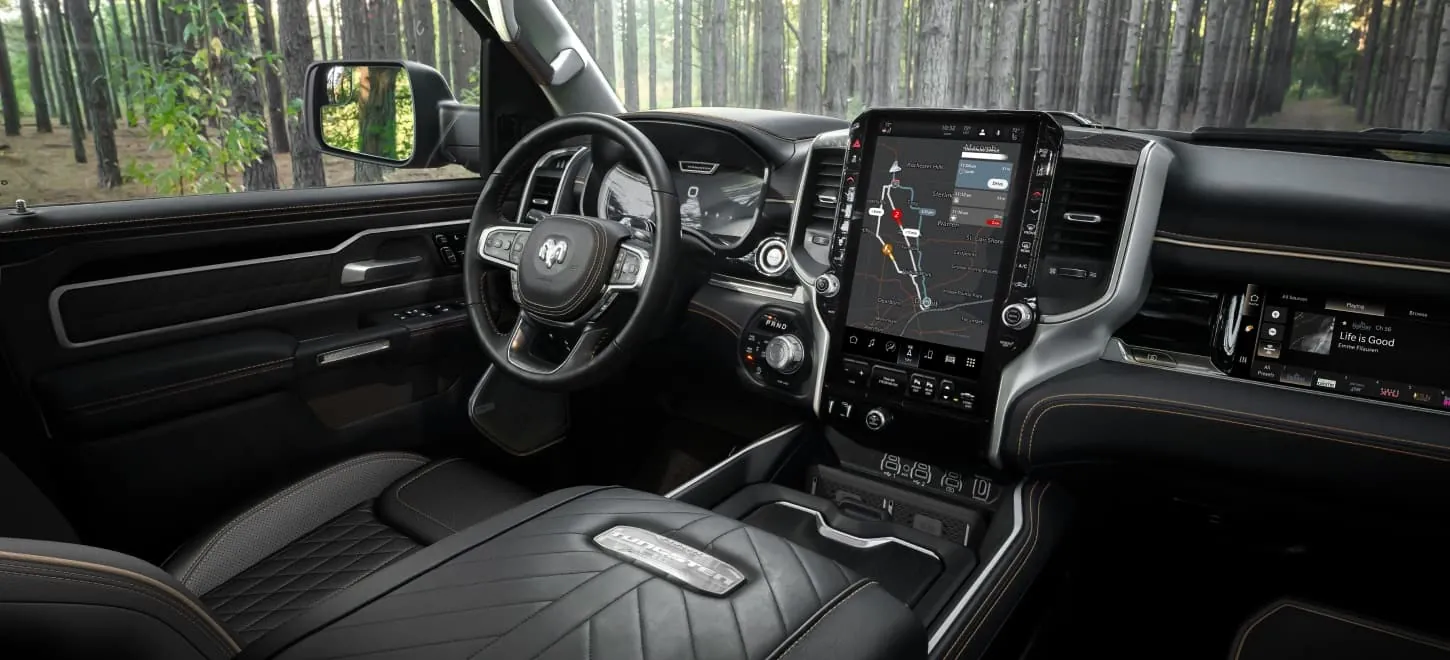
The half ton is not the compromise choice. For most buyers it is the better truck, and here is where it earns that honestly.
Ride quality, and it is not close. The 1500's coil spring rear suspension is the reason it rides the way it does, and on a truck that spends most of its life empty on gravel and highway, that is the difference you feel every day. An empty 2500 on washboard is a firm, busy place to be. An empty 1500 is not.
Running cost across the year. Fuel, tires, and routine service all favour the lighter truck. Over a five year ownership window with mostly empty kilometres, that gap is real money and it does not depend on any assumption about how you drive.
Available features and cabin comfort. The 1500 range is where the interior gets the most attention, from the large available Uconnect touchscreen through the premium leather trims. If the truck is also the family vehicle, that matters more than a tow rating you never approach.
Class exclusive equipment worth knowing about. RamBox lockable bed side storage is a genuine class exclusive on the 1500 and is one of the most useful things on the truck if you carry tools or gear. Active Level four corner air suspension is available on the Crew Cab and is a class exclusive as well, and it does two useful things at once: it settles the ride and it lets you lower the truck for hitching or loading. The available multifunction split tailgate is the kind of feature that sounds like a gimmick until you have loaded a truck parked tight against something.
Daily manoeuvrability. A 1500 fits places a 2500 does not, in a parkade, a drive through, an older garage, or a tight yard. If the truck is your everyday vehicle, you pay that tax every day.
Where the 2500 Genuinely Wins
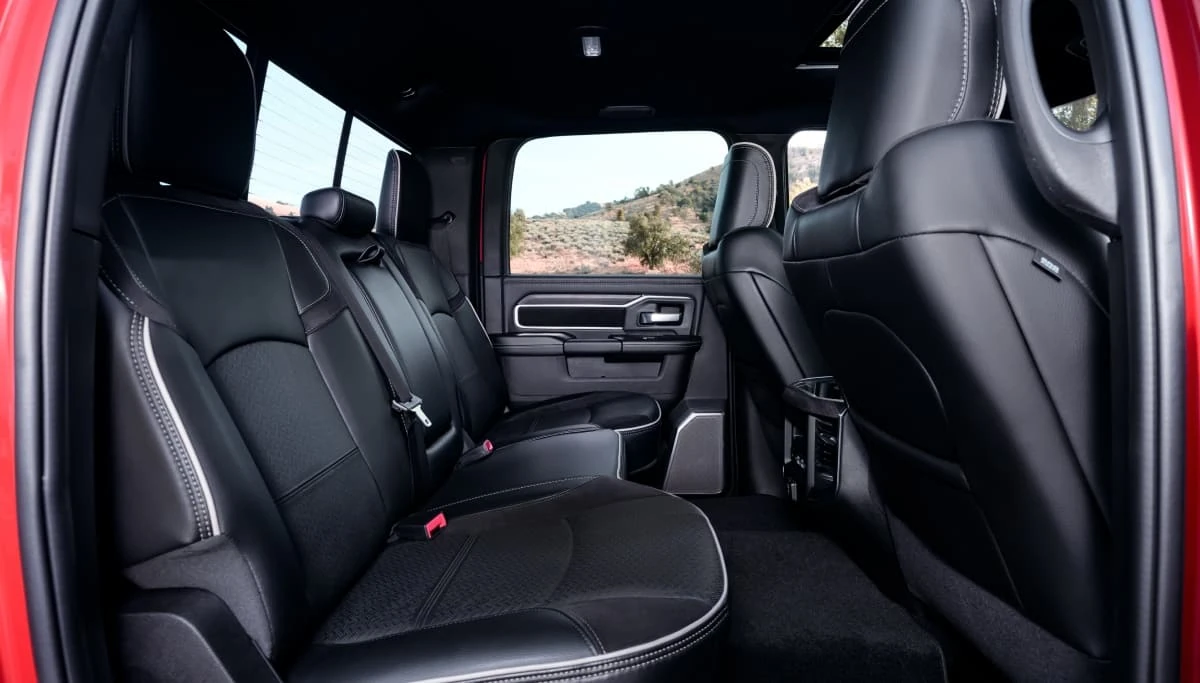
Now the honest other half, because a comparison that hands every category to the truck we would rather sell is not worth reading.
Payload, decisively. Up to 4,580 lb (2,077 kg) on the 6.4L HEMI V8 versus a 1500 ceiling in the neighbourhood of 1,840 lb (835 kg). If your load lives in the box or comes down through a fifth wheel pin, this is the whole argument and nothing about the 1500 answers it.
Sustained towing, not just peak towing. A tow rating tells you what a truck can pull once. Duty cycle tells you what it can pull every week for years. The 2500's heavier cooling, brakes, axles and frame are built for the second thing. If you tow heavy regularly, the heavy duty is not overkill, it is the correct tool and it will last longer doing it.
The Cummins. 1,075 lb ft of torque is a different experience on a long grade with a heavy trailer, and diesel duty cycle and engine braking genuinely matter if you tow for a living. There is no half ton equivalent to that.
Headroom in the numbers. Running a truck near its limit constantly is hard on it. If your load puts a 1500 at ninety five percent of its rating every trip, the 2500 at sixty percent is the better long term ownership decision even though both technically do the job.
If you are leaning heavy duty and wondering how far up the range to go, our Ram 2500 versus 3500 comparison is the next step, and the new Ram 2500 lineup shows what we have.
The Manitoba Version of This Decision

Three local realities change this calculation from the generic version you will find elsewhere.
Most of your kilometres are empty. The typical prairie truck tows hard for a handful of weekends and hauls something in the box occasionally, then spends the other three hundred days as transportation. Buying for the peak load means living with the peak load truck full time. That is sometimes right and often not.
Gravel amplifies the ride difference. On smooth pavement the gap between a 1500 and an empty 2500 is noticeable. On washboard it is significant, and it is the single most common thing 2500 owners mention to us when they are trading.
Winter changes what matters. Both trucks come with four wheel drive on the configurations most people up here buy, but an empty heavy duty with stiff rear springs and less weight per rear tire is not automatically the more confident truck on a slick approach. If you tow in the cold, our post on towing in a Manitoba winter is worth ten minutes.
The other thing that decides this honestly is money, and specifically the difference between the two payments over your real ownership window. Every new Ram 1500 we sell carries our Eh+ value stack, which includes the maintenance plan, anti theft protection, walkaway coverage, and absolutely zero dealer fees. Get a real number on your trade first with our instant cash offer, then compare the two builds side by side rather than comparing a stripped 2500 against a loaded 1500 and calling it a fair fight.
How to Settle It in Five Minutes
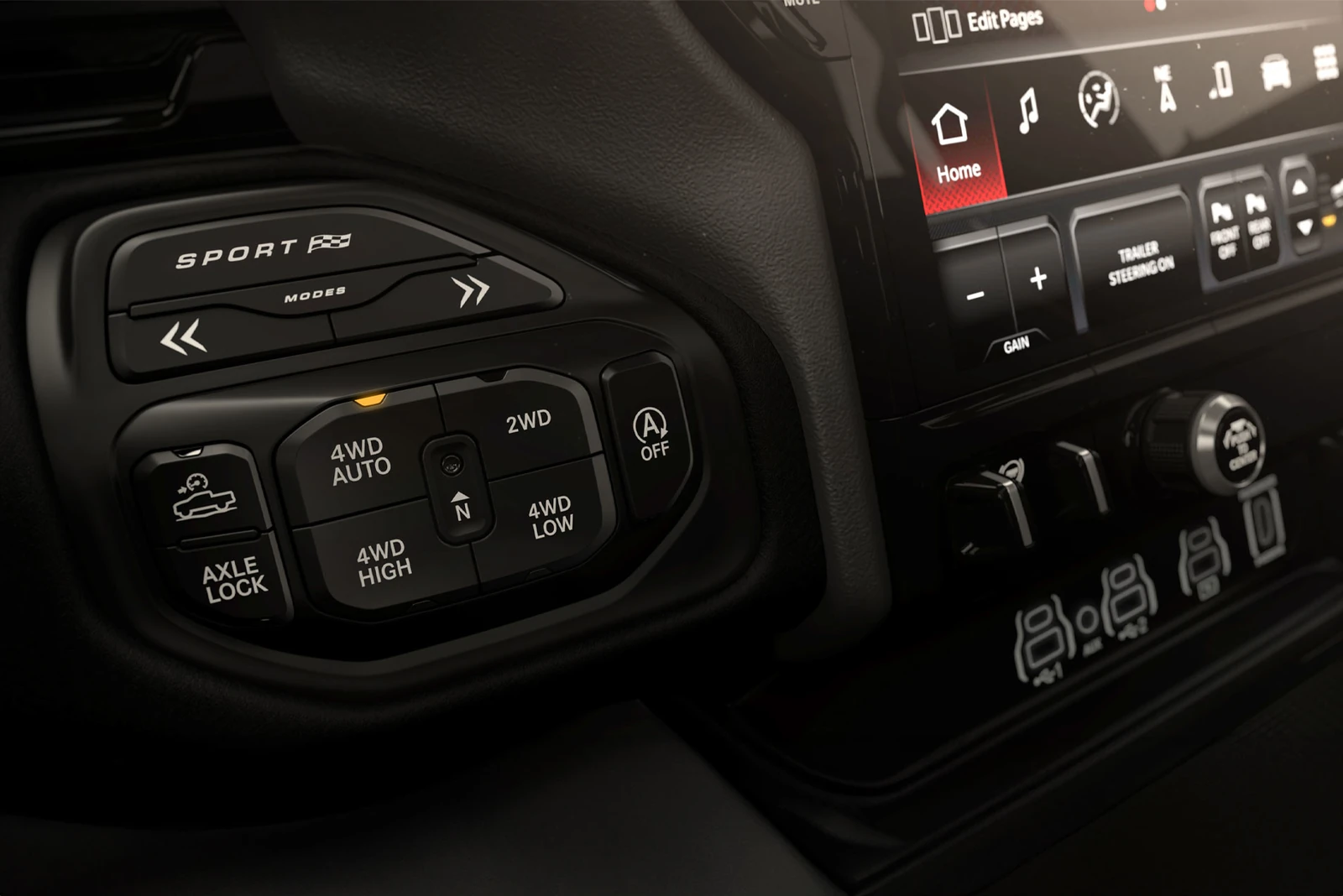
Answer four questions honestly and the truck picks itself.
What is the heaviest thing you tow, loaded, and how often? Loaded means with water, fuel, gear and everything in it, not the dry weight from the brochure. If the answer is under about eight thousand pounds a few times a year, that is 1500 territory without much debate.
What goes in the box? If the answer includes a slide in camper, pallets, gravel, or a fifth wheel pin, run the payload math before anything else.
Is it your daily vehicle? If yes, weight the ride, the fuel, and the size heavily. You will spend far more hours empty than loaded.
Do you tow for work or for weekends? Work means duty cycle, and duty cycle means heavy duty. Weekends usually do not.
Bring us those four answers and the trailer's real numbers, and we will put you beside both trucks rather than talking you into either one. And whichever you end up in, a truck that works for a living earns a proper maintenance schedule, so book service with us when it comes due.
FAQs
How much can a Ram 1500 tow?
Ram Canada publishes up to 11,220 lb (5,089 kg) on the 3.0L Standard Output Hurricane, up to 10,170 lb (4,613 kg) on the 5.7L HEMI V8, up to 10,000 lb (4,536 kg) on the 3.0L High Output Hurricane, and up to 8,110 lb (3,679 kg) on the 3.6L Pentastar V6 with eTorque, all when properly equipped. Your specific truck's rating depends on cab, bed, axle ratio and options.
How much can a Ram 2500 tow?
Up to 20,000 lb (9,071 kg) with the available High Output 6.7L Cummins Turbo Diesel and up to 17,440 lb (7,910 kg) with the 6.4L HEMI V8, when properly equipped, per Ram Canada.
Is the Ram 2500 uncomfortable as a daily driver?
Not uncomfortable, but noticeably firmer when empty, and that difference is most obvious on gravel and washboard. If the truck is primarily transportation and only occasionally a tow vehicle, that is a real consideration and one most people underweight when they are shopping on a tow number.
Do I need a 2500 for a travel trailer?
It depends entirely on the trailer's loaded weight and its tongue or pin weight against the truck's payload. Plenty of conventional travel trailers are comfortably inside a properly equipped 1500's numbers. Fifth wheels are where payload usually forces the move up. Weigh the trailer loaded and bring us the number.
Is the Cummins diesel worth it if I only tow a few times a year?
Usually not on the towing alone. The diesel earns its premium on sustained, heavy, frequent work. For occasional towing the 6.4L HEMI in a 2500, or a well specified 1500, is generally the better financial decision. We would rather tell you that than sell you a diesel you will not use.
The Bottom Line
The Ram 1500 covers far more real world towing than its reputation suggests, and it does it while riding better, costing less to run, and fitting into your life the other three hundred days a year. The Ram 2500 exists for payload, sustained heavy work, and the Cummins, and when you need those, nothing smaller substitutes. Answer the four questions above honestly, bring us the trailer's real weight, and we will point you at whichever truck the numbers actually support even when it is the cheaper one.