
Most people find out their HEMI has sixteen spark plugs the same way. They call around for a price on a plug change, hear the number, and assume somebody added a zero. Then somebody explains that a HEMI V8 runs two plugs per cylinder, and the math suddenly makes sense even if the quote still stings. If your truck is due, the quickest way to get a real answer for your exact truck is to book a service appointment and let us read the schedule against your VIN. Before you do, it is worth understanding why that second plug is in there, because it is not an upsell and it is not a design mistake.
This is the plain version of the whole subject. Why the engine is built that way, what the published maintenance schedules actually say about when the plugs come out, what a past due set looks like in our bays on a truck with prairie kilometres on it, and why this specific job is one we would rather do on a hoist than see attempted in a gravel driveway on a Saturday.
Key Takeaways
- A modern HEMI V8 uses two spark plugs per cylinder, sixteen in total. That covers the 5.7 litre, and the bigger 6.4 litre and supercharged 6.2 litre HEMI engines as well. A V6 Ram has one plug per cylinder, which is why the two quotes look nothing alike.
- The second plug is about burning the fuel completely, not about making power for its own sake. The hemispherical combustion chamber is wide, and the large valves leave no room for a plug in the middle, so the plugs sit off to the sides. Firing from both sides gives a faster, more even burn, which means cleaner emissions and a smoother running engine.
- The interval is long on a modern HEMI and short on an older one. Published schedules for the current generation of the 5.7 litre put plug replacement out in the neighbourhood of 145,000 to 160,000 km, roughly 90,000 to 100,000 miles, depending on model year and which plug the engine left the factory with. Earlier HEMI trucks, generally the ones built before about 2013 and 2014, were on a far shorter schedule, closer to 48,000 km or 30,000 miles.
- Do not take a number off a forum for your own truck. The interval moved more than once as the plugs and the coils changed. Bring us the VIN and we will read the exact published schedule for your engine and model year rather than guessing.
- The symptoms show up under load first. A rough idle at a red light, a stumble pulling a trailer up onto the highway, a cylinder specific misfire code, or a cold start that takes a beat longer than it used to. Those are the ones we actually see when the plugs are past due.
- This is a bay job on this engine. Sixteen plugs, sixteen coil and boot assemblies to deal with, tight access on both banks, aluminum heads, and a torque specification that matters. A plug that has been baked into an aluminum cylinder head for a decade does not always want to come out politely.
Why There Are Sixteen Plugs in There
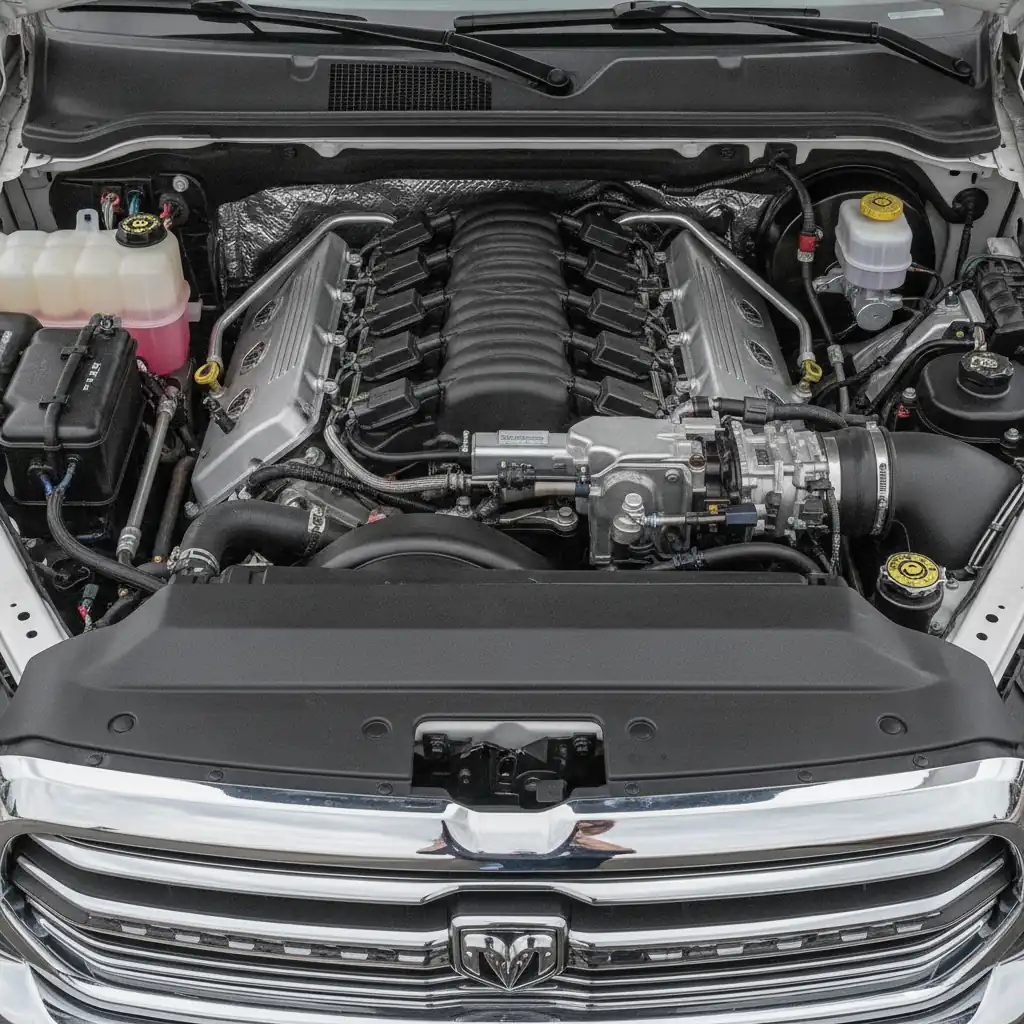
The HEMI name comes from the shape of the combustion chamber. It is a dome, roughly hemispherical, and that shape lets the engine use big valves set at an angle, which is a large part of why these engines breathe as well as they do.

The trade off is space. The valves are so large, and they take up so much of the chamber roof, that there is no practical room for a spark plug in the centre where an engine designer would normally want it. So the plugs get pushed off to the sides of the chamber. One plug firing from the edge of a wide dome leaves fuel at the far side burning late, and late burning fuel is exactly how you get unburned hydrocarbons out the tailpipe and a rougher, less efficient engine.
The fix Stellantis engineered into the modern HEMI is a second plug on the opposite side of each chamber. Fire from both edges and the flame fronts meet in the middle. The burn finishes faster and more evenly, emissions come down, and the engine runs smoother. That is the whole story. Eight cylinders, two plugs each, sixteen plugs, and a service quote that reflects it.
It is worth saying plainly: this is a design that exists to satisfy emissions rules and to make a big V8 civilized. It is not a wear item doubling as a profit centre, and no, you cannot just do eight of them and call it a plug change.

The Honest Answer on the Replacement Interval
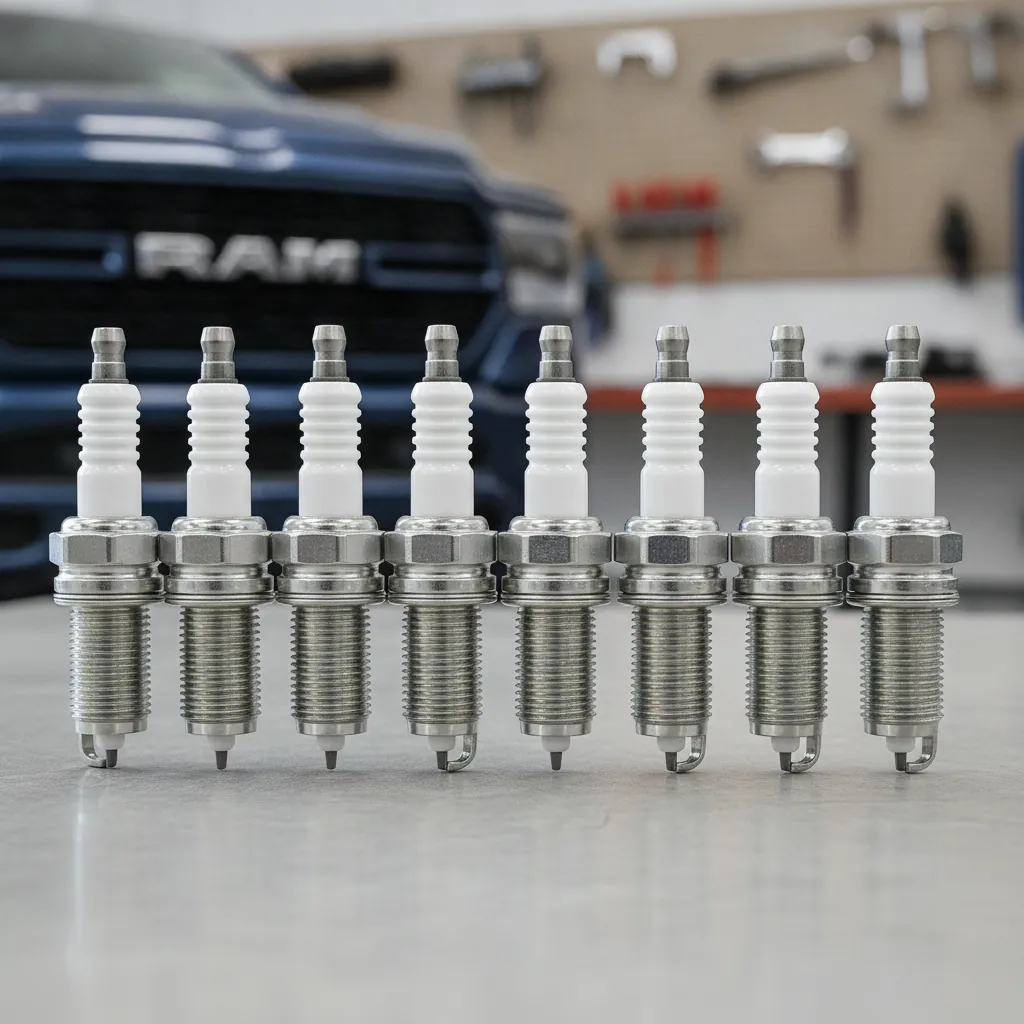
Here is where a lot of internet advice goes sideways, because the answer genuinely changed over the years as the plugs and the ignition coils changed.
On a current generation 5.7 litre HEMI, the published maintenance schedules put spark plug replacement well out into the truck's life, in the neighbourhood of 145,000 to 160,000 km, which is roughly 90,000 to 100,000 miles. The exact figure varies by model year and by which plug the engine was built with, and the schedules are not identical across every year of the truck. On the earlier HEMI trucks, generally the ones built before about 2013 and 2014, the published interval was dramatically shorter, in the range of 48,000 km or 30,000 miles. If you own an older HEMI and you have never had the plugs done, that is not a small oversight, that is a service that came due several times over.
What we will not do is print one confident number here and let you plan a repair around it. The interval belongs to your specific engine and model year, and there is a difference between the schedule for a 5.7 litre, a 6.4 litre, and the Hurricane six that is in a lot of newer trucks. Bring us the VIN, or give it to us over the phone, and we will read the exact published schedule for your truck. That is a two minute conversation and it is free.
One honest working note from our side of the counter. When a truck is right at the top end of the published interval and it has lived its whole life out here, we would generally rather do the plugs a little early than fight a set that has been sitting in aluminum heads through eleven or twelve prairie winters. That is a judgement call, not a manufacturer specification, and we will tell you which one we are giving you.
If you want the wider picture of what comes due and when, our post on the Ram 1500 maintenance schedule walks through the milestones, and the engine and cabin air filter intervals are worth knowing too since gravel dust loads a filter out here faster than the book assumes.
What a Past Due Set Actually Looks Like Out Here
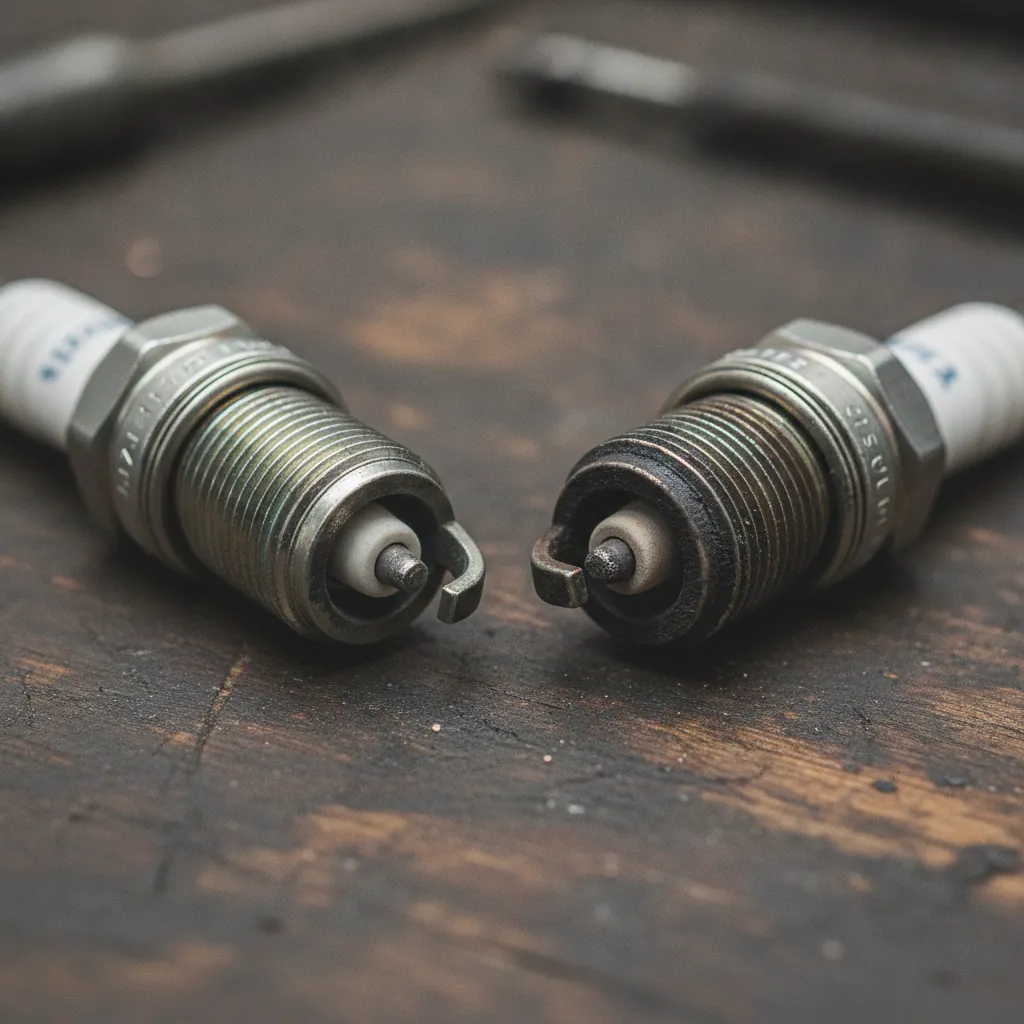
A worn plug does not fail all at once. The electrode erodes, the gap grows, and the coil has to work harder to jump it. For a long while the truck compensates and you notice nothing. Then it starts to show up in specific places, and this is the pattern we see in the bays.
Under load, first. The gap is hardest to jump when cylinder pressure is high, which is exactly when you are pulling a loaded trailer up the ramp onto Highway 1 or working the truck up a grade. A truck that feels perfectly normal running empty around Portage can stumble and hesitate the first weekend it tows something heavy. That is a classic tired plug symptom.
A rough idle sitting at a light. Not dramatic, just a shake at a stoplight that was not there last year, sometimes with the exhaust note going slightly uneven.
A cold start that takes a beat longer. More noticeable in the cold months, when everything is already asking more of the ignition system. A truck that used to fire instantly at minus 25 and now cranks a touch longer is telling you something.
The check engine light, usually as a cylinder specific misfire. The scan tool will name the cylinder, which is genuinely useful information because it points us at that cylinder's plugs, its coil, and its injector rather than at the whole engine. If your light is on, our post on what a check engine light actually means explains how we work backwards from the code.
Fuel economy quietly drifting. This one is easy to miss because it happens slowly and there are a hundred other explanations, including a headwind on the way to Winnipeg and a box full of gear.
There is one more thing worth knowing. A persistent misfire is not just a comfort issue. Unburned fuel that gets pushed into a hot catalytic converter is hard on it, and a converter is a much larger bill than a set of plugs. When the light is flashing rather than steady, that is the truck asking you to stop driving it that way.

Prairie trucks reach these kilometres fast. A crew cab that runs the Portage to Winnipeg commute plus a farm or a job site can put on 40,000 or 50,000 km in a year without anybody thinking about it. That means a 160,000 km service item can arrive in year four, not year twelve, and a lot of owners are genuinely surprised the first time we bring it up.
Why This One Is a Bay Job
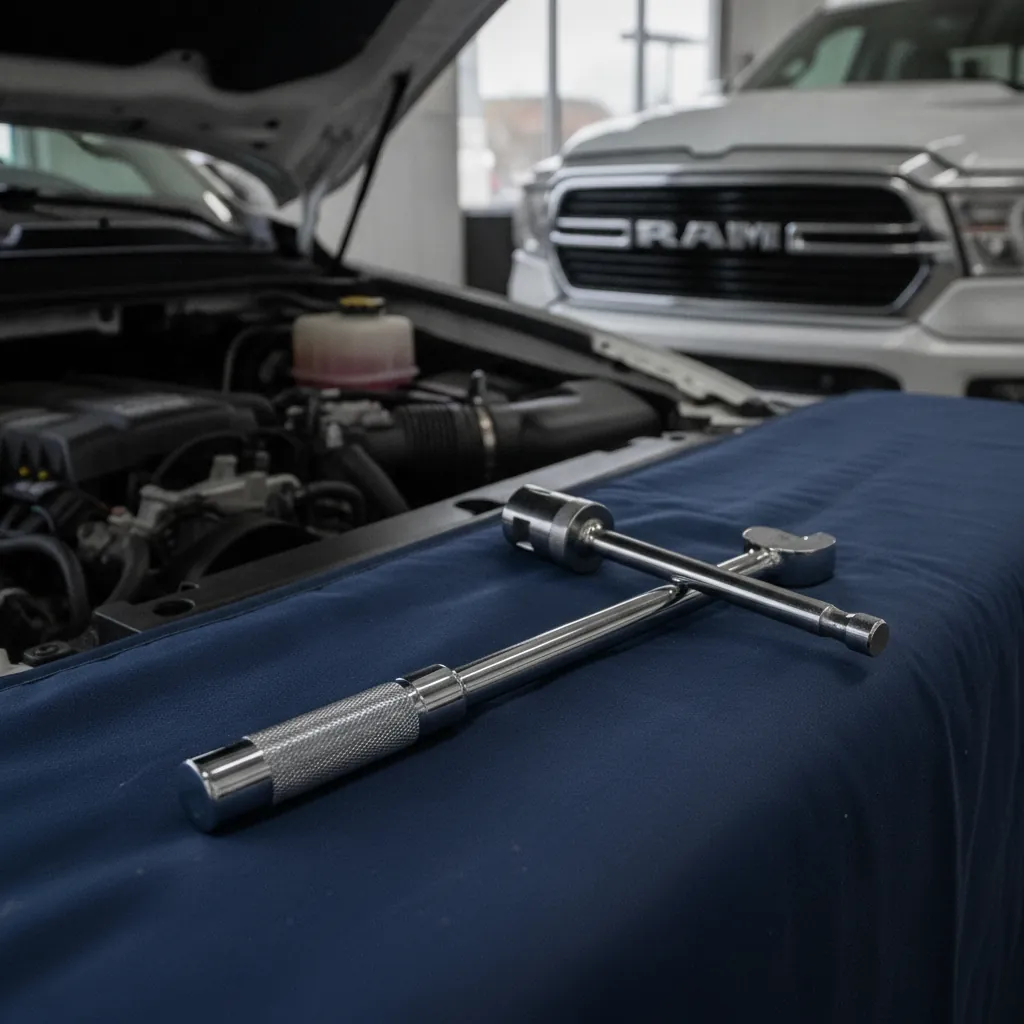
Plenty of people change their own plugs, and on a lot of engines that is a perfectly reasonable Saturday. On a HEMI at high kilometres, there are real reasons we would rather you let us do it.
Sixteen plugs means sixteen chances. Everything that can go wrong on one plug can go wrong sixteen times. Access is not equal across the engine either. Some of them come out easily and some of them are behind things.
Aluminum heads and long service intervals do not mix well. A plug that has been torqued into an aluminum head and heat cycled for well over a decade can seize. When one lets go badly, you are no longer doing a plug change, you are doing a thread repair or worse, and that repair happens in a shop with the right tools whether you wanted it to or not.
Torque specification is not a suggestion. Too loose and a plug can back out or blow by. Too tight in aluminum and you are pulling threads. This is a torque wrench job, every plug, every time.
Coils and boots get inspected while everything is apart. Since we have the coil packs off anyway, that is the moment to look at the boots and the connectors, because a hardened, cracked boot will create the same misfire the new plugs were meant to fix.
The parts matter more here than people expect. Heat range, reach, and the correct plug for your specific engine are not places to improvise, and the genuine parts come through our parts department so we know what went in the truck.
If you are weighing where to have the work done while the truck is still under warranty, we wrote a straight piece on dealership versus independent shop service and what it means for your warranty. And if you would rather just see how our shop runs before you hand over the keys, our service department guide covers it.
FAQs
How many spark plugs does a 5.7 HEMI have?
Sixteen. Two per cylinder across eight cylinders. The bigger HEMI engines, the 6.4 litre and the supercharged 6.2 litre, use the same twin plug arrangement. A V6 Ram uses one plug per cylinder, which is the main reason a HEMI plug quote looks so different from a V6 one.
Why does a HEMI need two spark plugs per cylinder?
The hemispherical combustion chamber is wide and its large valves leave no room for a plug in the centre, so the plugs sit at the edges. Firing from both sides burns the fuel faster and more completely across the whole chamber, which lowers emissions and makes the engine run smoother than a single edge mounted plug could manage.
What is the HEMI spark plug replacement interval?
On a current generation 5.7 litre, the published schedules put it in the neighbourhood of 145,000 to 160,000 km, roughly 90,000 to 100,000 miles, with the exact figure depending on model year and plug type. Older HEMI trucks, broadly the ones built before about 2013 and 2014, were on a much shorter schedule closer to 48,000 km or 30,000 miles. Give us the VIN and we will read the exact published schedule for your truck rather than working off a general number.
Can I replace only the eight plugs that are easy to reach?
No, and it is a false saving. All sixteen are wearing at the same rate, and a mixed set of new and worn plugs gives you an uneven burn and an engine that is only half serviced. If the job is due, the job is sixteen.
What does a HEMI spark plug change cost?
That depends on your engine, your model year, and what we find when the coils come off, so we are not going to print a number here that we cannot stand behind on your truck. Call the service desk or book online and we will give you the real figure for your truck before any work starts.
Do I need to do the plugs if the truck runs fine?
The plugs are a scheduled maintenance item, not a repair, so yes, they come due whether or not you can feel them. Waiting until you can feel it usually means you are also dealing with a misfire, and a long running misfire is hard on the catalytic converter, which is the expensive part of that conversation.
The Bottom Line
Sixteen plugs is not a mistake and it is not padding. It is what a wide hemispherical combustion chamber needs in order to burn cleanly, and it is a big part of why a modern HEMI is as smooth and as clean as it is. The number on the quote is higher because the parts count is higher, and knowing that up front makes the whole conversation easier.
The part that matters for your truck is the interval, and the honest answer is that it belongs to your VIN, not to a forum post. Book a service visit or reach the shop through our service centre page, tell us the kilometres and the model year, and we will tell you exactly where you sit on the published schedule. If the truck has reached the point where the maintenance list is getting long and you are quietly wondering whether it is time to trade, our new Ram 1500 inventory is right there, and we will give you the straight math either way.
Tyler Dunn, Dunn Ram Trucks, Portage la Prairie