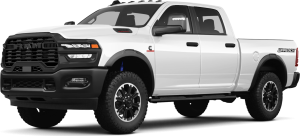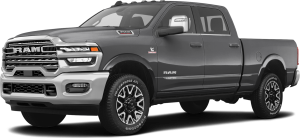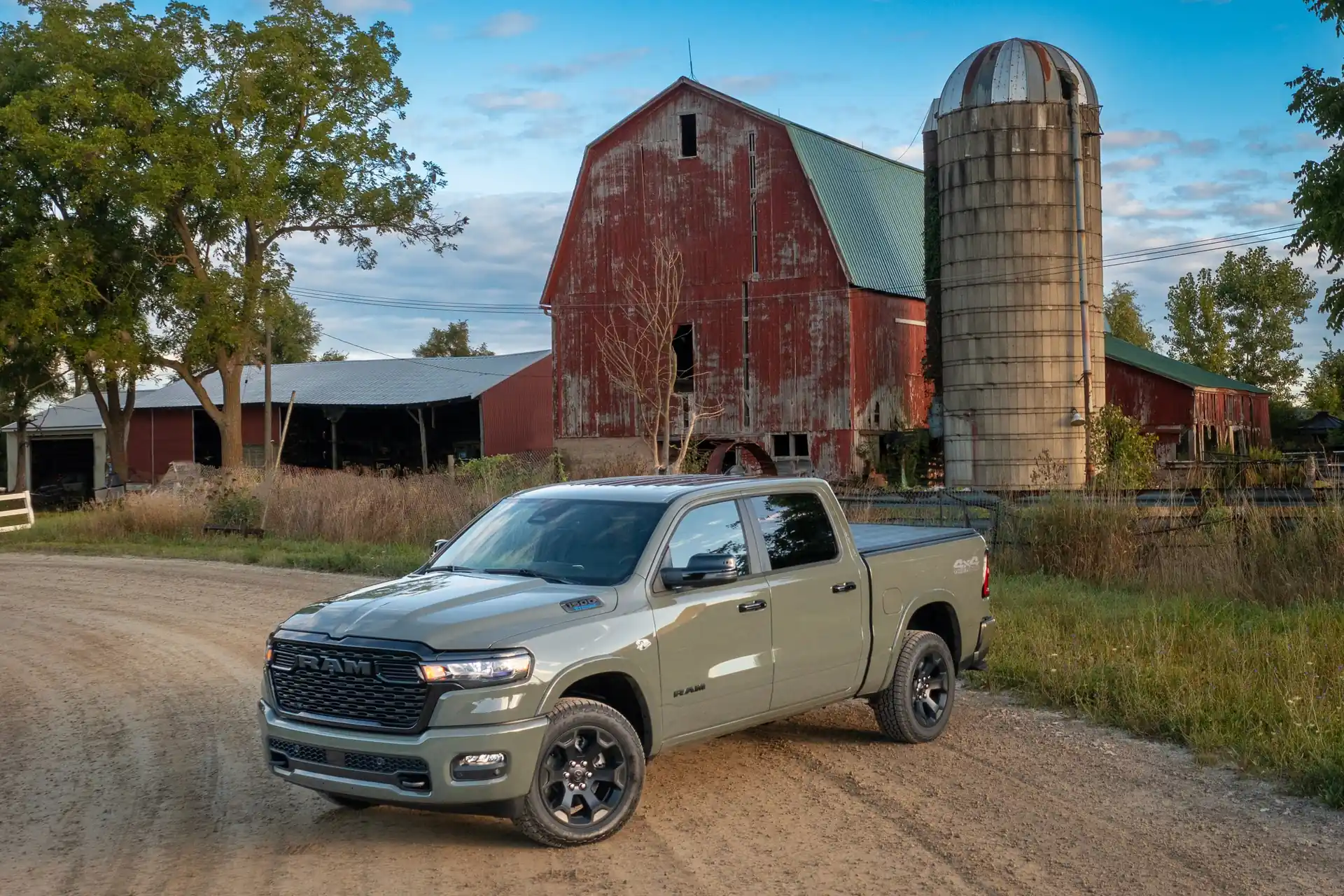
You are standing in front of two trucks that look almost the same. One wears last year's model year, one wears this year's, and the older one has a friendlier number on the windshield. Every buyer who has ever searched "what's new" for a truck ends up at this exact fork, and almost nobody explains the mechanics of it honestly. So here is the straight version from a dealer desk, using our new Ram 1500 inventory as the working example, because this is the decision we walk people through every fall in Portage la Prairie.
The short answer is that a leftover model year truck is usually the better buy, but only for a specific kind of buyer. If you are the wrong kind of buyer for it, the discount that looked like free money quietly costs you more than it saved.
Key Takeaways
- New model year vehicles generally land at dealerships between roughly August and October, and the timing moves by model and by build schedule. The outgoing year does not vanish, it just stops being reordered.
- The savings on a leftover are real and they stack. Factory clearance money, dealer motivation to move a unit that has been floorplanned for months, and whatever program is live that month can all land on the same truck. Nobody can honestly quote a number in a blog post, because these programs change monthly. Ask us what is running.
- On paper, a leftover is already a year old the day you buy it. A new vehicle commonly loses in the neighbourhood of 20 percent of its value in the first year, with published estimates ranging from roughly 15 to 30 percent. That clock is tied to the model year, not to your delivery date.
- The warranty is not shortened. Stellantis coverage begins on the vehicle's warranty start date, meaning the day it is delivered to its first owner, at zero kilometres. A truck does not eat its own warranty while it sits on a lot.
- Buy the leftover if you keep trucks a long time. Wait for the new year if you trade every two or three years, or if the new model year brings a change you will genuinely use.
What Actually Happens to Last Year's Trucks When the New Year Lands
Here is the part that never makes it into the brochure.

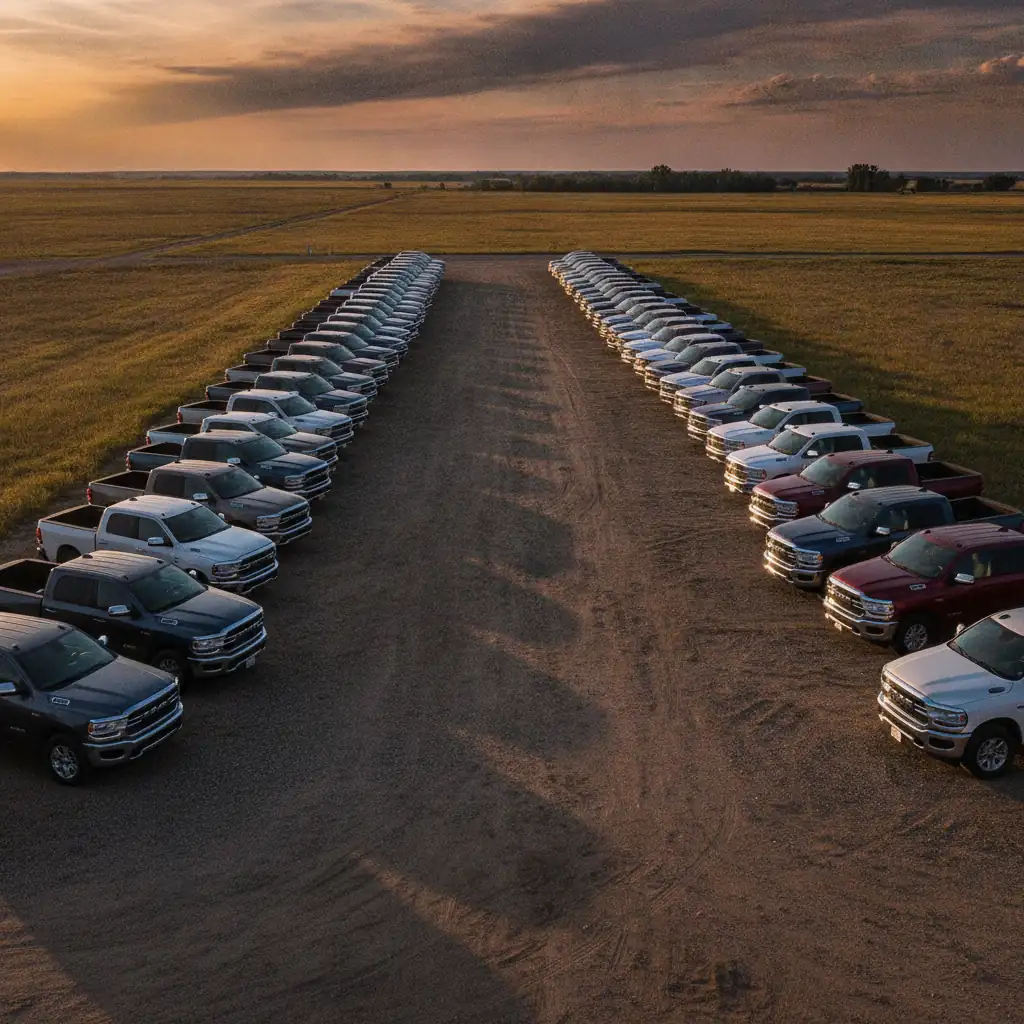
Production of the outgoing year stops before the new year shows up. The pool of last year's trucks is fixed and shrinking from the moment the changeover starts. Nobody is building more. What is on the ground is what exists.
The good configurations go first. The popular colours, the volume trims, the crew cab with the box length everybody around here wants, those move early. What is left later skews toward the odd colour or the loaded unit that has been sitting. That is not a knock, it is just how a fixed pool drains. If the outgoing year has the exact build you want, that is a real reason to move sooner rather than later.
Allocation is the quiet piece. Once the changeover happens, a dealer's ability to get more of the outgoing year is essentially gone, and the new year arrives on a schedule that is not instant. So there is a window where the leftover is the only truck you can actually drive home this month. Out here that matters more than it does in a city, because a farm or a trade cannot wait three months for a build slot when the current truck is done.

The truck itself did not get worse. A leftover is a brand new truck wearing last year's number. Zero kilometres, full factory warranty, and in most cases mechanically the same vehicle as the one beside it. When the year over year change is genuinely cosmetic, badging and colours and trim names, we will tell you it is cosmetic. When it is not, we will tell you that too. Our read on the current changeover is in our 2027 Ram 1500 what's new breakdown.
Where the Discount Actually Comes From
People assume the discount on a leftover is the dealer being generous. It is usually three separate things landing on the same truck.
Factory clearance support on the outgoing year. The manufacturer wants the old year cleared so the new year has room. That shows up as consumer cash, subvented rates, or both. It is program driven and time limited, and it changes month to month, which is exactly why you should never trust a number you read on a blog, including ours. Ask us what is live right now.
Carrying cost on the dealer side. Every unit on a lot is financed. A truck sitting since spring costs money every single day. That is real pressure and it is honest to name it. It is also why the same truck can be a better deal in November than it was in August.
Program stacking. Depending on what is running, clearance money can sometimes sit alongside other eligible offers on the same unit. Sometimes it cannot, because a subvented rate and a cash offer are often an either or choice. Anyone who tells you everything always stacks is selling, not explaining.
Whatever the program is, every new Ram 1500 we sell also carries our Eh+ value stack, with the maintenance plan, anti theft protection, walkaway coverage, and zero dealer fees. That does not change with the model year, and it belongs in the comparison.
The Depreciation Math Nobody Runs
This is the piece that decides the answer, and it is arithmetic, not opinion.
A new vehicle takes its biggest depreciation hit in the first year. The commonly published figure sits around 20 percent, with estimates across sources running roughly 15 to 30 percent depending on the vehicle and the market. After that, the annual loss flattens out.
A leftover is a year old on paper the moment you drive it off the lot. So the question is simple: is the discount bigger than the year of depreciation you are inheriting?
If you keep your trucks a long time, yes, almost always. By year six or seven, whether the badge says 2026 or 2027 barely moves the trade number, but the money you saved at purchase was real and you kept all of it. A truck bought to work for a decade does not care about the model year on the paperwork, and out here that describes a lot of buyers.
If you trade every two or three years, be careful. You will be selling into the steepest part of the curve while carrying an extra year on the valuation. The discount has to be genuinely large to cover that, and sometimes it is not. Get a real number on what you are driving now with our instant cash offer on your trade, because the trade side swings this decision more often than the new side does. Our guide to what actually drives your trade in value in Manitoba covers the rest.
One prairie wrinkle. If you pile on kilometres, and plenty of people running between Portage, Winnipeg, and Brandon do, buying the leftover late in its cycle gives you one more model year to spread those kilometres across. A truck with average kilometres for its year holds up better at valuation time than one that reads high. Small edge, but a genuine one.
When Waiting for the New Year Is the Right Call
We are not going to pretend the leftover always wins. Here are the cases where waiting is the smarter money, and we say so at the desk.
The new year brings something you will actually use. A returning engine, a real capability change, a camera that changes how you hitch a trailer alone. If it is a change you would use every week, pay for it. Cosmetic updates do not clear that bar.
The outgoing pool no longer has your build. If the leftovers do not contain your cab, box, axle, and engine combination, the discount is irrelevant. You cannot buy a truck that does not exist. Ordering the new year is the honest answer.
You trade on a short cycle. Short hold plus an extra year on paper is the one combination where the leftover often loses.
A redesign is landing. A truck being replaced by a redesigned model tends to give up value faster than one in the middle of a generation. That is not always the case, so ask about the specific model rather than assuming.
If budget rather than model year is the real constraint, two other paths are worth a look: work the payment side using our how much truck can I afford in Manitoba guide, or look at a low kilometre truck from our used inventory. Sometimes a two year old truck beats both new model years on pure money, and we would rather tell you that than sell you the wrong one.
How We Actually Work This at the Desk

Three questions, and they take about five minutes.
How long do you keep a truck? If the answer is seven years, we are looking hard at the leftover. If it is three, we run both numbers side by side before anyone gets excited.
What does the new year actually change for you? Not what changed in general. What changed that you would use. We read you the honest list and mark the cosmetic items as cosmetic.
What is on the ground versus what has to be ordered? If your build exists in the outgoing pool today, that is a strong position. If it has to be ordered either way, the model year question mostly dissolves.
Then we put the numbers beside each other, including what the current programs do to the payment. If financing is the deciding factor, start with our finance application and we will work the rate and term against both years.
FAQs
Is it better to buy last year's model truck?
Usually yes, if you keep your trucks a long time. The discount is real, and depreciation flattens after the first few years so the model year on the paperwork stops mattering. If you trade every two or three years it is a closer call and the numbers have to be run.
How much cheaper is a leftover model year truck?
It varies by month, by model, and by how long the unit has been on the lot, because the manufacturer programs behind it are time limited. We will not print a figure we cannot stand behind. Ask us what is running on the outgoing trucks this month and we will show you the number on the actual unit.
Does a leftover truck have a shorter warranty?
No. Coverage begins on the vehicle's warranty start date, the date it is delivered to its first owner, at zero kilometres. A truck that sat on a lot for eight months did not spend eight months of its warranty. That is the biggest misconception about buying a leftover.
Does buying last year's model hurt resale value?
It affects it, because valuation guides work off model year, and a leftover is a year old on paper from day one. Whether that matters depends on how long you keep it. Over a long ownership the effect largely washes out. Over a short one it does not.
When do new model year trucks arrive at dealerships?
Generally between roughly August and October, though it varies by model and by build schedule and has moved around in recent years. The outgoing year stops being produced before the new year arrives, so the leftover pool is fixed and drains from the best configurations down.
The Bottom Line
A leftover model year truck is a brand new truck with a discount attached and a year already spent on paper. Whether that is a good trade comes down to one thing you already know the answer to, which is how long you keep a truck. Long hold, take the discount. Short hold, run the numbers before you sign anything.
Come see what is actually on the ground. Look through the new Ram 1500 inventory, tell us how long you keep a truck and what you tow, and we will show you both model years side by side with the real programs applied. If the honest answer is wait, we will say wait.
Tyler Dunn, Dunn Ram Trucks, Portage la Prairie