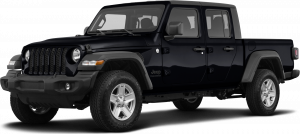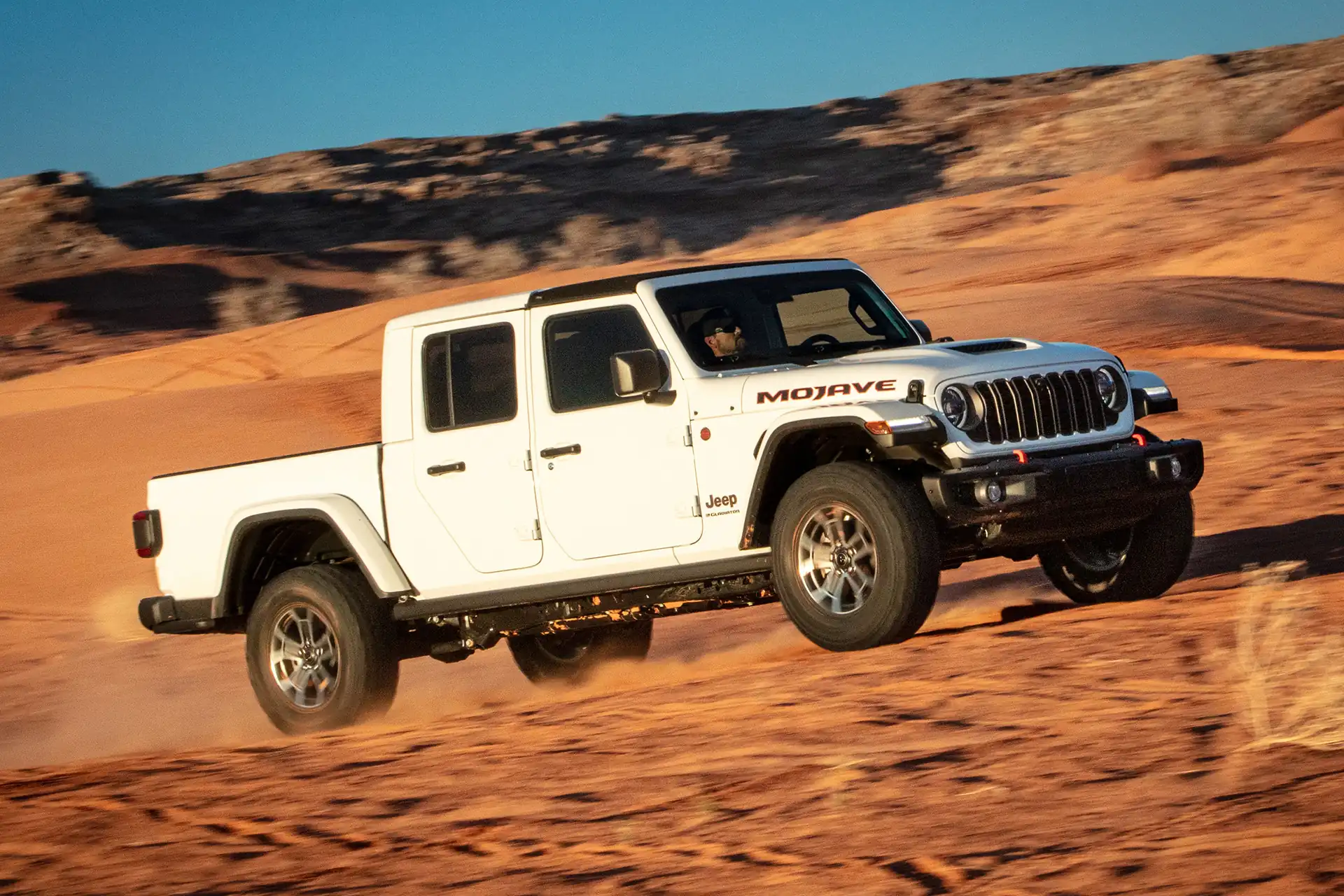
Most people who type "jeep gladiator mojave" into a search bar already know they want a Gladiator. What they are trying to sort out is which one, because the trim names all sound rugged and the differences underneath are not obvious from a photo. The Mojave is not the Rubicon with a different sticker, and it is not the Rockslide appearance package either. It is a genuinely separate build with its own hardware and its own job. If you want to see what is on the ground and what we can order, our new Jeep Gladiator inventory is the place to start, and this is the straight read on where the Mojave fits.
Here is the short version before the detail. The Mojave is Jeep's Desert Rated Gladiator, built to run fast over open sand, whoops, and rough dirt rather than to crawl slowly over rocks. That matters out here, because a lot of what a Manitoba buyer actually drives is gravel and washboard, not a rock garden. So the real question is whether the Mojave's desert tuning is the right tool for a prairie life, or whether you are better served by a Rubicon. We sell these in Portage la Prairie, so this is the version we would give you across the desk.
Key Takeaways
- The Mojave is the only Desert Rated Gladiator. Every other Gladiator wears a Trail Rated badge. The Mojave is tuned for high speed off road running over sand and rough dirt, a different discipline from rock crawling.
- The headline hardware is the suspension. The Mojave rides on Fox 2.5 inch internal bypass shocks with remote reservoirs, plus Fox hydraulic jounce bumpers up front. That combination is built to soak up repeated hits at speed without bottoming out or fading.
- It shares the Gladiator engine. Like the rest of the lineup, the Mojave runs the 3.6 litre Pentastar V6 making 285 horsepower and 260 lb ft of torque, paired with the eight speed automatic. This is not a different engine, it is a different chassis tune.
- Mojave versus Rubicon is the real decision. The Rubicon is the rock crawler, with front and rear lockers and an electronic front sway bar disconnect. The Mojave keeps a rear locker but drops the front locker and the disconnect, and trades some low speed crawl gearing for high speed composure.
- For Manitoba, the honest read is nuanced. The Fox shocks genuinely shine on washboard gravel at speed, which is a real prairie use case. But neither trim's headline feature is a winter feature, and if you do slow, technical, muddy trail work, the Rubicon's hardware is the more versatile pick. Confirm the current Canada availability and the exact build with us before you commit.
What the Gladiator Mojave Actually Is
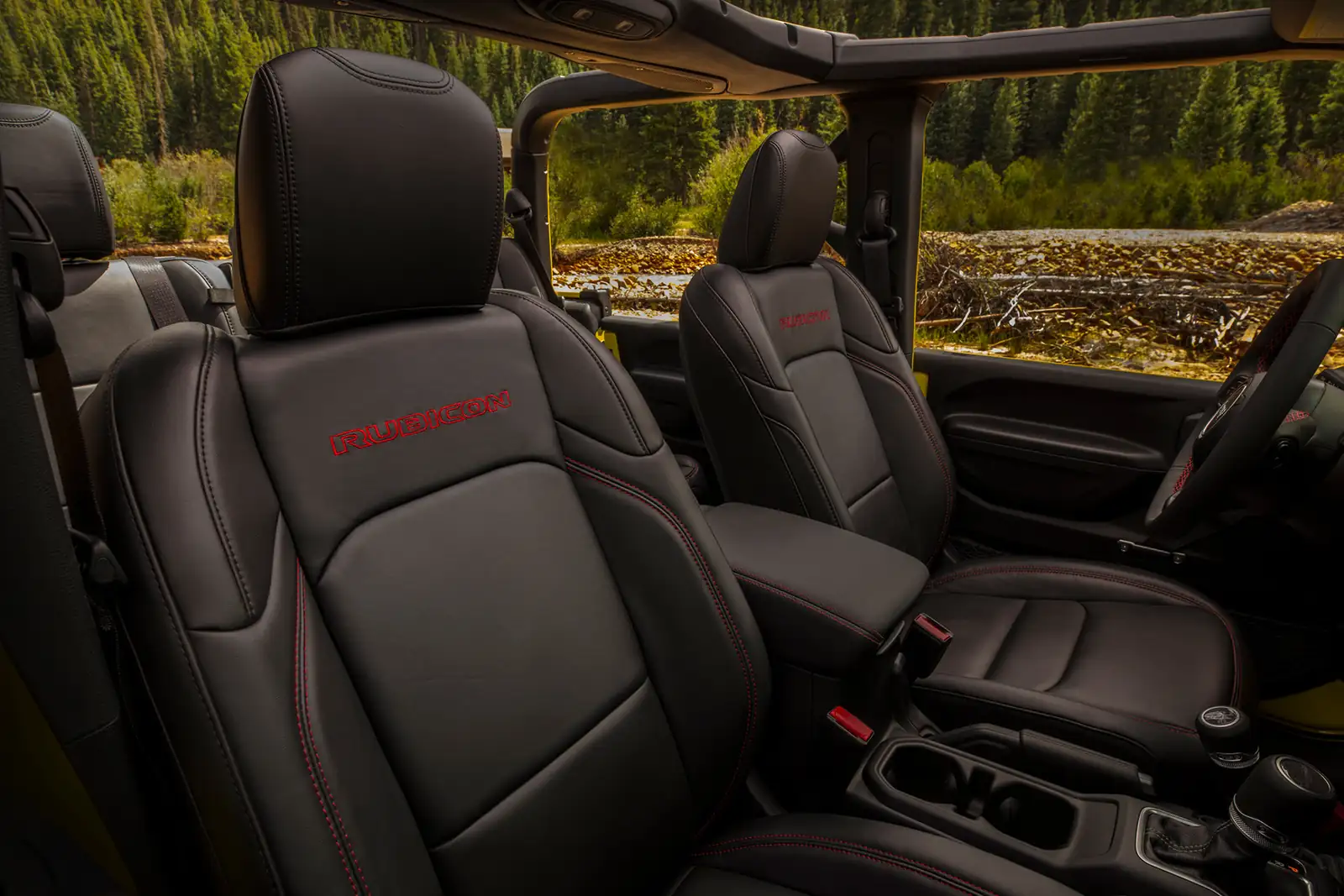
Jeep splits its off road badging into two philosophies. Trail Rated is the one most people know, and it covers slow, deliberate, technical terrain: rocks, ruts, ledges, steep loose climbs. Desert Rated is the newer one, and the Gladiator Mojave is the only Gladiator that carries it. Desert Rated means the truck is engineered to go fast over open terrain: sand washes, high speed dirt, whoops that would rattle a normal suspension to pieces.

To earn that badge, Jeep did not just raise the ride height and call it done. The Mojave gets specially tuned Fox 2.5 inch internal bypass shocks with external remote reservoirs, and Fox hydraulic jounce bumpers on the front. Those bump stops were an industry first as a factory part when the Mojave launched, and the point of all of it is bottom out resistance at speed. An internal bypass shock lets fluid route through ports that change the damping as the shock moves through its travel, so it stays composed over a normal dirt road and then ramps up firmness right before it runs out of travel on a big hit. In plain terms, it is built to take repeated hard hits and keep the tires planted instead of skipping and pogoing.
The Mojave also sits a touch taller in the front and runs a slightly wider track than the other Gladiators to make room for those larger shocks, and it comes on 33 inch all terrain tires. Reinforced components in the front axle and steering handle the higher loads that come with speed over rough ground. It is, in short, a factory prerunner wearing a Gladiator body.
One thing it is not: a different engine. The Mojave uses the same 3.6 litre Pentastar V6 as the rest of the range, rated at 285 horsepower and 260 lb ft of torque through the eight speed automatic. If you were hoping the desert badge came with more power, it does not. What you are paying for is the chassis, the shocks, and the tuning, not a bigger motor.

If the visual, blacked out, street presence side of the Gladiator is more your interest than the desert hardware, that is a different edition entirely, and we break it down in our Gladiator Rockslide edition guide. The Rockslide is about looks and appearance content. The Mojave is about what happens when you point it at a rough road and get on the throttle.
The Fox Shocks and the Desert Tuning, Explained Plainly
The Fox setup is the whole reason the Mojave exists, so it is worth understanding what it buys you and what it does not.
A standard shock has a fixed damping curve. It resists motion the same way whether you are rolling over a gentle dip or slamming into a washout at 60. That is fine on pavement and fine on a smooth trail, but it struggles when the hits get big and repeated, because it either rides harsh over small stuff or blows through its travel on the big stuff. The Fox internal bypass shock solves that with position sensitive damping. Early in the travel it is soft and compliant, so small chatter does not beat you up. Deep in the travel it firms up hard, so a big hit does not bottom the truck out on the frame. The remote reservoirs add oil volume and cooling, which keeps the damping from fading when you are working the suspension hard for a long stretch.
The hydraulic jounce bumpers up front are the last line of defence. When the suspension does run out of normal travel, instead of hitting a rubber stop with a bang, it meets a small hydraulic damper that catches the hit smoothly. That is what lets you drive a Mojave over rough ground at a pace that would have you lifting off in another truck.
Now the honest part. All of that is tuned for speed and impact, not for slow technical crawling. The Mojave is not trying to articulate over a boulder at walking pace with a spotter out front. It is trying to stay flat and planted while you carry momentum over rough terrain. Keep that distinction in your head, because it is the entire basis of the Mojave versus Rubicon decision.
Mojave vs Rubicon for Prairie Use
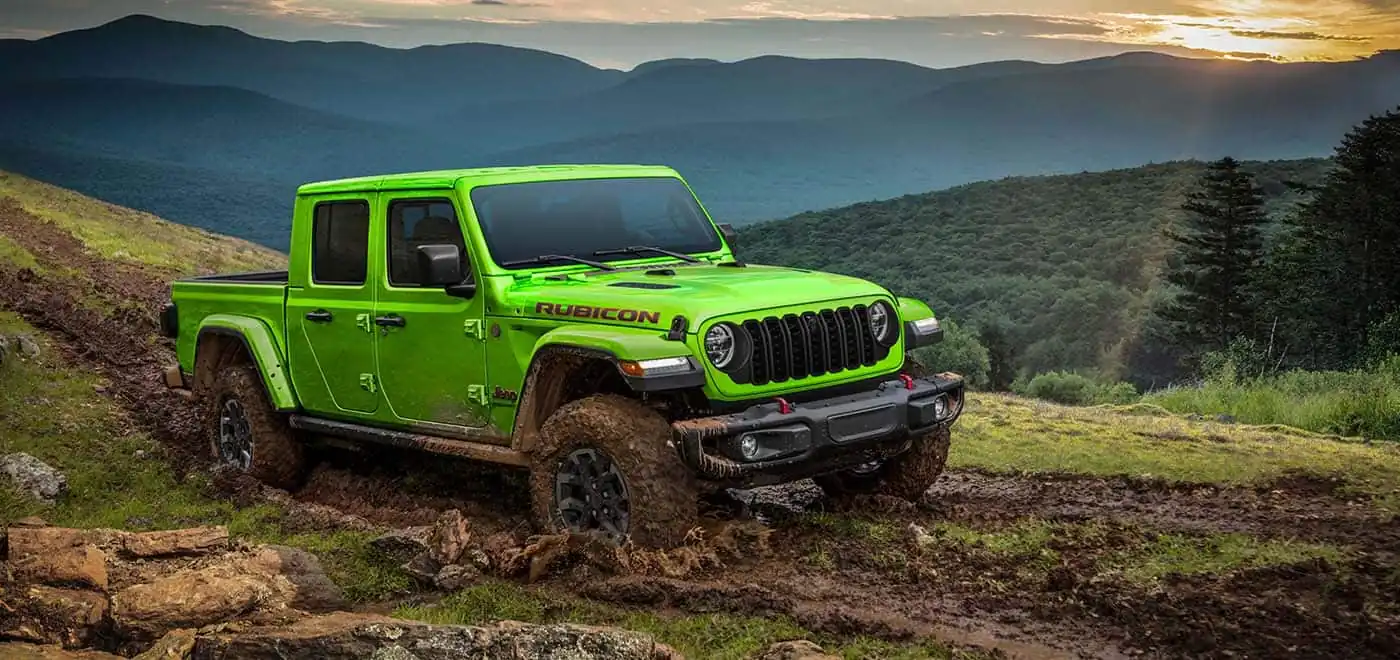
This is the comparison that actually decides your purchase, so here is each truck's real strength, stacked so it reads top to bottom.
Jeep Gladiator Rubicon. The rock crawler. It carries front and rear Tru Lok electronic lockers and an electronic front sway bar disconnect that lets the front axle flex further for grip over uneven ground. It runs lower crawl gearing for creeping precisely over obstacles at low speed. If your idea of off road is mud, deep ruts, cottage trails, steep loose approaches, or picking a line over rocks and roots, the Rubicon's hardware is the more complete kit.
Jeep Gladiator Mojave. The desert runner. It keeps a rear locker for traction but drops the front locker and the sway bar disconnect, and it trades some of that low speed crawl gearing for the Fox suspension and high speed composure. Where it pulls ahead of the Rubicon is exactly the thing a lot of prairie drivers actually do: covering rough, fast, open ground without getting beaten up. A washboard gravel grid road that hammers a normal truck is the Mojave's happy place, because those Fox shocks were designed for repeated impacts at speed.
So which one fits Manitoba? It depends honestly on what you do. If you spend real time on gravel section roads, field approaches, and rough summer back roads and you like to keep your pace up, the Mojave's suspension is a genuine, felt upgrade, not a marketing line. If you do slower, technical, low traction stuff, or you want the most locker and articulation hardware for the money, the Rubicon is the more versatile trail truck. There is no wrong answer, there is only which discipline matches your driving. If you want to weigh the Gladiator against its two door sibling while you are at it, our Wrangler versus Gladiator comparison covers that side of the question.
The Honest Fit for Manitoba Gravel and Winter
Here is where a lot of desert trim marketing quietly falls apart, and where you deserve the straight version.
The Mojave is genuinely good at one prairie thing: fast, rough, dry ground. Washboard gravel, a beat up back road, a rutted field approach taken at a real pace. The Fox internal bypass shocks and hydraulic bumpers do exactly what they are built to do out here, and it is a noticeably more composed ride than a standard truck over that surface. If most of your off pavement miles are that kind of driving, the Mojave earns its keep.
What the Mojave does not do is turn into a snow machine in December. Its headline hardware is desert hardware. It does not add anything special for ice and deep snow beyond the four wheel drive and all terrain tires that make any Gladiator capable. Winter traction on any of these trucks still comes down to a proper set of dedicated winter tires and how you drive, not the desert badge. We tell every Gladiator buyer the same thing regardless of trim: budget for winter rubber, because the all terrain tires that come on it are a compromise once the temperature drops below freezing and the roads glaze over.
The other honest note is ground clearance and approach for slow technical work. If your off road is more about crawling through mud and over obstacles than running fast over open dirt, the Mojave gives up the front locker and the sway bar disconnect that would help you there. That is not a flaw, it is a design choice, and it is the reason the Rubicon exists alongside it.
Bottom line for a prairie buyer: the Mojave is a fantastic fit if you run a lot of fast gravel and rough summer roads and you want that Fox composure. It is the wrong tool if you were really shopping for a slow speed rock and mud crawler, or if you thought the desert badge added winter capability. Either way, the right move is to tell us how you actually drive and let us point you at the trim that matches, whether that is a new Gladiator, a strong low kilometre truck in our used inventory, or something you order to spec. If you are trading up, start with a number on your current vehicle through our instant cash offer tool, and browse the current new Jeep Gladiator lineup while you think it over.
FAQs
What is the difference between the Jeep Gladiator Mojave and the Rubicon?
The Rubicon is built for slow, technical rock crawling. It has front and rear lockers, an electronic front sway bar disconnect, and low crawl gearing. The Mojave is built for high speed off road running. It carries Fox 2.5 inch internal bypass shocks and hydraulic front bump stops, keeps a rear locker, but drops the front locker and the sway bar disconnect. Same engine, different chassis tuning for a different job.
Does the Gladiator Mojave have a more powerful engine?
No. The Mojave uses the same 3.6 litre Pentastar V6 as the rest of the Gladiator lineup, rated at 285 horsepower and 260 lb ft of torque with the eight speed automatic. What you pay for on the Mojave is the suspension and the desert tuning, not extra power.
Is the Jeep Gladiator Mojave available in Canada?
Yes. Jeep listed the Mojave and Mojave X in the 2026 Gladiator Canadian lineup and the range is orderable, with trucks arriving through the model year. Availability and the exact build can shift, so confirm the current Canada availability and what we can get with us before you count on a specific truck.
Is the Mojave a good choice for Manitoba winters?
The Mojave's desert hardware does not add winter capability on its own. Its four wheel drive and all terrain tires make it as capable in snow as any Gladiator, but no more, and real winter traction on any of these trucks comes down to a dedicated set of winter tires. Budget for winter rubber regardless of which Gladiator trim you pick.
Is the Mojave better than the Rubicon for gravel roads?
For fast, rough gravel and washboard, yes, the Mojave's Fox internal bypass shocks are built for exactly that and ride more composed at speed. For slow, technical, muddy trail work, the Rubicon's lockers and articulation hardware make it the more versatile pick. Match the trim to the kind of driving you actually do.
The Bottom Line on the Gladiator Mojave
The Jeep Gladiator Mojave is a real, distinct trim with a real, distinct purpose. It is the Desert Rated Gladiator, built around Fox internal bypass shocks and hydraulic bump stops to run fast over rough open ground, and it is a genuinely different truck from the rock crawling Rubicon and the appearance focused Rockslide. For a prairie buyer who spends time on fast gravel and rough summer roads, that desert tuning is a felt upgrade. For a slow trail crawler or a buyer who assumed the desert badge added winter grip, it is the wrong read, and the Rubicon or a well chosen alternative is the better call.
The right next step is the same either way. Tell us how you actually drive, look through the current new Jeep Gladiator inventory, and if you are shopping Jeeps in the city too, our Jeep buyer's guide for Winnipeg is a good companion read. We will give you the straight answer on which Gladiator trim is the smarter truck for your life and what it actually costs.
Tyler Dunn, Dunn Ram Trucks, Portage la Prairie