Towing is straightforward enough on dry pavement in July. Add a Manitoba winter, ice under the snow, a crosswind that does not quit, and short cold daylight, and the same trailer becomes a genuinely different job. A loaded trailer changes how your truck stops, turns, and recovers from a slide, and winter amplifies every one of those changes. Most of the trouble we hear about does not come from people who could not tow. It comes from people who towed in winter exactly the way they tow in summer, and the road did not give them the room.
If you are pulling sleds to the trails, a trailer of gear out to the lake, a load for work, or a camper you are not done with yet, this is the straight guide to doing it safely when the road is cold and slick. We sell the trucks that do this work and we service them through every winter, so this is the practical version, the stuff that actually keeps you and everyone around you out of the ditch.
Key Takeaways
- Everything takes longer and more room in winter. Stopping distance with a trailer on snow or ice can stretch dramatically. Leave far more following distance than you think you need, and slow down sooner.
- Smooth is the whole game. Gentle inputs on the brakes, the throttle, and the wheel keep the trailer settled. Sudden anything is what starts a slide or a sway.
- Trailer sway is more dangerous on ice. A sway that you could correct on dry pavement can turn into a jackknife on a slick road. Slow down at the first hint of it, and never speed up to "drive out" of sway.
- Winter tires on the truck matter even more when towing. You are asking the truck to control more weight on less grip. Good rubber on the drive and steer wheels is doing real work.
- Match the truck to the load honestly. A trailer that is fine behind a half ton in summer asks more of the truck on a winter road. Know your real weights and that your truck is genuinely rated for them.
- Do a real pre trip check in the cold. Trailer brakes, lights, tire pressures, the hitch and safety chains, and the trailer connector all behave differently when it is bitter out.
Why Winter Towing Is a Different Job
Start by understanding what actually changes, because the physics is the whole reason winter towing demands more of you.

When you add a trailer, you add weight, and that weight wants to keep moving when you try to stop or turn. On dry pavement your tires have enough grip to manage that, the truck slows the trailer, the trailer follows the truck. On a snow covered or icy road, the grip available to do all of that shrinks, sometimes dramatically, while the weight you are trying to control stays exactly the same. So the trailer that followed obediently in summer now has the leverage to push your truck around when traction runs low. That is the core of it: same load, far less grip, and the margin for error gets thin fast.
Three things follow directly from this. Your stopping distance grows a lot, because you are slowing more total weight on less grippy ground. Your ability to recover from a slide or a sway shrinks, because the tires have less grip to claw back control with. And the consequences of any sudden input, a hard brake, a sharp steering correction, a stab of throttle, get bigger, because the road cannot absorb the mistake the way dry pavement would. None of this means you cannot tow in winter. Plenty of us do it all season. It means you tow differently, with more room and a gentler hand, and you respect what the road can and cannot give you.
Slow Down, Leave Room, and Be Smooth
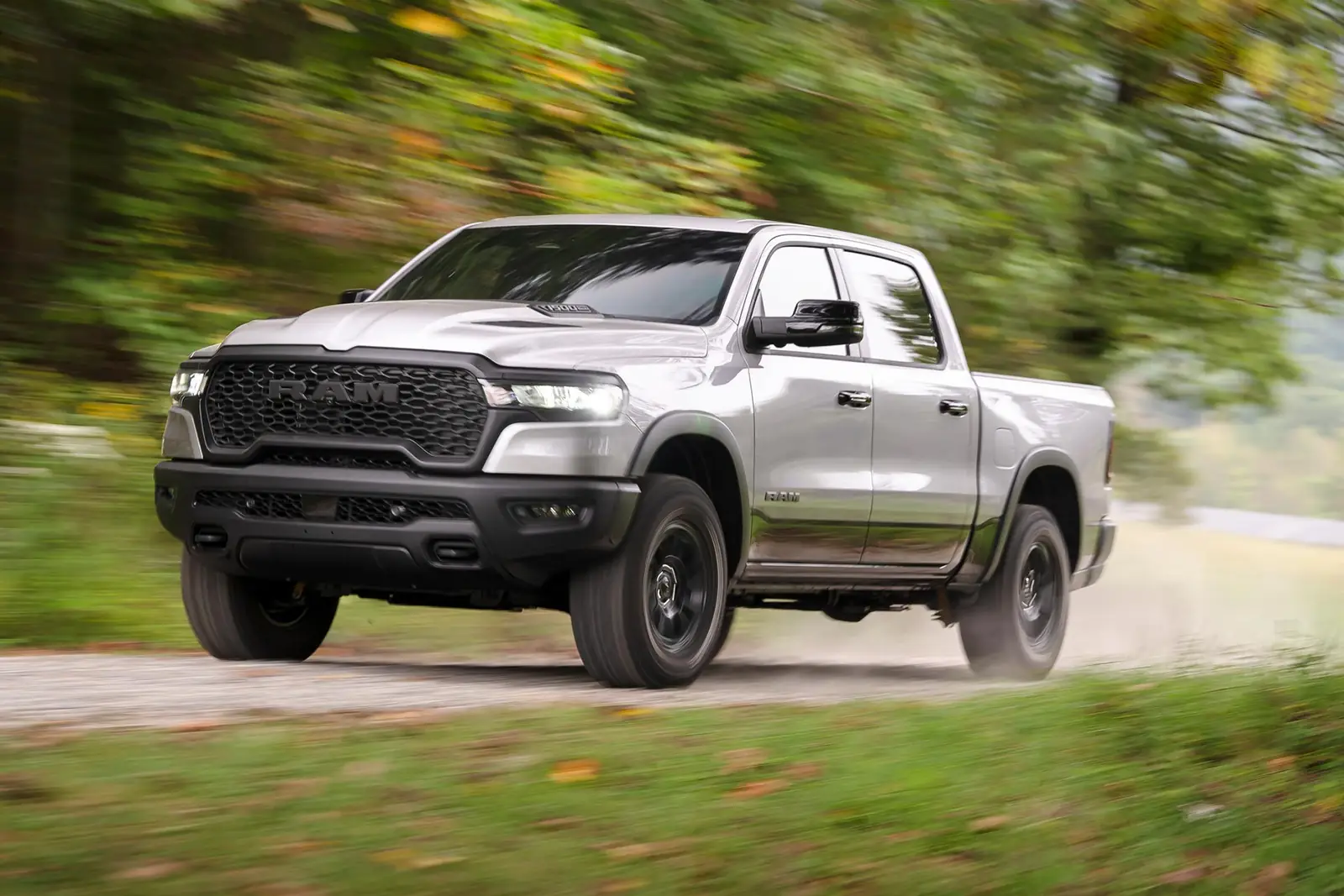
If you take one habit from this whole guide, take this one: in winter, with a trailer, give yourself far more room and far more time than feels necessary.

Leave a huge following distance. The single most useful thing you can do is open up the gap to whatever is ahead of you. With a loaded trailer on a slick road, your stopping distance can be much longer than you instinctively expect, and the only thing that buys back that distance is space you left in front of you. If the gap feels too big, it is probably about right for winter towing. You want enough room that you never have to brake hard, because hard braking is exactly what you are trying to avoid.
Brake early and gently. Plan your stops far ahead and bleed off speed gradually instead of braking late and firm. Smooth, early, light braking keeps the trailer tracking straight behind you. A sudden hard brake on ice can break the trailer's grip loose and start it pushing the truck sideways, which is how a manageable situation becomes a spin. Look well down the road, anticipate the lights and the slowdowns, and you will rarely need the brakes hard at all.
Be smooth with everything. Steering, throttle, braking, all of it gentle and gradual. Sudden inputs are what unsettle a trailer. Ease into turns, ease onto the throttle pulling away, and make any correction a smooth one rather than a jerk. A settled trailer follows quietly. An upset one is the thing you are trying to prevent, and smoothness is how you keep it settled.
Slow down, especially in wind and on bridges. Speed multiplies every winter towing risk. A crosswind has more to push against with a trailer, bridges and overpasses ice over first and worst, and shaded stretches stay slick when the open road has cleared. Back off the speed in all of them. There is no prize for getting there ten minutes sooner, and a trailer in the ditch ends the trip a lot more thoroughly than driving slow ever could.
Trailer Sway on Ice: Catch It Early
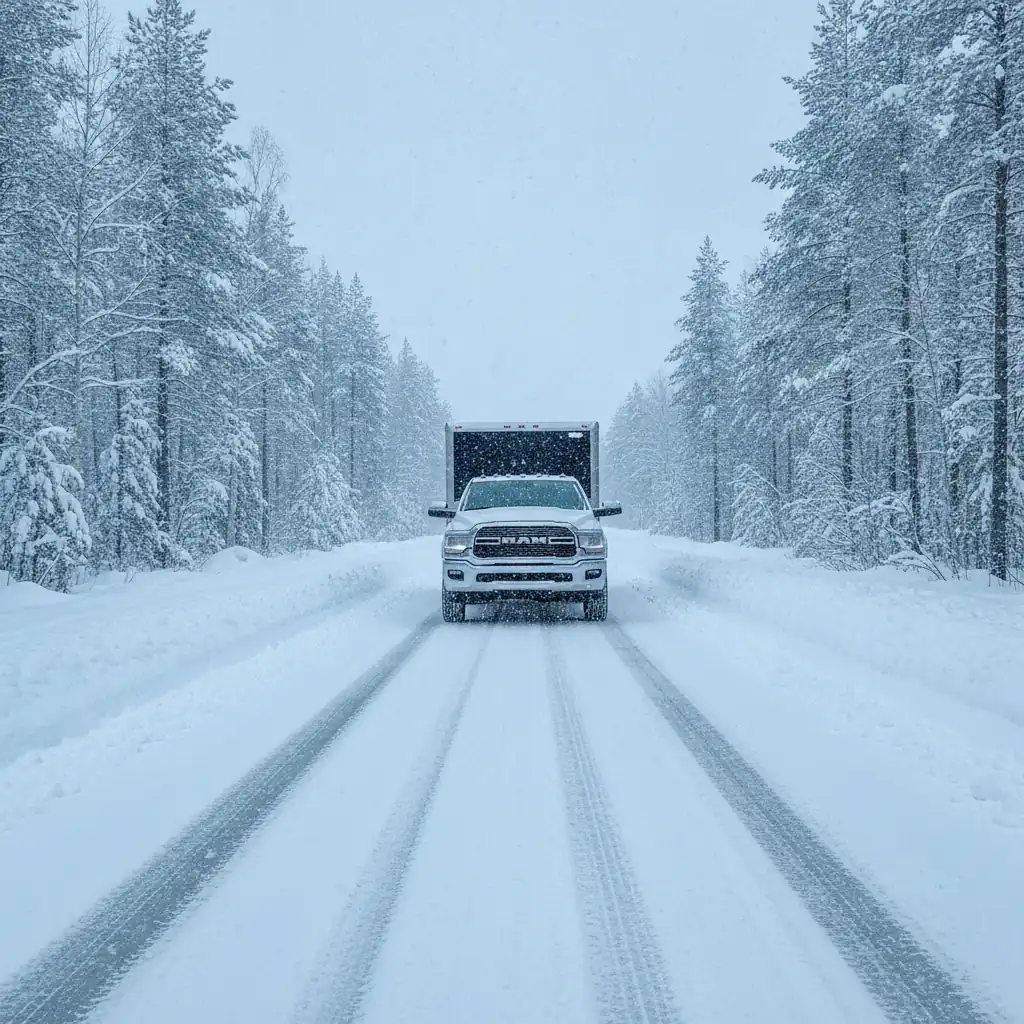
Trailer sway, that side to side fishtailing of the trailer, is unsettling any time of year. On a winter road it is genuinely dangerous, because the grip you would normally use to correct it is exactly what is in short supply.
Sway usually starts from something: a gust of wind, a sudden steering input, a poorly loaded trailer with too little weight on the hitch, or going too fast for the conditions. On dry pavement a small sway often settles itself or corrects with a gentle touch. On ice, that same sway can build instead of settle, because the tires cannot grab enough road to damp it out, and a building sway on a slick surface can escalate toward a jackknife alarmingly fast. So the winter rules around sway are strict and worth memorizing.
The most important one: if you feel sway starting, ease off the throttle and slow down gently. Do not speed up. There is an old and dangerous myth about accelerating to "pull the trailer straight." Do not do it, especially on ice. Gently reducing speed, hands steady, letting the rig slow itself, is what brings a sway back under control. Avoid hard braking, which can make it worse, and avoid sharp steering corrections, which can whip the trailer the other way. Smooth and slowing, that is the recipe. And the best defence of all is to never let sway start: load the trailer correctly with appropriate weight on the hitch, keep your speed down, and back off before wind and rough surfaces rather than after. Many modern trucks also have trailer sway control systems that help damp sway automatically, which is a genuine help, but it is a backup to good habits, not a replacement for them.
Winter Tires and Matching the Truck to the Load
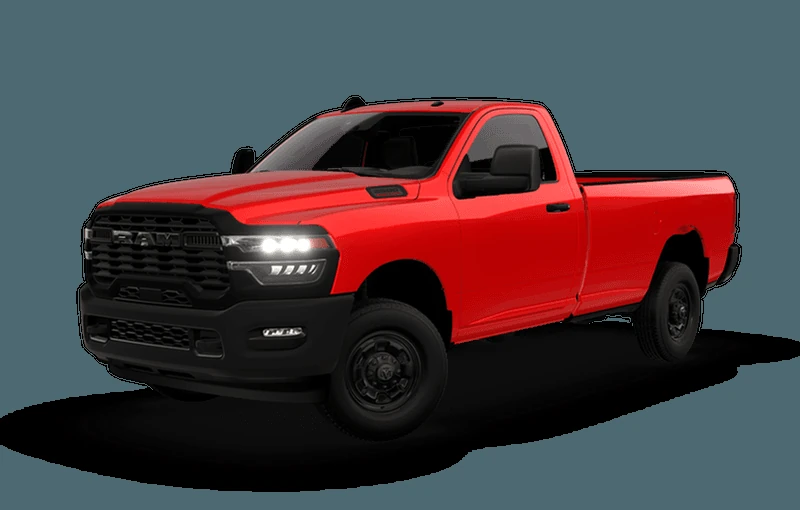
Two setup decisions do a lot of the safety work before you ever hit the road: your tires and whether your truck is genuinely matched to what you are pulling.
Winter tires matter even more when you tow. You are asking the truck to start, stop, and steer more total weight, and it does all of that through the tires. Good winter rubber on the truck gives you the grip to actually control the load, where hardened all seasons leave you fighting for traction with a trailer pushing from behind. If you tow at all in winter, proper winter tires on the truck are not a nice to have, they are part of the safety equipment. Here is our guide on when to switch to winter tires in Manitoba and how the MPI tire program helps with the cost.
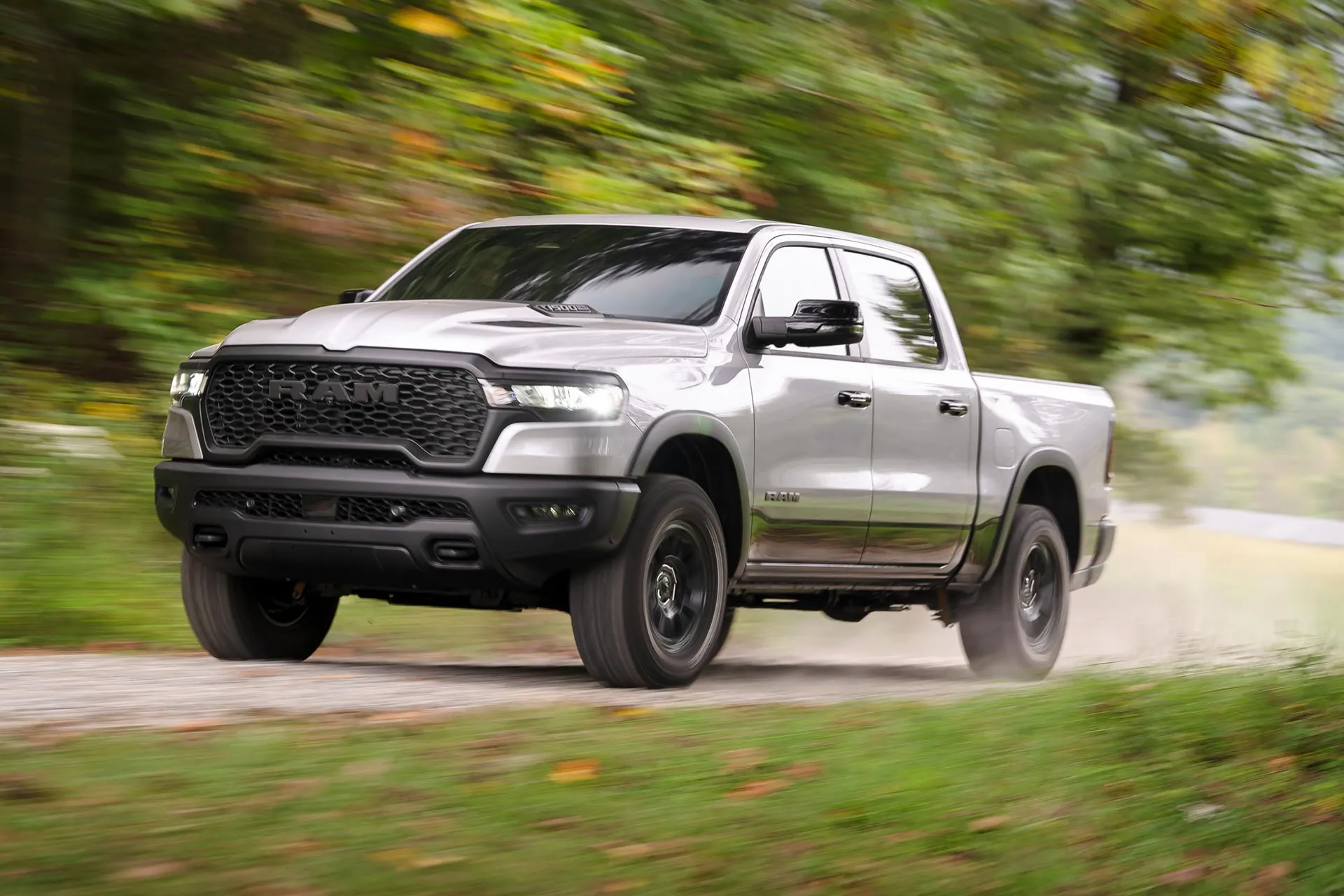
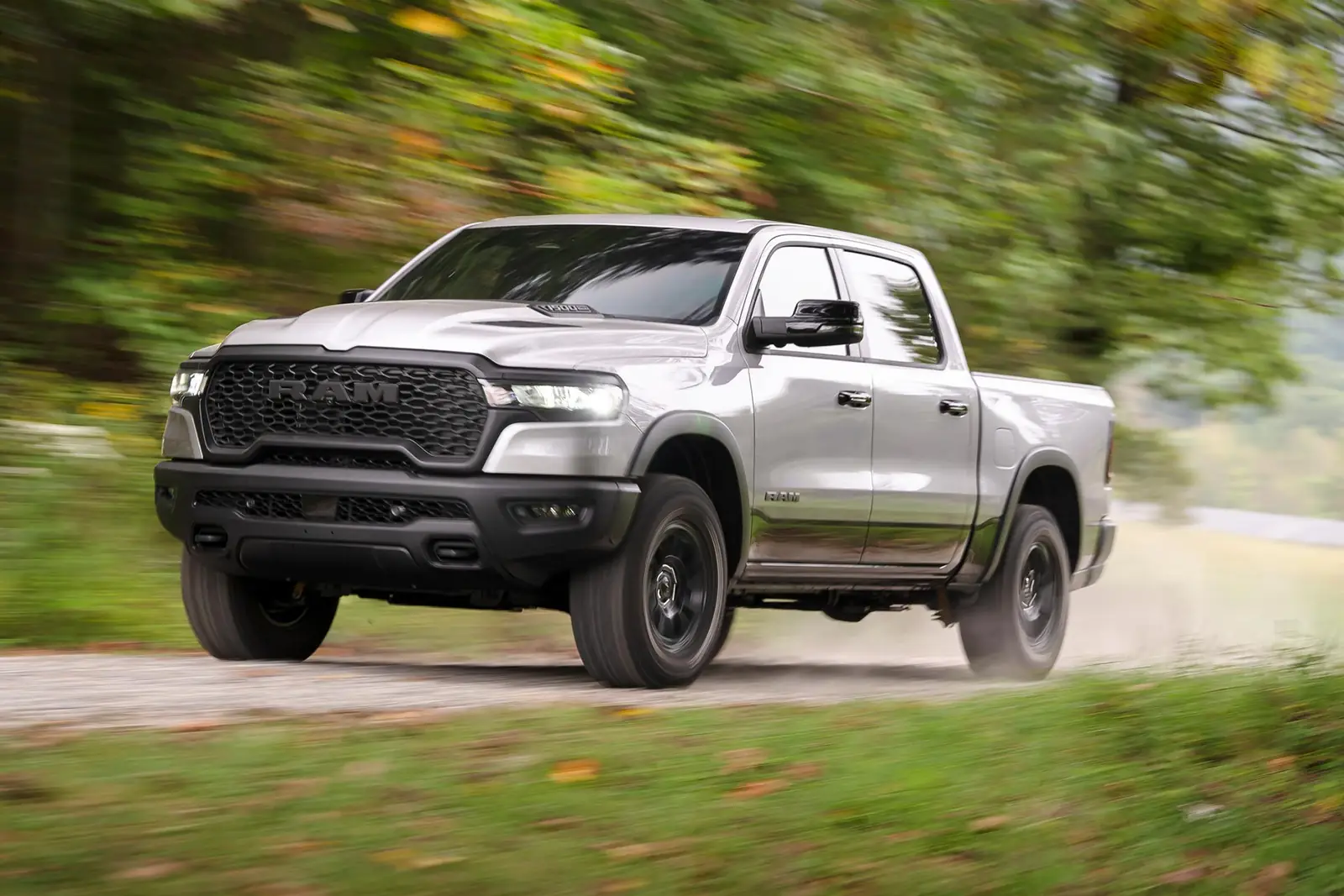
Match the truck honestly to the load. A trailer that a half ton handles comfortably on a dry summer highway asks more of the truck on a winter road, because controlling weight on low grip is harder than controlling it on high grip. This is not a reason to panic, a properly equipped modern truck tows confidently in winter. It is a reason to be honest about weights. Know the real loaded weight of your trailer, know what your specific truck is genuinely rated to tow, and stay comfortably within it, with a little extra margin for the conditions. If you regularly tow at the heavier end, a three quarter ton truck like the Ram 2500 gives you the braking, the control, and the margin that make winter towing a lot more relaxed than running a half ton near its limit.
A real caution that applies to every truck: maximum tow ratings depend on the exact engine, axle ratio, and configuration, and the truck on the lot may be rated differently than a headline number. If you are buying a truck to tow something specific through our winters, tell us the real weight and we will match you to one genuinely rated for it with margin to spare. You can browse our new Ram 1500 and Ram 2500 inventory, but the right move is to bring us your real towing numbers and let us spec it properly.
The Cold Weather Pre Trip Check
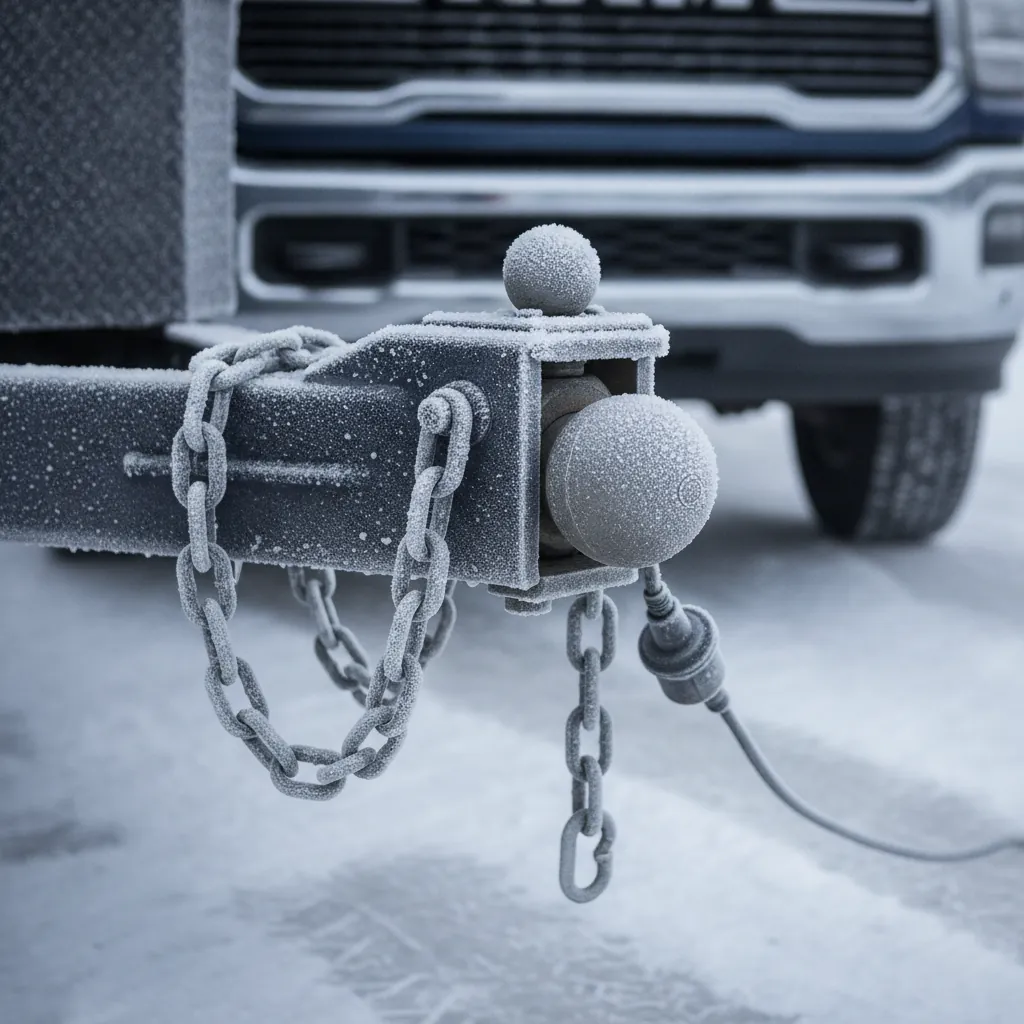
Cold changes how trailer hardware behaves, so a winter pre trip check is worth the five minutes every single time. Run through this before you pull out.
- Trailer brakes. If your trailer has its own brakes, confirm they are working and your brake controller is set right before you are out on the highway. Trailer brakes do a lot of the stopping, and you want them sharing the load, not lagging, on a slick road.
- Lights and the connector. Check that all the trailer lights work, brake, signal, running, and that the connector is clean and seated. Road salt and moisture corrode connectors, and a cold one can be intermittent. Short winter daylight makes working trailer lights a real safety item, not a formality.
- Tire pressures, truck and trailer. Cold air drops tire pressure, and pressure that was fine in the fall can be low on a bitter morning. Underinflated tires hurt traction and handling exactly when you need them most. Check and top up the truck and the trailer before a winter trip.
- The hitch and safety chains. Confirm the coupler is fully seated and locked on the ball, the safety chains are crossed and connected, and the breakaway cable, if your trailer has one, is attached. Frost and ice can hide a coupler that did not seat fully, so look, do not just assume.
- Load and weight on the hitch. Make sure the trailer is loaded with appropriate weight toward the front so there is proper weight on the hitch. A tail heavy trailer is a sway waiting to happen, and that is the last thing you want on ice.
If anything on this list is acting up, a dragging trailer brake, a flaky light, a hitch that does not feel right, get it sorted before the trip, not on the shoulder of the highway in a wind chill. Our service team can check your truck's brakes, battery, and tires heading into towing season, and you can book an appointment online in a couple of minutes.
FAQs
Is it safe to tow a trailer in winter?
Yes, with the right setup and habits. Towing in winter is safe when you slow down, leave much more following distance, brake early and gently, run proper winter tires on the truck, and match the truck honestly to the load. The danger comes from towing in winter the same way you would in summer, since stopping distances grow and grip shrinks on snow and ice. Adjust your driving to the conditions and winter towing is very manageable.
How much longer is my stopping distance when towing in winter?
Considerably longer than towing on dry pavement, because you are slowing more total weight on a lower grip surface. The exact distance depends on your speed, the road, your tires, and your load, but the safe assumption is that it is much longer than you expect. The fix is to leave a large following distance and brake early and gently so you never need to stop hard.
What do I do if my trailer starts to sway on ice?
Ease off the throttle and let the rig slow down gently. Do not speed up, despite the old myth about accelerating out of sway, that is dangerous on ice. Avoid hard braking and sharp steering corrections, both of which can make sway worse. Keep your hands steady and let the reduced speed settle it. The best approach is to prevent sway by loading the trailer correctly, keeping speed down, and backing off in wind.
Do I need winter tires on my truck to tow in winter?
Strongly yes. When towing, you are controlling more weight through the truck's tires, so grip matters even more than usual. Good winter tires give you the traction to start, stop, and steer the load safely, where all seasons leave you fighting for grip with a trailer pushing from behind. For winter towing, proper winter tires on the truck are part of the safety equipment.
Can a half ton truck tow safely in a Manitoba winter?
Yes, within its limits and with the right setup. A properly equipped half ton tows confidently in winter when the load is comfortably within its real rating, the truck has winter tires, and you drive for the conditions. If you regularly tow at the heavier end, a three quarter ton truck gives you more braking, control, and margin, which makes winter towing more relaxed. Know your real weights and stay within your truck's genuine rating.
What should I check before towing in cold weather?
Check the trailer brakes and your brake controller, all trailer lights and the connector, tire pressures on both the truck and trailer since cold drops them, the hitch coupler and safety chains for a full secure connection, and that the trailer is loaded with proper weight on the hitch. Cold weather changes how all of these behave, so a five minute pre trip check every time is well worth it.
Get There Calm, Not Quick
Winter towing is not about being braver than summer towing, it is about being more patient. The trailer that follows quietly in July needs more room, a gentler hand, and more respect when the road is cold and slick. Slow down, leave a huge gap, be smooth with every input, catch sway early by slowing not speeding, run real winter tires, and match your truck honestly to the load. Do those things and you will get the sleds to the trail and the gear to the lake without a white knuckle moment.
If you are heading into towing season, our service team can check your brakes, battery, and tires before you load up. And if you are thinking about a truck that tows confidently through our winters, bring us your real towing numbers and we will match you to the right one from our new Ram 1500, Ram 2500, or used inventory. Come talk to us in Portage la Prairie and we will spec it for the work you actually do.
Tyler Dunn, Dunn Ram Trucks, Portage la Prairie