The question we get about electric trucks almost never starts with range. It starts with the driveway. Where does the thing plug in, what does an electrician have to do to the house, and what happens to all of it when it is 30 below and the wind is coming across the field. Fair questions, and the answers are more reassuring than most people expect. If you are shopping the broader half ton lineup while you think it through, our new Ram 1500 inventory is the place to start.
Here is the practical Manitoba version. What a home charging setup really involves, what it costs to fill a battery at the rates we actually pay here, and why plugging a truck in at night is a habit this province already has.
Key Takeaways
- The electric Ram you can order is a range extended truck, not a battery only one. Ram confirmed in September 2025 that it stopped development of the battery only pickup and moved the REV name onto the range extended truck previously called the Ramcharger. It pairs a 92 kilowatt hour battery with a 130 kilowatt onboard generator.
- That changes the home charging question completely. With a gas generator on board, your home charger handles the daily driving and the truck covers the long trip on its own. A missed charge is an inconvenience, never a stranding.
- A full battery is cheap to fill here. At Manitoba Hydro's residential energy charge of 9.970 cents per kilowatt hour, effective January 1, 2026, a 92 kilowatt hour pack works out to roughly nine dollars for a full charge, and a little less in practice since usable capacity sits below the gross figure.
- Level 2 at home is the setup that makes sense, which means a 240 volt circuit run by a licensed electrician. Cost depends entirely on your panel and the run to where the truck parks, so get a quote on your house rather than trusting an internet average.
- Manitoba already plugs its vehicles in. Block heater culture means the cord habit, the outdoor outlet, and often the wiring are already there. The behaviour is not new here, only the size of the draw.
The Truck Actually Changed, So Start There
If you have been following the electric Ram story for a couple of years, the plan you remember is not the plan anymore, and it matters for this conversation.

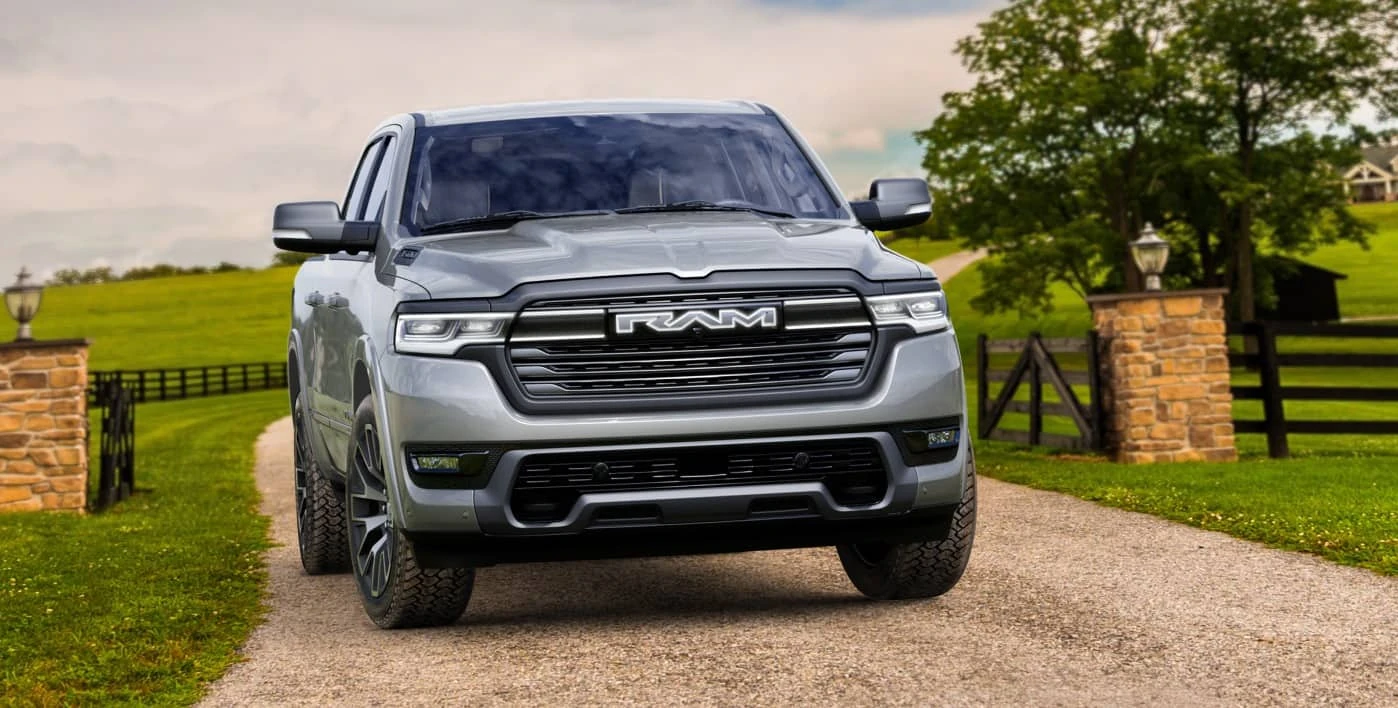
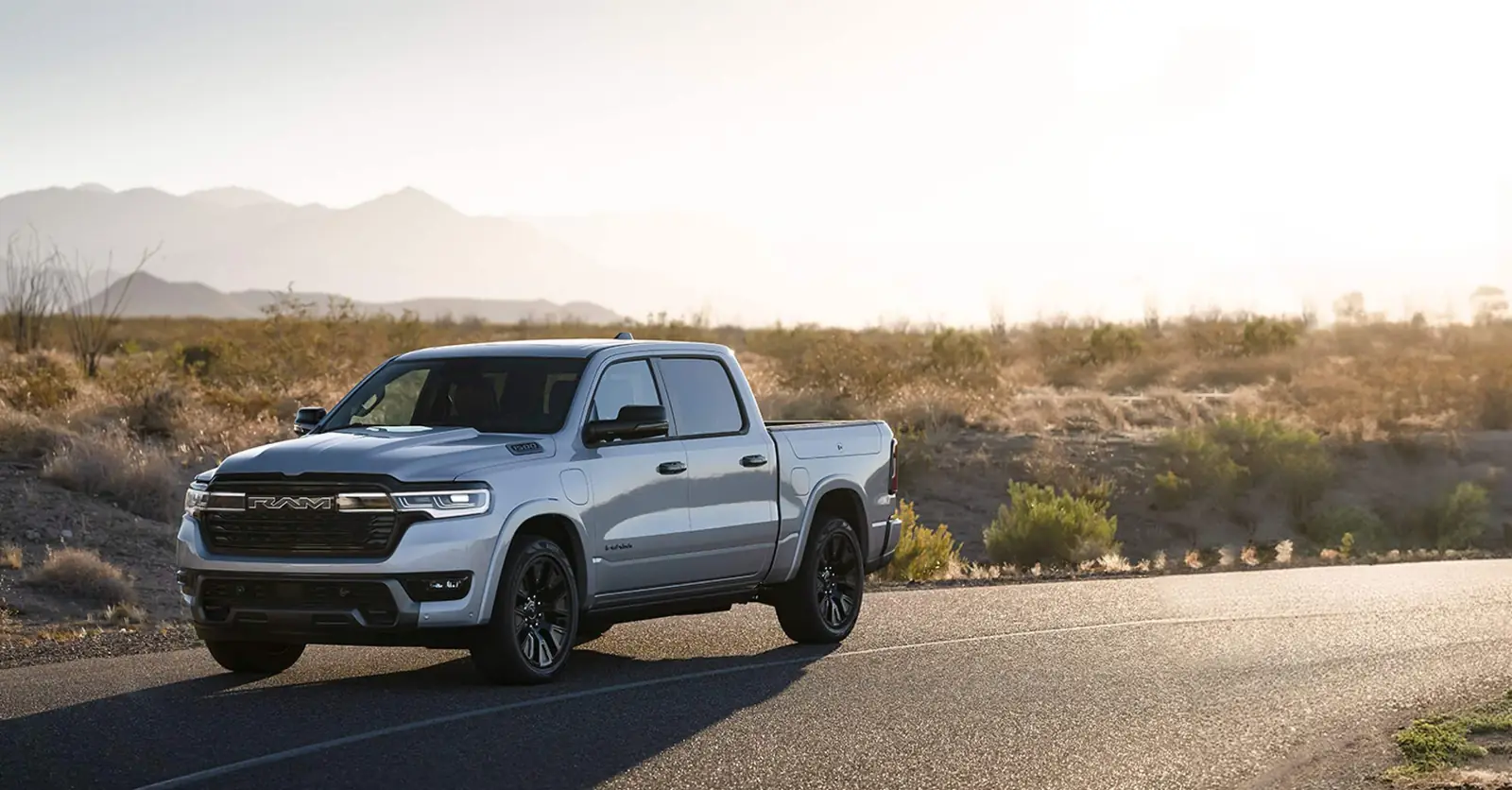
Ram originally had two trucks coming. A battery only pickup called the 1500 REV, and a range extended truck called the Ramcharger that carried a gas V6 acting purely as a generator. In September 2025 Stellantis confirmed it was stopping development of the battery only truck, citing demand for large battery electric pickups that did not materialize. The REV name moved over to the range extended truck. So when someone says Ram 1500 REV today, they mean the one with the generator on board.
For a Manitoba buyer this is genuinely good news, and not a consolation prize. The specifications Ram has confirmed are a 92 kilowatt hour battery pack paired with a 130 kilowatt generator, over 615 lb ft of torque, towing up to 6,350 kilograms, and payload up to 1,191 kilograms. Ram targets total range up to 1,110 kilometres. Consumer orders were set to open in the first half of 2026.
We are not going to print an all electric range figure, because the numbers circulating from secondary sources do not agree with each other and we have not seen a confirmed Canadian figure we would stand behind. Ask us and we will give you the number Ram has actually published for the build you are looking at. Our earlier pieces on the Ram Ramcharger and Ram REV cold weather range cover the range side in more depth, with the naming caveat above in mind.

What a Home Setup Actually Involves
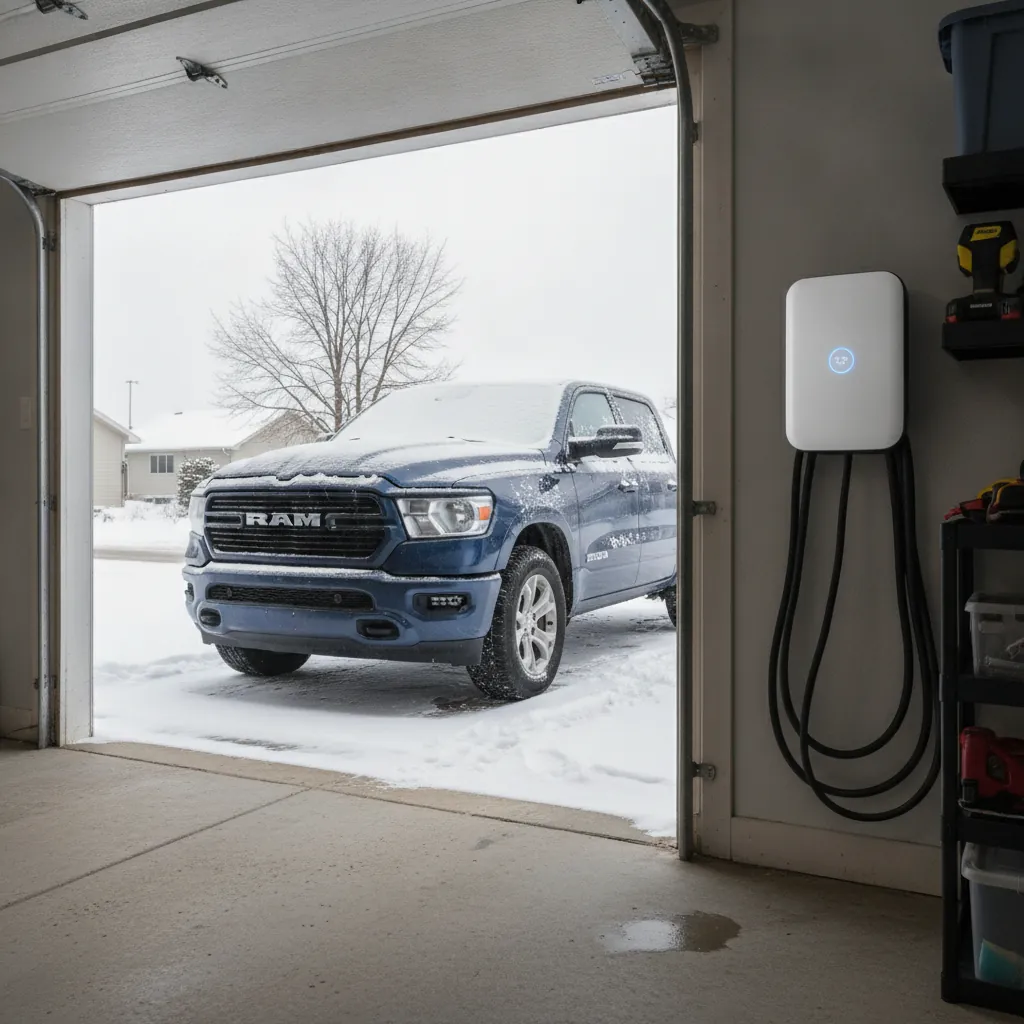
There are three ways to put electricity into the truck at home, and only one of them is the real answer.
Level 1 is the wall outlet you already have. A standard 120 volt household plug will charge the truck, very slowly. On a battery this size, it is a trickle. It works as a backup or for someone who drives a handful of kilometres a day, but nobody should plan a truck purchase around it.
Level 2 is the setup you want. This is a 240 volt circuit, the same class of service your dryer or range runs on, feeding a wall mounted charging unit where the truck parks. Plugged in overnight, the battery is full in the morning. This is what essentially every home EV owner ends up with, and it is the assumption behind every "charge at home" claim you read.
DC fast charging is a road trip tool, not a home one. Ram states the truck accepts DC fast charging at up to 175 kilowatts, adding as much as 8 kilometres of all electric range per minute. That hardware does not go in a house. It matters on the highway, not in your driveway.
What the install involves in practice. An electrician assesses your panel to confirm there is capacity for a new 240 volt circuit, then runs that circuit to where the truck parks. A newer home with an unloaded panel and an attached garage is a straightforward job. An older Portage house with a full panel, or a detached garage that needs a trench, is a bigger one. That is exactly why we will not quote you a number. The honest advice is to have a licensed Manitoba electrician look at your specific panel and your specific run before you budget anything.
On rebates and financing, check the current programs directly. Manitoba Hydro has offered financing for home energy efficiency work, and provincial EV incentives have come and gone with their funding. What we found online contradicted itself, so we are not going to state an amount that might be wrong or expired. Confirm current offerings with Manitoba Hydro and the Province directly before counting on them.
What It Actually Costs to Charge Here
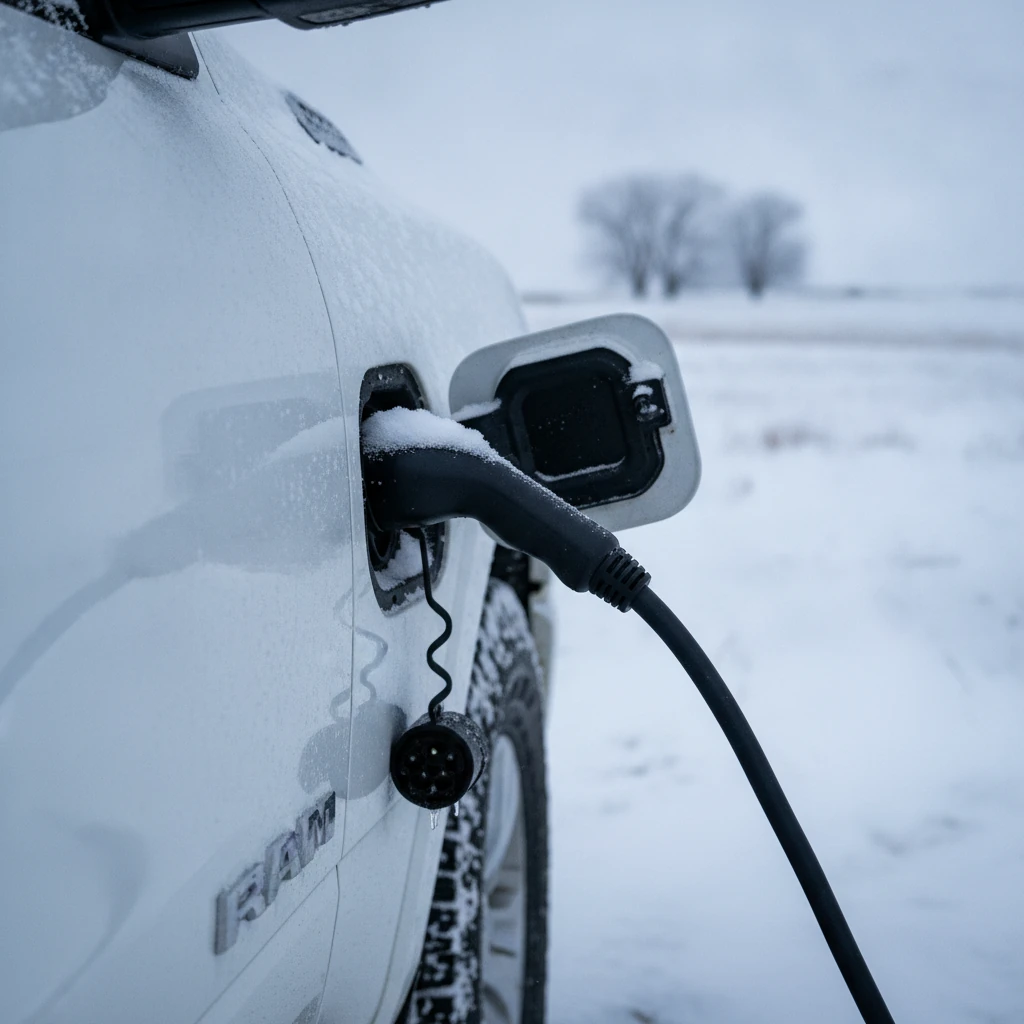
This is where Manitoba quietly wins, and the arithmetic is simple enough to check yourself.
Manitoba Hydro's residential energy charge is 9.970 cents per kilowatt hour, effective January 1, 2026, alongside a basic monthly charge of $9.84 for service not exceeding 200 amps. Rates went up 4.0 percent on that date.
Run the numbers on a 92 kilowatt hour pack. Filling it from empty at 9.970 cents costs roughly nine dollars. In the real world it is a bit less, because the usable capacity of a battery sits below its gross rating and you are almost never charging from truly empty. Call it a few dollars to top up a normal day's driving.
Compare that to filling a half ton at the pump and the gap is obvious. That is the entire economic case for home charging, and in a province with some of the cheapest electricity in the country, it lands harder here than almost anywhere else.
Two honest caveats. First, that is the energy cost only, and it does not include the one time cost of the electrical work. Second, cold weather reduces efficiency, so your winter cost per kilometre will be higher than your summer cost. Anyone who tells you otherwise is selling something.
The Winter Reality, Straight
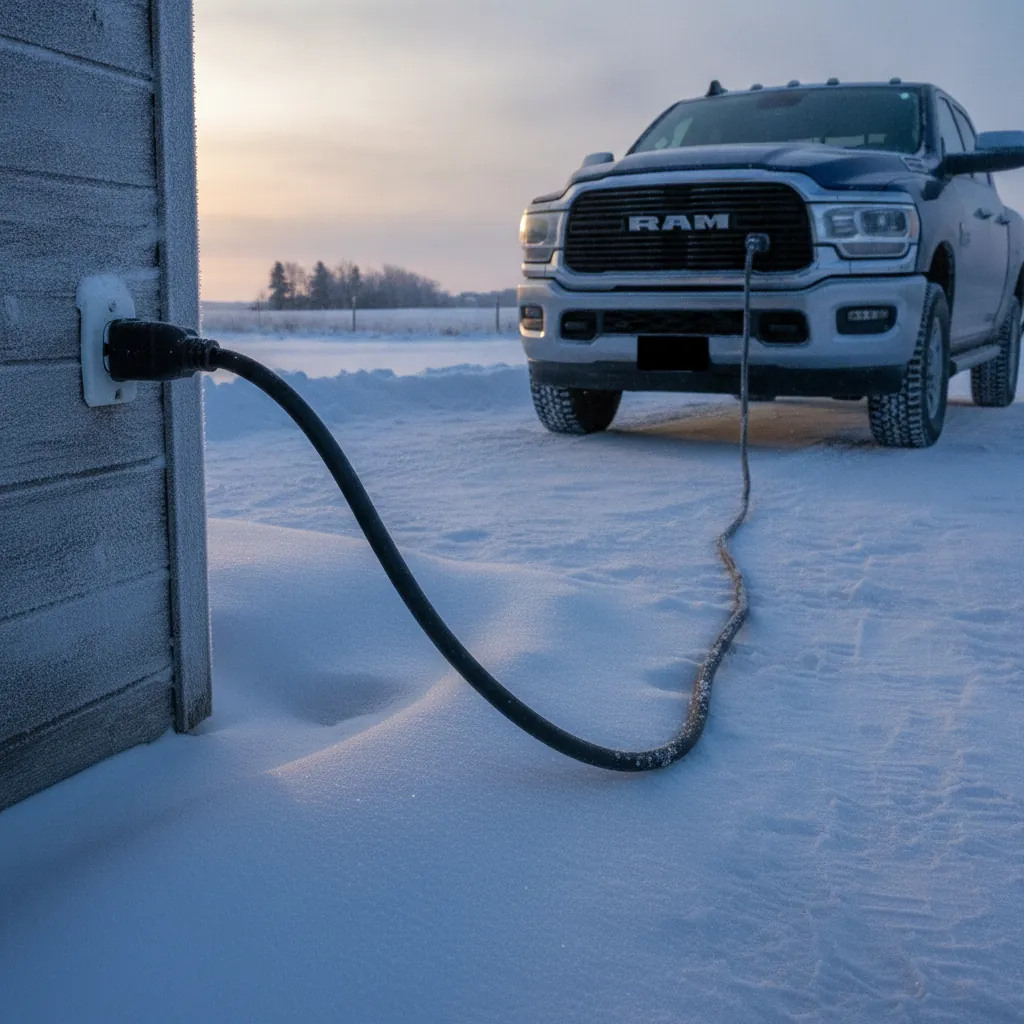
Here is the part most articles about home charging get wrong, because they are not written by anyone who has scraped a windshield in January.
Cold reduces efficiency, and that is not a defect. A battery is less willing in the cold, and heating the cabin draws real power. Your kilometres per charge drop in winter. Every electric vehicle does this, and so does a gas truck, which is why your fuel economy is worse in February too. The difference is that you notice it more on a battery.
The range extender is why this is a Manitoba friendly truck. This is the whole point. On a battery only pickup, a hard cold snap plus a long trip plus a trailer is a planning exercise. With a generator on board, the truck simply keeps going on gasoline when the battery is done. You get the cheap home charging for the daily driving and you keep the gas station as a backstop that never disappears. For a province where the nearest town can be an hour away and the temperature genuinely reaches minus 35, that architecture makes more sense than a battery only truck ever did.
Plugging in is already what we do here. Every Manitoban with an older vehicle knows the block heater routine. Cord out, plug it in, unplug it before you drive off, and the mild embarrassment of the one time you did not. The outdoor outlet is often already there. Home charging is that same habit with a heavier cord and a much bigger benefit, because instead of just warming the engine you are filling the tank overnight for about nine dollars.
Charge in a garage if you have one. It is easier on the battery, easier on you, and it means the cable is not frozen stiff at 7am. Not essential, but a real quality of life difference.
Towing in the cold hits harder. A trailer plus winter plus a battery is the toughest combination there is, and it is worth planning around regardless of what you drive. Our guide to towing in winter in Manitoba covers the ground rules.
Is It the Right Truck for You
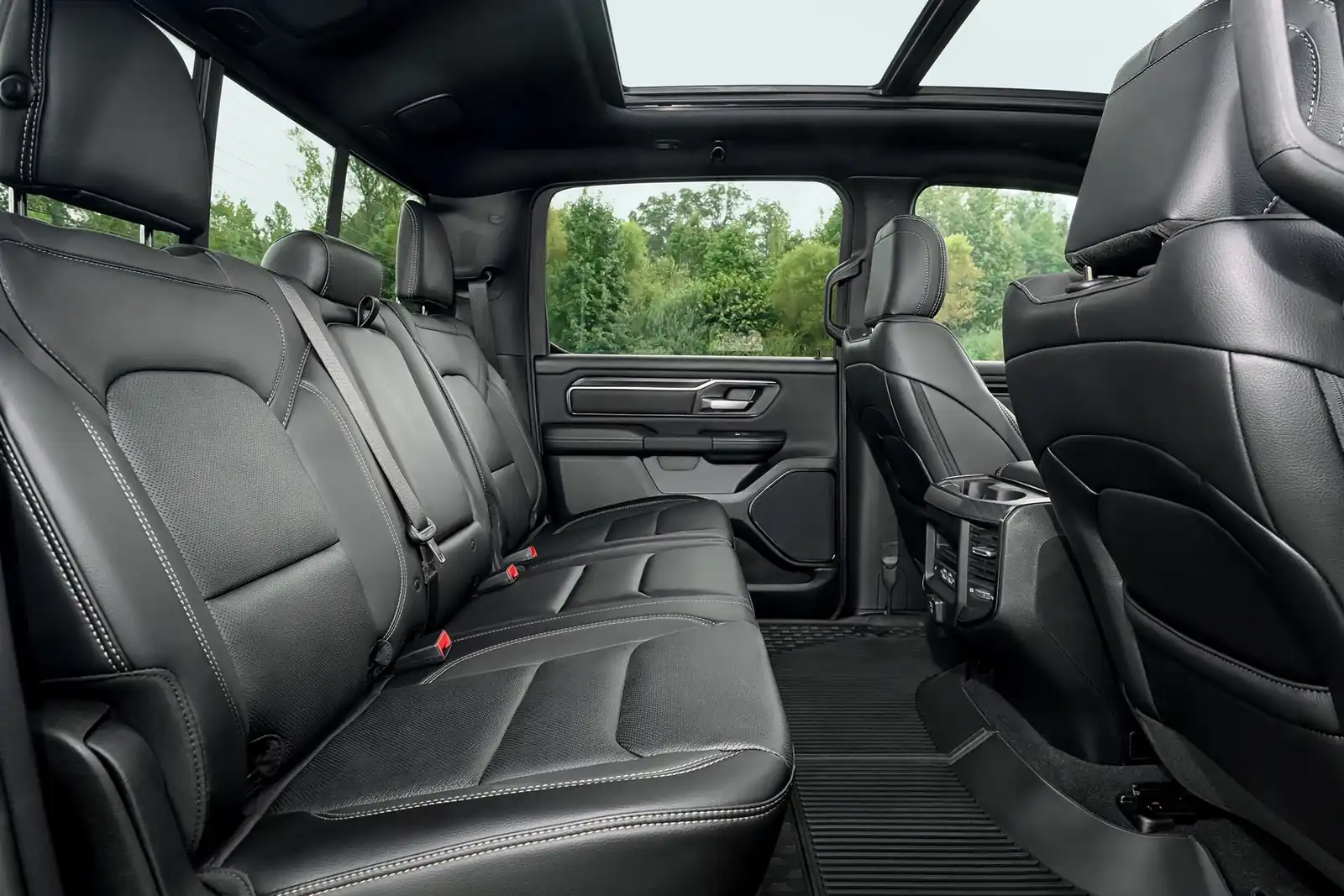
The short version, without the sales pitch.
If you have a place to put a Level 2 charger, drive a predictable daily distance, and want to stop buying fuel for that daily driving without giving up the ability to hitch a trailer and drive to Thunder Bay, the range extended Ram is worth a serious look. If you park on the street with no realistic charging option, the economics stop working and we will tell you that honestly rather than sell you one.
When you are ready to talk numbers, get a baseline on your trade with our instant cash offer tool and start the finance application so the budget conversation is real. Every new Ram 1500 we sell carries the Eh+ value stack, with the maintenance plan, anti theft protection, walkaway coverage, and zero dealer fees. And when service comes due, you can book it online with the shop right here in town.
FAQs
What kind of charger do I need at home for an electric Ram in Manitoba?
A Level 2 charger, which runs on a 240 volt circuit installed by a licensed electrician, the same class of service as a dryer or range. Plugged in overnight it fills the battery by morning. A standard 120 volt outlet will charge the truck but far too slowly to build your routine around on a battery this size.
How much does it cost to charge an electric Ram in Manitoba?
Manitoba Hydro's residential energy charge is 9.970 cents per kilowatt hour as of January 1, 2026. On the 92 kilowatt hour battery in the Ram 1500 REV, a full charge works out to roughly nine dollars, and slightly less in practice since usable capacity is below the gross rating and you rarely charge from empty.
What does it cost to install a Level 2 charger?
It depends entirely on your electrical panel and the distance from the panel to where the truck parks. A newer home with panel capacity and an attached garage is a simple job. An older house with a full panel or a detached garage needing a trench is not. Get a quote from a licensed Manitoba electrician on your own house rather than relying on a published average.
Does cold weather hurt charging and range?
Yes, and honestly so. Batteries are less efficient in the cold and cabin heat draws real power, so winter kilometres per charge are lower than summer. This is true of every electric vehicle. The advantage of the range extended Ram is that the onboard generator means reduced electric range is an efficiency question rather than a stranding risk.
Is the Ram 1500 REV fully electric?
Not anymore. Ram confirmed in September 2025 that it stopped development of the battery only pickup and moved the REV name to the range extended truck previously called the Ramcharger. It pairs a 92 kilowatt hour battery with a 130 kilowatt gas generator, so it drives on electricity and uses gasoline to generate more when the battery runs down.
Can I still fast charge on a road trip?
Yes. Ram states the truck accepts DC fast charging at up to 175 kilowatts, adding as much as 8 kilometres of all electric range per minute. With the onboard generator you are also never dependent on finding a charger, which is the practical difference on a prairie highway.
The Bottom Line
Home charging an electric Ram in Manitoba is less exotic than it sounds. It is a 240 volt circuit, a wall unit where you park, and a cord habit this province has practiced for decades on block heaters. At just under ten cents a kilowatt hour, filling a 92 kilowatt hour battery costs about nine dollars, and the generator on board means the winter and the long haul stop being a planning problem.
The piece we cannot answer from here is your electrical panel, so get a licensed electrician to look at it. Everything else, come ask us. Start with our new Ram 1500 inventory and we will give you the straight version on whether the electric truck actually fits how you drive.
Tyler Dunn, Dunn Ram Trucks, Portage la Prairie