
The truck started fine on Monday. Thursday morning it clicks, or it cranks slow and gives up, and you are borrowing a booster pack from the neighbour again. So you buy a new battery, it works for a week or two, and then the same thing happens. That pattern is one of the most frustrating calls a service advisor takes, because the owner has already spent money and the problem is still there.
If you are already past the point of guessing, book a battery drain diagnosis with our service department and let a tech measure it instead of swapping more parts. In a lot of those cases the battery was never the real problem. Something on the truck is quietly pulling power while it sits, and a new battery just gives that something a fresh tank to empty.
Key Takeaways
- A dead battery every few days is a symptom, not a diagnosis. A battery that keeps going flat is often being drained by something, not failing on its own.
- Every modern truck draws a little power when it is off. Clocks, keyless entry receivers and module memory all sip current. A healthy draw is small, commonly cited in the range of about 20 to 50 milliamps once the modules are asleep.
- Modules need time to go to sleep. A proper draw test waits for them. Test too early and a normal truck looks like it has a problem.
- Aftermarket add ons are the usual suspects. Remote starters, dash cams, amplifiers, light bars and anything wired straight to the battery can keep a truck awake.
- A new battery will not fix a draw. It only hides it for a while, and repeated deep drains shorten the life of the new one too.
Normal Draw Versus a Problem Draw
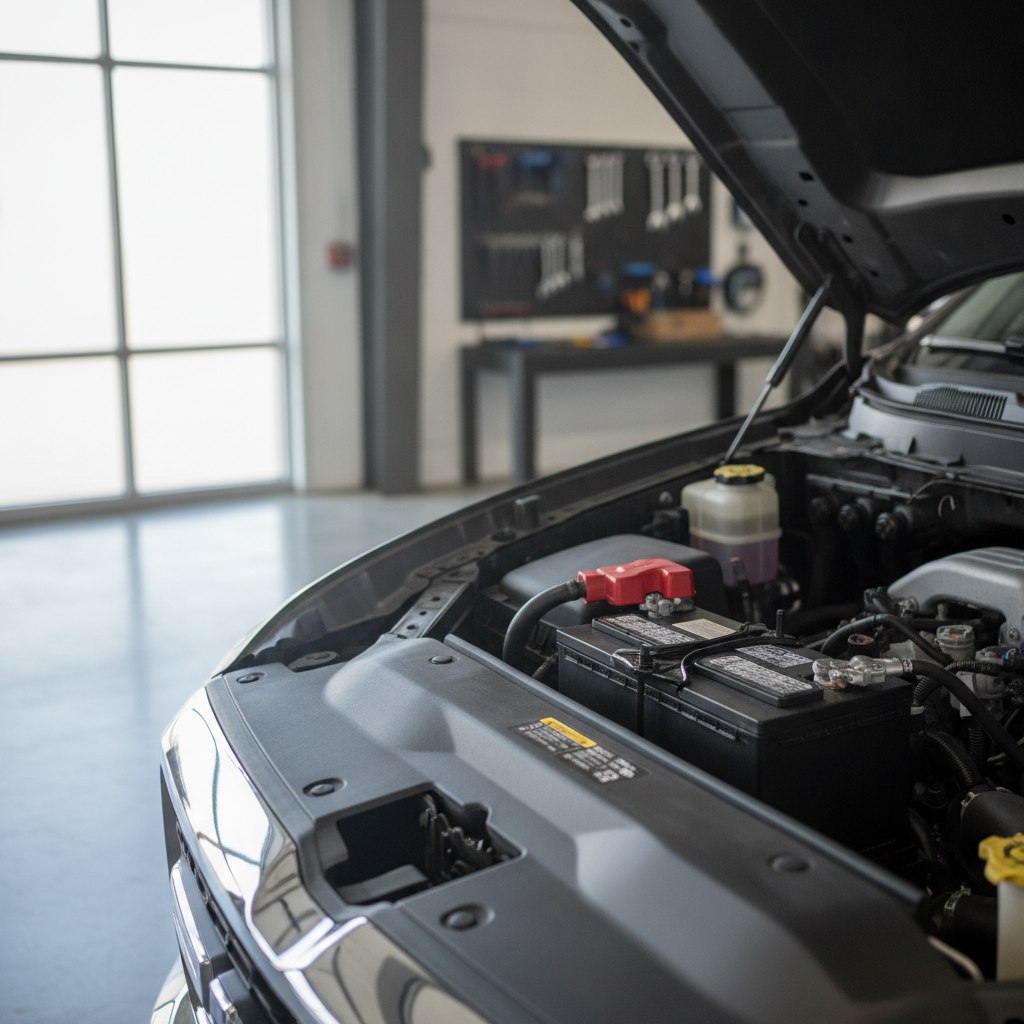
When you shut a modern truck off and walk away, it does not go completely dark. The radio remembers its presets, the keyless entry is listening for your fob, and a long list of computer modules hold onto their settings. That takes a trickle of current around the clock. It is designed in, and a healthy battery handles it for weeks.

A parasitic draw is when that trickle turns into a stream. Service references commonly put a normal draw at roughly 20 to 50 milliamps after everything has gone to sleep, with anything consistently much higher worth chasing. The exact acceptable number varies by vehicle and by how much equipment it carries, which is why a tech checks against the service information for that truck rather than one number from the internet.
Here is why a small number matters. A draw that sounds tiny, a few hundred milliamps from a module that never shuts down, runs 24 hours a day. Park the truck for a long weekend, or leave it at the farm for a week during harvest, and that adds up to enough to leave a battery too weak to crank.
Why the Test Takes Patience
This is the part that trips up a lot of driveway testing. When you turn the truck off, it does not drop straight to its sleeping draw. Modules stay awake for a while after the key is off and the doors close, then shut down in stages.

How long that takes depends on the vehicle. Technician references put it anywhere from several minutes to well over half an hour, and some vehicles take longer. Open a door, and on many trucks the clock starts again. So a meter clipped on right after shutdown will often show a big number on a perfectly healthy truck, and an owner concludes something is wrong when nothing is.
A proper draw test sets the truck up so it can sleep, waits it out, and only then reads the current. If the number is too high, the tech works through the circuits one at a time to see which one makes the draw drop. That is how the culprit gets named instead of guessed.
The Things Owners Install That Cause It
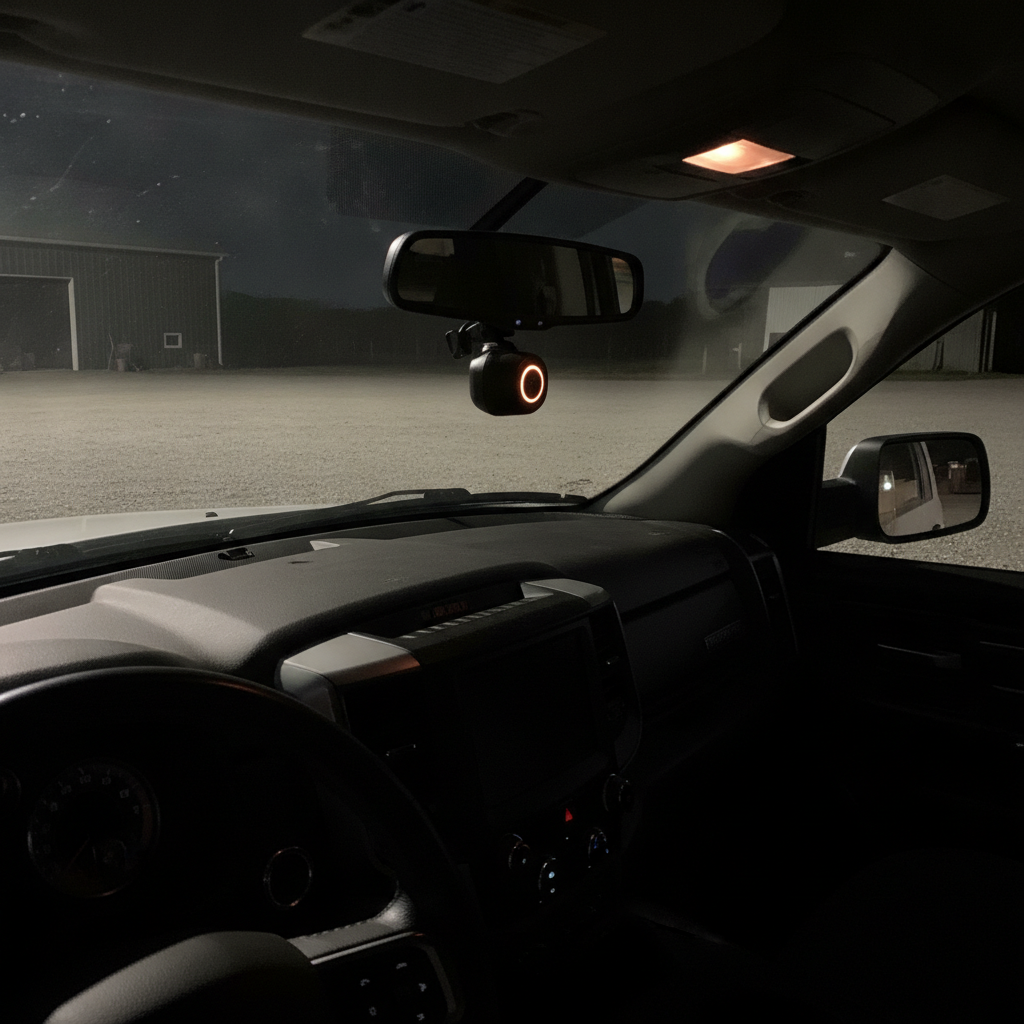
Honest list time. When a truck keeps draining, the first question our advisors ask is what has been added to it. A factory truck can develop a draw, but anything wired in after the fact is a common place to start looking.
Aftermarket remote starters. One of the most common add ons in Manitoba, and one of the most common suspects. A poorly integrated or failing unit can keep a module awake or pull current on its own. If your factory remote start is the one acting up, our post on Ram remote start not working covers that side.
Dash cams with parking mode. A camera hard wired to watch the truck while it is parked is, by design, using power while the truck is off. Some have a low voltage cutoff. Some are set too low to save the battery.
Amplifiers, subwoofers and aftermarket stereos. A remote turn on wire connected to the wrong circuit can leave an amplifier running all night.
Light bars, work lights and switch panels. Wired straight to the battery without a proper relay, they can leak current or get left on.
Phone chargers and plug in accessories. On some trucks certain power outlets stay live with the key off. A charger or an inverter plugged in there draws power the whole time.
Trailer wiring and ag equipment connections. A corroded or pinched trailer plug, or wiring added for a sprayer monitor or a tank, can create a small path to ground that drains the battery slowly.
Factory Things That Keep a Truck Awake
Not every draw comes from an add on. A few factory items can do it too.
A light left on. A glovebox light, a cargo light or a vanity mirror light that does not switch off will slowly drain the battery. Ram's owner's manual describes a battery saver feature that turns interior lights off automatically after about 10 minutes with the ignition off, which helps, but a switch or a light that is not controlled by that feature can still stay on.
A door, tailgate or hood that the truck thinks is open. If a latch switch is not reading closed, the truck may keep modules awake waiting for that door to shut.
A module that will not go to sleep. Sometimes a module keeps talking on the network when it should be quiet. Finding that one takes a scan tool and the service information for the truck, and some fixes are software, looked up against the VIN.
The charging side. A draw is not the only way to end up with a flat battery every few days. If the battery is not being recharged properly on the drive, the result looks similar. That is why a real diagnosis tests the battery and the charging system, not just the draw.
Short Trips and Cold Mornings Make It Worse
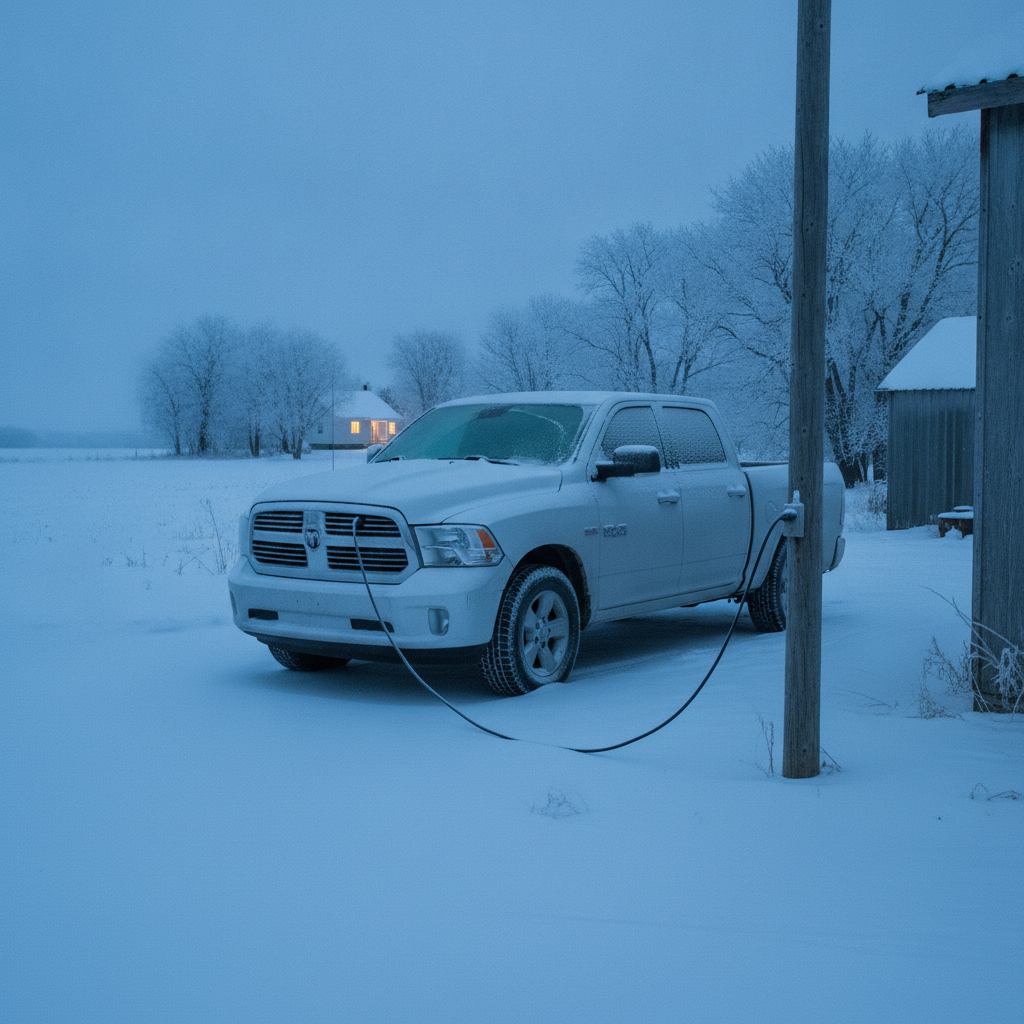
A small draw that a truck gets away with in July can leave you stranded in January. Cold cuts how much power a battery can deliver while the engine takes more to turn over, so a battery that has been partly drained all night has less margin on a cold morning.
Short trips add to it. If most of your driving is five minutes to the shop and back, the alternator never gets much time to put back what the start took, let alone what the draw took overnight. If your truck lives on short runs, winter is when that catches up.
If you are not sure your battery is even the right one for the truck, our guide to Ram 1500 battery size lays out what to look for.
What You Can Check Before You Book
A few things are worth doing at home, and none of them need a meter.
Make a list of everything added to the truck, including anything a previous owner installed. Bring that list to your appointment.
Unplug accessories from the power outlets and see if the problem changes over the next few days.
Look for lights that stay on in the glovebox, cargo area and under the hood after the truck has been locked for a while.
Notice the pattern. Dead after one night, or only after several days parked? After a trip with the trailer, or only in the cold? Our post on describing an intermittent problem to the shop shows which details help a tech the most.
What we would not suggest is pulling fuses one at a time with the truck awake and calling the one that changes the number the culprit. Without the sleep wait, that test fools a lot of people.
What Happens in the Bay
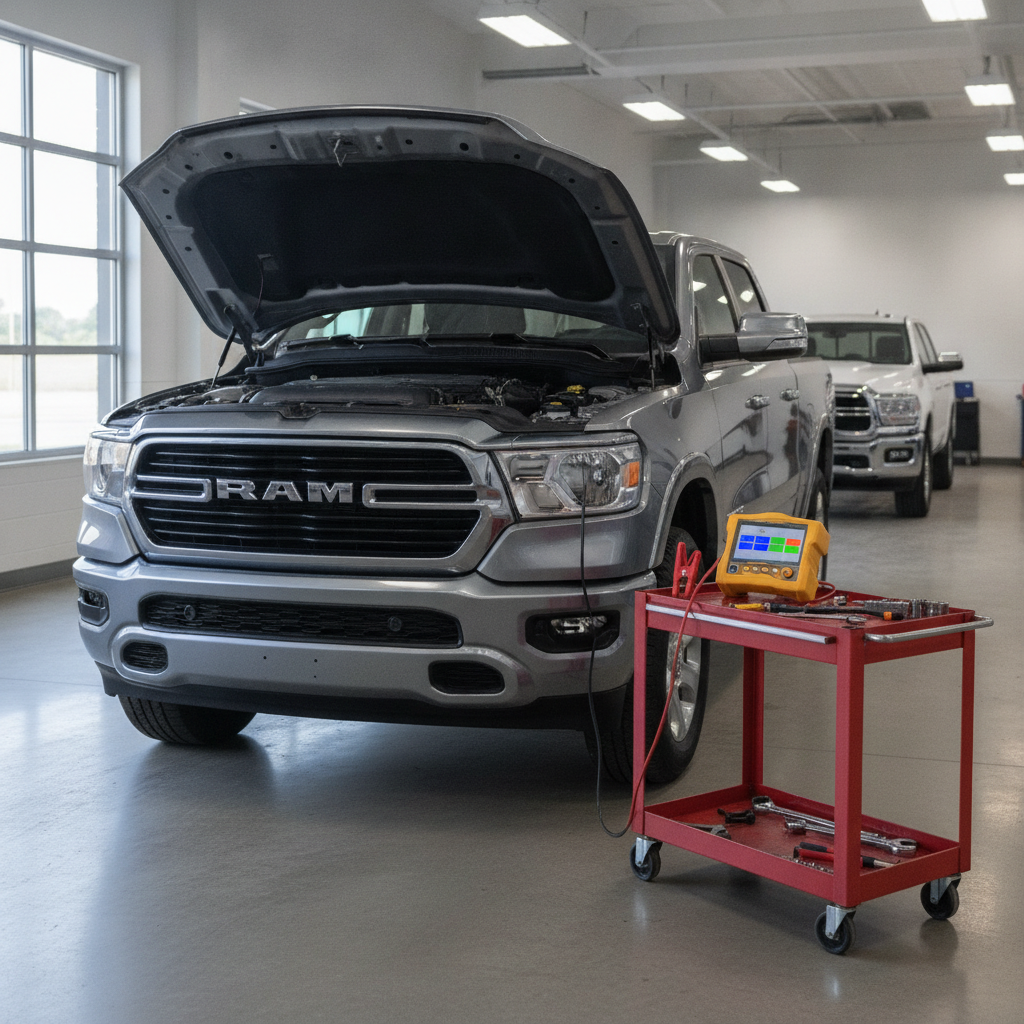
When a truck comes in with a battery that keeps dying, our techs work through it in order.
Test the battery itself. If the battery is damaged from being drained flat over and over, it needs replacing no matter what caused it, and a good draw diagnosis on a bad battery can still leave you stuck.
Test the charging system. Confirm the truck is actually recharging the battery when it runs.
Measure the draw after the truck is asleep, then isolate the circuit responsible.
Scan for stored faults and check for software updates that apply to the VIN.
Then we tell you what it is before any parts go on. If a battery or a component does need replacing, the genuine part comes through our parts department.
FAQs
Why does my truck battery die after sitting for a few days?
Usually something is drawing more power than it should while the truck is off, such as an aftermarket accessory, a light that stays on or a module that does not go to sleep. A weak battery or a charging problem can cause a similar pattern.
How much parasitic draw is normal on a truck?
Service references commonly cite roughly 20 to 50 milliamps once the modules are asleep, but the acceptable figure depends on the vehicle and its equipment. A tech checks against the service information for your truck.
Can a remote starter drain my battery?
Yes. An aftermarket remote starter is one of the most common add ons we ask about when a battery keeps dying, especially if it was installed without proper integration.
Will a new battery fix a parasitic draw?
No. A new battery only delays the problem. The draw will empty it too, and repeated deep drains shorten its life.
How long does a parasitic draw test take?
Longer than people expect, because the truck has to be left long enough for its modules to go to sleep before the reading means anything. Finding which circuit is responsible takes more time after that.
The Bottom Line
A battery that dies every few days is telling you something is pulling power while the truck sleeps. Replacing the battery again is the expensive way to find that out. Make a list of what has been added to the truck, notice when it happens, and have the draw measured properly.
When you are ready, schedule a battery and charging system check and our service centre in Portage la Prairie will track down the cause. And if your truck is at the stage where the battery is one of several things going, have a look at our new Ram 1500 inventory.